Can I Remove And Reinstall Solar Panels? Complete Homeowner’s Guide To Costs, Roofing, And Reinstallation
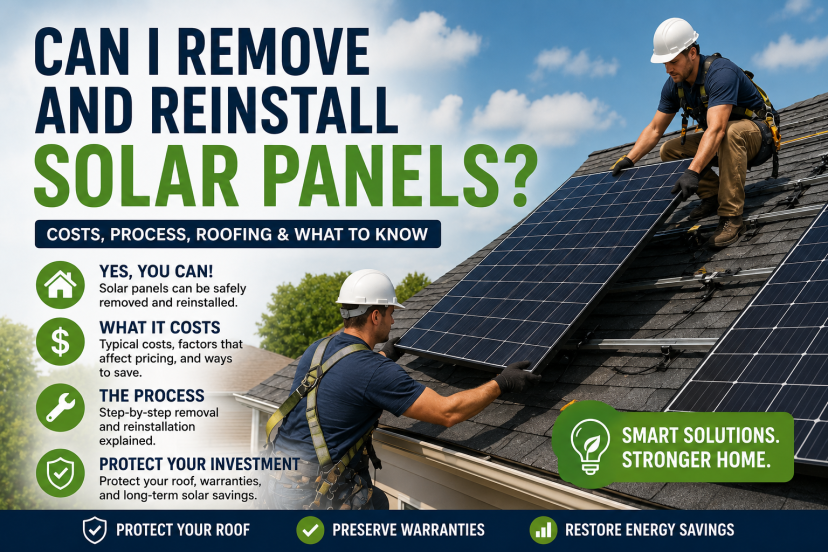
Installing solar panels is a long-term investment that can lower electricity bills, increase your home’s value, and reduce your carbon footprint. But what happens if you need a new roof, move to a new home, or need major roof repairs? Many homeowners ask, Can I remove and reinstall solar panels?
The good news is yes—you can. In fact, removing and reinstalling solar panels is a common service performed by certified solar installers whenever roofing work or major home improvements are needed.
The key is having the work completed properly. Solar panels, mounting hardware, wiring, and roof flashing must all be handled carefully to protect your roof, preserve your warranties, and ensure your system performs efficiently once reinstalled.
⭐ Quick Answer: Can I Remove And Reinstall Solar Panels?
Yes, you can remove and reinstall solar panels. Most systems can be safely removed for roof replacement, repairs, or remodeling and then reinstalled by qualified professionals. Proper removal and reinstallation help protect your roof, preserve your equipment, and restore your system’s energy production.
Key Takeaways
Most likely reason: Roof replacement, major roof repairs, remodeling, or upgrading an existing solar system.
Usually serious? No. Most solar panels can be safely removed and reinstalled by qualified professionals without affecting their performance.
First thing to check: Determine whether your roof needs replacement or repairs, and review your solar panel and roof warranties before scheduling any work.
Best solution: Hire a certified solar installer to remove and reinstall the system, coordinate the work with your roofing contractor, and test the system after reinstallation to ensure it operates safely and efficiently.
☀️ Why Would You Remove And Reinstall Solar Panels?
There are several reasons homeowners choose to temporarily remove their solar panels.
The most common include:
- Roof replacement
- Roof leak repairs
- Storm damage restoration
- Structural roof upgrades
- Home additions
- Moving panels during remodeling
- Upgrading the solar system
- Replacing damaged mounting hardware
Since asphalt shingle roofs typically last 20–30 years and solar panels often last 25–30 years or more, many homeowners eventually face both roofing and solar work during the life of their home.
🏠 Can I Remove And Reinstall Solar Panels Myself?
Technically, it’s possible—but it’s rarely recommended.

Solar systems contain:
- High-voltage electrical wiring
- Sensitive glass panels
- Roof penetrations
- Specialized mounting systems
- Electrical disconnects
- Inverters and monitoring equipment
Improper removal can:
- Damage expensive panels
- Void manufacturer warranties
- Create roof leaks
- Reduce system performance
- Create electrical hazards
Most manufacturers and installers recommend using certified solar professionals for both removal and reinstallation.
🔧 How Solar Panel Removal And Reinstallation Works
If you’re wondering Can I remove and reinstall solar panels, here’s what typically happens.
Step 1: System Inspection
The installer evaluates:
- Panel condition
- Roof condition
- Wiring
- Mounting hardware
- Inverter operation
Step 2: Shut Down The System
The solar system is safely disconnected from the electrical supply.
Step 3: Remove Solar Panels
Each panel is carefully detached and labeled to ensure proper reinstallation.
Step 4: Remove Mounting Hardware
Rails, clamps, flashing, and roof attachments are removed.
Step 5: Complete Roofing Work
Your roofing contractor performs repairs or installs the new roof.
Step 6: Reinstall The Solar System
The installer reinstalls:
- Mounting hardware
- Waterproof flashing
- Rails
- Solar panels
- Wiring
- Electrical connections
Step 7: Test The System
Before completion, technicians verify:
- Proper electrical output
- Monitoring system operation
- Inverter performance
- Safety compliance
💰 How Much Does It Cost To Remove And Reinstall Solar Panels?
Costs vary depending on:
- Number of panels
- Roof type
- Roof height
- System complexity
- Local labor rates
- Equipment upgrades
Typical U.S. pricing:
| Service | Estimated Cost |
|---|---|
| Remove And Reinstall Small System | $1,500–$3,000 |
| Medium Residential System | $2,500–$4,500 |
| Large Residential System | $4,000–$6,500+ |
Additional roofing or electrical repairs may increase total costs.
Many roofing companies coordinate directly with solar installers to simplify the project.
⚖️ Roof Replacement Vs Solar Panel Reinstallation
If your roof is nearing the end of its lifespan, replacing it before installing solar panels is usually the smartest financial decision.
| Replace Roof First | Remove Panels Later |
|---|---|
| One Installation | Additional Labor Costs |
| Longer Roof Life | Temporary Energy Loss |
| Lower Lifetime Cost | Future Reinstallation Expense |
| Better Warranty Coordination | More Contractor Scheduling |
Planning ahead can save thousands of dollars over the life of your solar system.
🏡 Does Removing Solar Panels Damage The Roof?
When performed correctly, no.
Certified installers use proper techniques to:
- Remove flashing carefully
- Protect roofing materials
- Seal penetrations
- Replace worn mounting hardware if necessary
After roofing work is complete, new waterproof flashing is installed before the panels are reattached.
This helps maintain the roof’s weather resistance.
🌞 Can Solar Panels Be Reused After Removal?
Yes. One of the biggest advantages is that solar panels are designed for long-term durability.
If the panels remain undamaged, they can typically be reinstalled and continue producing electricity for many years.
Many homeowners reinstall:
- Existing panels
- Existing inverter (if still functional)
- Existing wiring (when appropriate)
Occasionally, installers recommend replacing aging components like inverters or mounting hardware during reinstallation.
🔋 Should You Upgrade While Reinstalling Solar Panels?
Sometimes it makes sense.
Reinstallation creates an opportunity to consider upgrades such as:
- Higher-efficiency solar panels
- Microinverters
- Battery storage
- Smart monitoring systems
- New mounting hardware
- Surge protection
If your original system is more than 10–15 years old, upgrading certain components may improve energy production and reliability.

🛡️ Warranties And Insurance Considerations
Before scheduling removal, review your warranties.
Important warranties include:
- Solar panel warranty
- Inverter warranty
- Installation workmanship warranty
- Roof warranty
Using unauthorized contractors may affect warranty coverage.
Homeowner’s insurance may cover removal and reinstallation if the work results from:
- Storm damage
- Fire
- Fallen trees
- Covered insurance claims
Always verify coverage with your insurance provider.
💵 Incentives And Long-Term Savings
Removing and reinstalling panels doesn’t usually affect your ability to continue benefiting from solar savings.
Your existing system can continue helping reduce electricity costs for decades after reinstallation.
If you’re expanding or upgrading your system during the project, you may also qualify for incentives such as:
- Federal Solar Investment Tax Credit (ITC), if eligibility requirements are met
- State solar rebate programs
- Local utility incentives
- Net metering programs
- Property tax exemptions in eligible areas
Talk with your installer to understand which incentives apply to your project.
🔧 Maintenance Tips After Reinstallation
Once your panels are back on the roof, take a few simple steps to keep them performing their best.

Monitor System Performance
Use your monitoring app to compare production before and after reinstallation.
Schedule Annual Inspections
Professional inspections help identify:
- Loose wiring
- Water intrusion
- Damaged flashing
- Mounting issues
Keep Panels Clean
Rain usually removes light dirt, but heavy pollen, leaves, or bird droppings may require occasional cleaning.
Inspect After Severe Storms
Check for visible damage following hail, high winds, or falling branches.
👨🔧 When To Call A Professional
Contact a certified solar installer or licensed roofing contractor if:
- You’re planning a roof replacement.
- You notice roof leaks beneath the solar array.
- Storms have damaged your panels or mounting system.
- Energy production drops unexpectedly after reinstallation.
- The inverter displays fault codes.
- Your monitoring system reports communication problems.
- You want to upgrade your solar equipment during the project.
Never attempt to disconnect or remove solar panels yourself unless you have appropriate training and electrical experience.
❓ Frequently Asked Questions
1. Can I remove and reinstall solar panels without damaging them?
Yes. Qualified installers can safely remove and reinstall most solar panels without affecting their performance.
2. How long does solar panel removal and reinstallation take?
Most residential projects take one to three days, depending on the roof size and complexity.
3. Do I need to replace my solar panels after a new roof?
Usually not. Existing panels can often be reinstalled if they’re still in good condition.
4. Will removing solar panels void the warranty?
It may if unauthorized contractors perform the work. Always check your manufacturer’s warranty requirements.
5. Can I move my solar panels to a different house?
You can move, although it’s often expensive. Your installer can evaluate whether relocation is practical and cost-effective.
6. Should I replace my roof before installing solar panels?
Yes, if your roof is nearing the end of its lifespan. This avoids future removal and reinstallation costs.
7. Is removing solar panels covered by insurance?
It depends. Insurance may cover removal if it’s part of repairing damage caused by a covered event, such as a storm or fire.
🎯 Final Thoughts
So, can I remove and reinstall solar panels? Absolutely. Whether you’re replacing your roof, repairing storm damage, or upgrading your home, solar panels can usually be removed and reinstalled safely by experienced professionals. Planning the work carefully protects your roof, preserves your warranties, and ensures your system continues producing clean, renewable energy for years to come.
If you’re preparing for roofing work or considering a solar upgrade, request quotes from certified solar installers and roofing contractors who have experience working together. Coordinating both projects can save time, reduce costs, and help you maximize the long-term value of your solar investment.
Disclaimer: Solar removal costs, warranties, tax credits, rebates, insurance coverage, and local building requirements vary by location. Always consult a licensed solar installer and qualified roofing professional before removing, reinstalling, or modifying any solar energy system.
 Explore more:
- What Happens If My Solar Inverter Fails?
- Which Roof Color Is Best For Solar Efficiency?
- Why Are My Solar Panels Producing Less Power?