Solar Tax Credits: How Homeowners Can Save Thousands On Solar Installation
Can You Save Thousands With Solar Tax Credits?
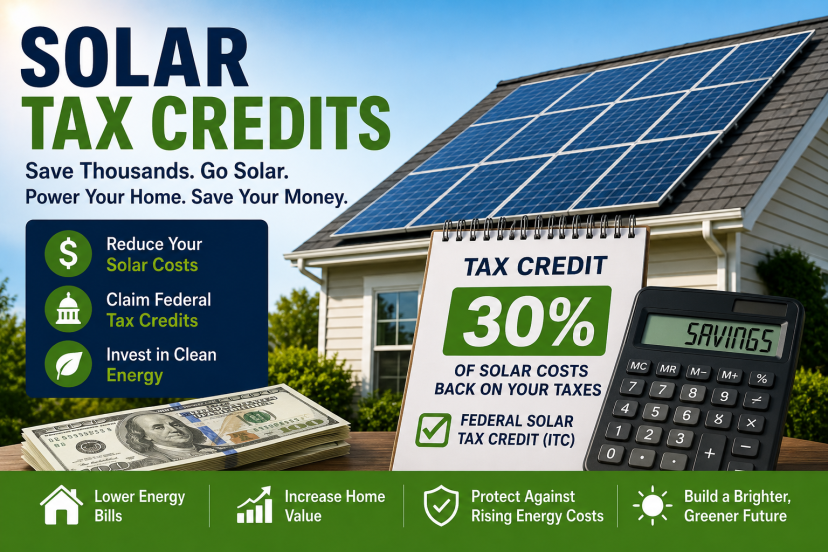
Rising electricity prices have many U.S. homeowners looking for smarter ways to reduce monthly utility bills while increasing their home’s value. One of the biggest financial advantages of installing solar panels is access to solar tax credits, which can significantly lower the upfront cost of going solar.
Whether you’re planning a new roof, replacing an aging one, or considering rooftop solar for the first time, understanding available tax incentives can help you make a more informed investment. Combined with modern solar technology, state rebates, and utility programs, solar tax credits can make clean energy far more affordable than many homeowners realize.
⭐ Quick Answer: Solar Tax Credits
Solar tax credits reduce the amount of federal income tax you owe by allowing you to claim a percentage of eligible solar installation costs. Qualified homeowners may also combine federal incentives with state rebates, local utility incentives, and net metering programs to maximize long-term savings.
☀️ What Are Solar Tax Credits?
Solar tax credits are financial incentives that encourage homeowners to install renewable energy systems.
Rather than being a deduction, the federal solar incentive is a tax credit, meaning it directly reduces the amount of federal income tax you owe.
Eligible expenses often include:
- Solar panels
- Solar roofing products
- Inverters
- Mounting hardware
- Wiring and electrical equipment
- Battery storage (when eligible)
- Installation labor
- Permitting fees
- Inspection costs
Because these expenses can add up quickly, the savings from solar tax credits may reduce the overall cost of your solar project by thousands of dollars.
💰 Understanding The Federal Solar Tax Credit
The primary federal incentive is commonly known as the Federal Solar Investment Tax Credit (ITC).

This program allows qualified homeowners to claim a percentage of eligible installation costs on their federal income taxes.
The credit applies to:
- Primary residences
- Secondary homes (in many situations)
- Existing homes
- Newly constructed homes
Rental properties generally have different eligibility rules.
One of the biggest advantages is that there is no maximum dollar limit on the amount of eligible installation costs that may qualify under current federal guidelines.
Always verify current IRS requirements before filing your taxes, as tax laws and program timelines may change.
🏡 Why Solar Tax Credits Matter For Homeowners
Installing solar is a long-term investment.
Without incentives, the upfront cost can feel overwhelming.
Fortunately, solar tax credits help make renewable energy more affordable while increasing your home’s value.
Benefits include:
- Lower installation costs
- Faster return on investment
- Reduced monthly electric bills
- Increased home resale value
- Lower carbon footprint
- Greater energy independence
- Protection against rising utility rates
Many homeowners discover that combining tax credits with lower utility bills significantly shortens the system’s payback period.
⚡ Eligible Solar Equipment
Many homeowners assume only solar panels qualify.
In reality, several components may be eligible.
Solar Equipment That May Qualify
| Equipment | Usually Eligible |
|---|---|
| Solar Panels | Yes |
| Solar Inverters | Yes |
| Mounting Hardware | Yes |
| Electrical Wiring | Yes |
| Labor Costs | Yes |
| Battery Storage | Often Eligible |
| Monitoring Equipment | Usually Included |
| Solar Roof Tiles | Yes |
Always ask your installer which components qualify under current federal guidelines.
🌞 Solar Roofing And Solar Tax Credits
If you’re replacing your roof while installing solar, understanding which expenses qualify is important.
Generally:
Usually Eligible
- Solar roofing tiles
- Integrated solar shingles
- Solar mounting systems
- Electrical components
Usually Not Eligible
- Standard asphalt shingles
- General roof repairs
- Cosmetic roofing upgrades
However, integrated solar roofing systems may qualify differently than traditional roofing materials.
Discuss your project with both your installer and tax professional before making purchasing decisions.
📊 Average Solar Installation Costs
Solar pricing depends on several factors:
- Home size
- Roof size
- Panel efficiency
- Roof complexity
- Local labor rates
- Battery storage
- Utility requirements
Typical U.S. installation costs before incentives:
| System Size | Average Cost |
|---|---|
| 4 kW | $10,000–$14,000 |
| 6 kW | $15,000–$22,000 |
| 8 kW | $20,000–$28,000 |
| 10 kW | $25,000–$35,000 |
After applying solar tax credits, many homeowners substantially reduce these upfront costs.
🌎 Additional Solar Incentives Beyond Federal Credits
Many states offer additional programs that can further reduce costs.
Possible incentives include:
- State tax credits
- Cash rebates
- Utility company rebates
- Property tax exemptions
- Sales tax exemptions
- Battery storage incentives
- Renewable Energy Certificates (RECs)
- Net metering programs
Some homeowners combine several incentives for even greater savings.
Because every state is different, check local energy offices or utility providers for available programs.
🔋 Energy Star, Net Metering, And Long-Term Savings
Although Energy Star does not certify solar panels, Energy Star-rated homes often pair well with solar systems because they consume less electricity overall.
Combining solar with energy-efficient upgrades can maximize savings.
Examples include:
- Better insulation
- High-efficiency HVAC systems
- Energy Star windows
- LED lighting
- Smart thermostats
Many utility companies also offer net metering, allowing homeowners to receive credit for excess electricity sent back to the power grid.

This further improves long-term financial returns.
🏠 Roof Compatibility Before Installing Solar
Not every roof is immediately ready for solar.
Before installation, evaluate:
Roof Age
Older roofs may need replacement first.
Roof Condition
Inspect for:
- Missing shingles
- Water damage
- Structural concerns
- Damaged flashing
Roof Orientation
South-facing roofs generally receive the most sunlight, although east- and west-facing roofs can still perform well.
Roof Pitch
Moderate slopes often provide ideal solar production.
Planning ahead helps avoid costly panel removal if roofing work becomes necessary later.
🛠️ Maintaining Your Solar Investment
Solar panels require surprisingly little maintenance.
To protect your investment:

- Remove leaves and debris.
- Clean panels when heavy dirt accumulates.
- Trim nearby trees.
- Schedule periodic inspections.
- Monitor energy production through your solar app.
- Inspect roofing after severe storms.
Most manufacturers offer equipment warranties ranging from 20 to 25 years, while many installers provide workmanship warranties covering installation quality.
📈 Solar Tax Credits Vs Other Home Improvement Incentives
| Incentive | Purpose | Potential Savings |
|---|---|---|
| Solar Tax Credits | Renewable Energy | High |
| Energy-Efficient Home Credits | HVAC, Windows, Insulation | Moderate |
| Utility Rebates | Energy Upgrades | Varies |
| State Solar Rebates | Solar Installation | Moderate To High |
| Net Metering | Ongoing Electric Bill Savings | Long-Term |
Unlike many rebates, solar tax credits can provide substantial savings immediately through your federal tax return if you qualify.
👷 When To Call A Professional
Contact a certified solar installer or licensed roofing contractor if:
- Your roof is over 15 years old.
- You’re planning a roof replacement.
- You want integrated solar roofing.
- You’re considering battery storage.
- Your roof has shading issues.
- You need help determining incentive eligibility.
- You want an accurate solar production estimate.
Professional evaluations help ensure your system is safe, efficient, and optimized for maximum financial return.
❓ FAQs: Solar Tax Credits
1. What are solar tax credits?
Solar tax credits reduce your federal income tax liability by allowing eligible homeowners to claim qualified solar installation expenses.
2. Who qualifies for solar tax credits?
Most homeowners who purchase and install qualifying solar energy systems on eligible U.S. properties and owe federal income tax may qualify.
3. Can I combine federal solar tax credits with state incentives?
Yes. Many homeowners combine federal tax credits with state rebates, utility incentives, and net metering programs.
4. Do battery storage systems qualify?
Many battery storage systems installed with qualifying solar systems are eligible under current federal rules, subject to program requirements.
5. Do solar tax credits cover roof replacement?
Generally, standard roof replacement costs are not eligible unless they involve qualifying solar roofing products or integrated solar technologies.
6. How long do solar panels last?
Most high-quality solar panels continue producing electricity for 25 to 30 years or more with proper maintenance.
7. Is solar still worth it after incentives?
For many homeowners, yes. Lower utility bills, increased home value, available incentives, and long equipment lifespans often make solar a worthwhile long-term investment.
🎯 Final Thoughts On Solar Tax Credits
Solar tax credits remain one of the most valuable incentives available to homeowners looking to invest in clean, renewable energy. When combined with state rebates, utility incentives, net metering, and modern high-efficiency solar technology, these programs can dramatically reduce installation costs while delivering decades of energy savings.
If you’re planning a new roof or considering rooftop solar, now is an excellent time to request quotes from certified installers. Comparing multiple proposals, reviewing available incentives, and ensuring your roof is solar-ready can help you maximize your return on investment and enjoy a more energy-efficient, resilient home for years to come.
Disclaimer: Tax laws, incentive programs, rebate availability, and installation costs vary by state and may change over time. Always consult a licensed solar installer and qualified tax professional to determine your eligibility and maximize available savings.
Explore more:
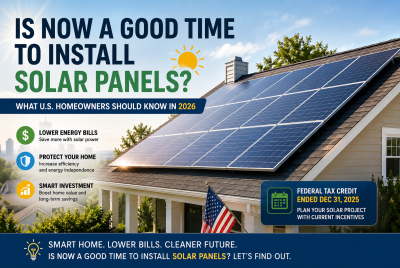
- Is Now A Good Time To Install Solar Panels?
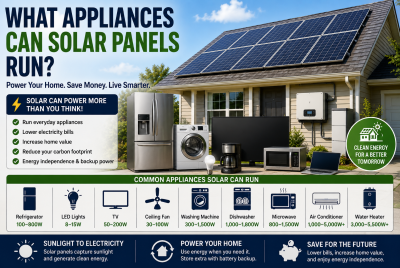
- What Appliances Can Solar Panels Run?
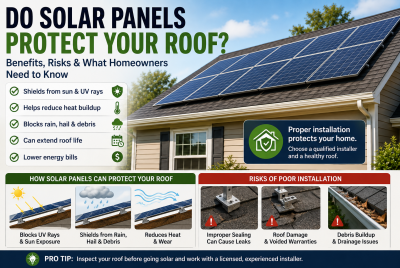
- Do Solar Panels Protect Your Roof?