Why Are My Solar Panels Producing Less Power? 15 Common Causes And Smart Fixes
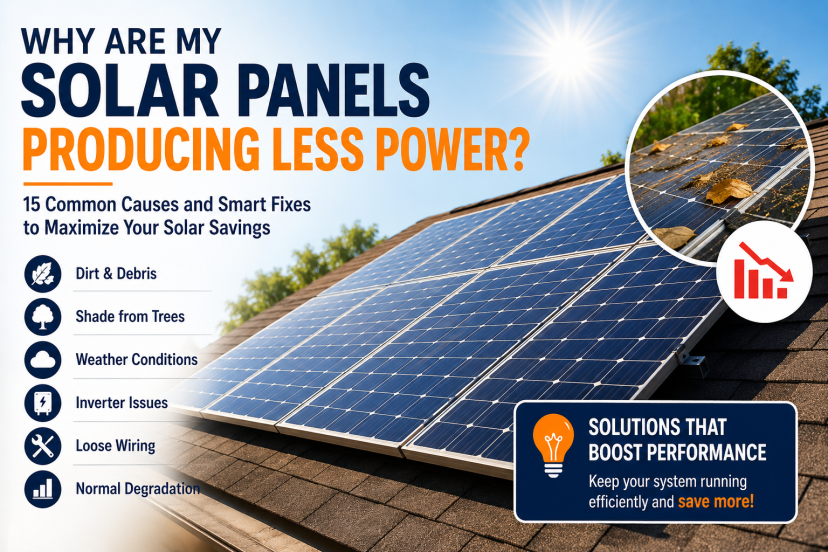
Solar panels are one of the best investments homeowners can make to reduce electricity bills and increase energy independence. But what happens when your system suddenly isn’t producing as much energy as expected? If you’ve been asking, Why are my solar panels producing less power? you’re not alone. Nearly every solar system experiences some fluctuation in production over time. While a slight seasonal drop is completely normal, significant decreases may point to shading, dirt buildup, equipment problems, weather conditions, or even roof-related issues.
The good news is that many causes are easy to identify—and some can even be fixed without expensive repairs.
In this guide, you’ll learn why solar panels lose efficiency, how to troubleshoot lower energy production, when to call a professional, and how to keep your system operating efficiently for decades.
⭐ Quick Answer
If you’re wondering why are my solar panels producing less power, the most common reasons include dirty panels, temporary shading, cloudy weather, aging equipment, inverter problems, loose electrical connections, roof issues, or natural panel degradation. Most systems lose only about 0.3%–0.8% of efficiency per year, so a sudden large drop usually deserves investigation.
☀️ Why Are My Solar Panels Producing Less Power?
Solar panels rarely stop working completely.
Instead, production usually declines gradually or temporarily because of environmental or equipment-related factors.
Here are the most common reasons.
Dirt And Debris
Dust, pollen, leaves, bird droppings, and air pollution can block sunlight.
Even a thin layer of dirt reduces the amount of sunlight reaching solar cells.
Common buildup includes:
- 🍂 Leaves
- 🐦 Bird droppings
- 🌿 Pollen
- 🌫 Dust
- 🌾 Tree debris
In dusty regions of the Southwest, cleaning panels periodically may noticeably improve production.
Tree Growth And New Shade
Your roof may have received full sunlight when the system was installed.
Years later:
- Trees grow taller
- Neighboring landscaping changes
- New construction creates shade
Even partial shading on one panel can reduce output across multiple panels depending on system design.
Trim trees whenever possible.
Cloudy Or Stormy Weather
Weather affects every solar system.
Production commonly decreases during:
- Heavy clouds
- Rain
- Snow
- Smoke
- Wildfire haze
- Fog
Fortunately, this reduction is usually temporary.
Modern solar panels still produce electricity on cloudy days—they simply generate less.
🔋 Why Are My Solar Panels Producing Less Power During Summer?
Many homeowners assume summer always produces maximum power.
Surprisingly, extremely high temperatures reduce panel efficiency.
Solar panels work best around 77°F (25°C).
When panel temperatures climb well above that, efficiency begins dropping.
This explains why:
- Mild sunny spring days often outperform extremely hot afternoons.
- Cool, clear days sometimes generate more electricity than scorching summer days.
Proper airflow beneath rooftop panels helps reduce overheating.
🏠 Roof Issues Can Reduce Solar Production
Your roof also affects solar performance.
Potential problems include:
- Loose mounting hardware
- Roof movement
- Water intrusion
- Structural settling
- Roof repairs affecting wiring
If your roof needs replacement, production may decrease until the system is reinstalled correctly.
A healthy roof protects both your home and your solar investment.
⚡ Inverter Problems
The inverter converts solar electricity into usable household power.
If the inverter develops a problem, production may fall dramatically.
Warning signs include:
- Error codes
- Flashing warning lights
- System offline alerts
- Mobile app notifications
- Unusually low daily production
Fortunately, many modern systems automatically notify homeowners when inverter issues occur.
🔧 Loose Wiring Or Electrical Problems
Electrical components naturally age.
Possible issues include:
- Loose connectors
- Corroded wiring
- Damaged conduit
- Rodent damage
- Blown fuses
- Breaker problems
These problems should always be diagnosed by qualified solar professionals.

🌡 Natural Solar Panel Degradation
Many homeowners worry their panels are “wearing out.”
Fortunately, degradation happens slowly.
Typical solar panel degradation:
| Years Installed | Average Remaining Output |
|---|---|
| New | 100% |
| 10 Years | 96–98% |
| 20 Years | 92–95% |
| 25 Years | 88–92% |
| 30 Years | Around 85–90% |
Most premium manufacturers guarantee at least 80–90% production after 25 years.
This gradual decline is completely normal.
💰 Could Your Energy Bills Increase Even If Solar Production Doesn’t Drop?
Yes.
Sometimes homeowners believe their panels produce less electricity when the real issue is increased electricity usage.
Examples include:
- New HVAC systems
- Electric vehicles
- Hot tubs
- Pool pumps
- Space heaters
- More people living in the home
Compare both:
- Solar production
- Household electricity consumption
Many monitoring apps display both values.

📊 Signs Your Solar Panels Need Attention
- Watch for these warning signs:
- Large month-to-month production drops
- Frequent inverter errors
- Physical panel damage
- Water leaks around roof mounts
- Cracked glass
- Unexpectedly high utility bills
- Monitoring app alerts
🧹 Maintenance Tips To Improve Solar Panel Performance
Routine maintenance helps maximize long-term savings.
Recommended Maintenance Checklist
- ✔ Inspect panels several times each year.
- ✔ Remove leaves when safe.
- ✔ Trim nearby tree branches.
- ✔ Watch for bird nests.
- ✔ Check inverter status lights.
- ✔ Review monitoring reports monthly.
- ✔ Schedule professional inspections every few years.
Avoid walking directly on rooftop panels.
💵 How Lower Solar Production Affects Long-Term Savings
Even small efficiency losses can reduce annual savings.
Example:
| Production Loss | Possible Annual Impact* |
|---|---|
| 5% | Small increase in utility costs |
| 10% | Noticeable reduction in savings |
| 20% | Significant financial impact |
*Actual savings depend on electricity rates, system size, location, and energy usage.
Keeping panels clean and operating properly helps maximize your return on investment.
🌎 U.S. Incentives Can Help Offset Repairs Or Upgrades
If your system needs replacement equipment or you’re considering expanding your solar array, several incentives may help reduce costs.
Depending on your location, homeowners may qualify for:
- 🇺🇸 Federal Solar Tax Credit (Residential Clean Energy Credit) for eligible solar installations.
- ⚡ State solar rebate programs.
- 💵 Utility company incentives.
- 🔋 Battery storage rebates in some states.
- 🌱 Net metering programs where available.
Check your state energy office and local utility for current programs.
🛡 Understanding Solar Warranties
Most residential systems include multiple warranties.
| Warranty Type | Typical Coverage |
|---|---|
| Product Warranty | 10–25 Years |
| Performance Warranty | 25–30 Years |
| Inverter Warranty | 10–25 Years |
| Workmanship Warranty | 5–25 Years |
If production suddenly drops while your equipment remains under warranty, contact your installer before paying for repairs.
⚖️ Should You Clean Solar Panels Yourself?
| DIY Cleaning | Professional Cleaning |
|---|---|
| Lower Cost | More Thorough |
| Safe Only On Easily Accessible Panels | Safer For Steep Roofs |
| Suitable For Light Dirt | Better For Heavy Debris |
| Requires Care To Avoid Damage | Includes Inspection |
Use only soft water, gentle cleaning tools, and manufacturer-approved methods.
Avoid pressure washers or abrasive cleaners.
👷 When To Call A Professional
Contact a certified solar installer or roofing professional if you notice:
- Sudden production losses greater than expected.
- Cracked or damaged panels.
- Roof leaks near mounting points.
- Persistent inverter errors.
- Burn marks or damaged wiring.
- Storm or hail damage.
- Loose mounting hardware.
- Animal damage beneath the array.
A professional inspection can identify electrical, structural, or roofing issues that aren’t safe to diagnose yourself.
❓ Frequently Asked Questions
1. Why are my solar panels producing less power than last year?
Seasonal weather differences, dirt buildup, new shade, equipment aging, or increased household energy use are common reasons.
2. How much power loss is normal each year?
Most modern panels lose only about 0.3%–0.8% of output annually.
3. Do dirty solar panels really reduce efficiency?
Yes. Dirt, pollen, leaves, and bird droppings can noticeably reduce energy production, especially if buildup is significant.
4. Can extreme heat reduce solar panel efficiency?
Yes. Solar panels generate electricity from sunlight, but excessive heat slightly reduces their efficiency.
5. How often should solar panels be inspected?
Most homeowners benefit from a visual inspection several times a year and a professional inspection every few years or after severe storms.
6. Can roof problems affect solar performance?
Yes. Roof movement, leaks, damaged mounts, or structural issues can impact panel alignment, wiring, and overall system performance.
7. When should I replace my solar panels?
Most quality solar panels continue producing useful electricity for 25–30 years or longer. Replacement is usually only necessary if production drops significantly, panels become damaged, or newer technology offers a worthwhile upgrade.
🎯 Final Thoughts
If you’ve been wondering why are my solar panels producing less power, remember that small fluctuations are normal, but significant or sudden drops deserve attention.
Regular inspections, proper cleaning, routine maintenance, and monitoring your system can help protect your investment and keep energy production high for decades. A well-maintained solar system not only lowers electricity bills but also supports a more energy-efficient, resilient home.
If you suspect your roof or solar equipment is affecting performance, consider requesting a professional inspection or roof assessment. Catching minor issues early can prevent costly repairs and help you get the most from your solar investment.
Disclaimer: Solar production, equipment costs, tax incentives, rebates, and warranty terms vary by manufacturer, utility provider, and location. Always consult a licensed solar installer or roofing professional before making repair or upgrade decisions.
 Explore more:
- How Much Weight Do Solar Panels Add To A Roof?
- Eco Friendly Roofing Solutions
- South-Facing vs West-Facing Roofs For Solar Power