Are Portable Power Stations Worth Buying? A Complete Homeowner’s Guide
Power outages, rising electricity costs, camping trips, and emergency preparedness have made portable power stations more popular than ever. But before investing hundreds—or even thousands—of dollars, many homeowners ask the same question: Are portable power stations worth buying?
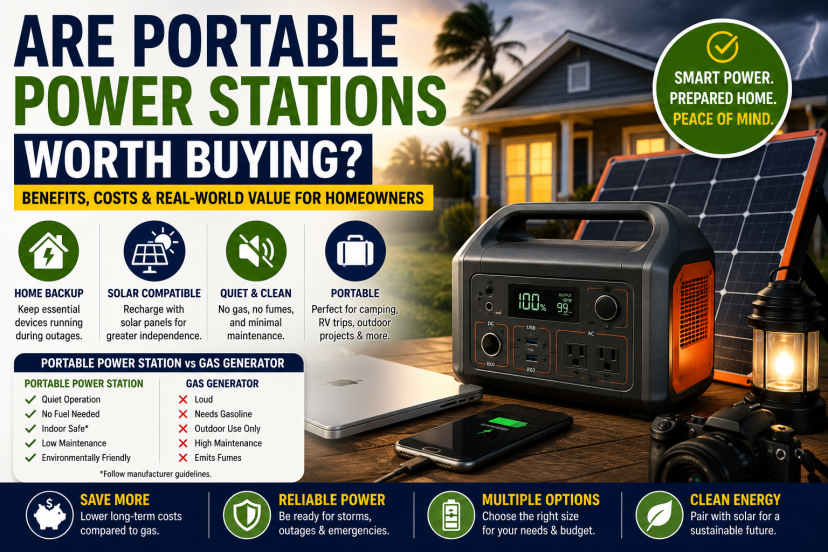
For many households, the answer is yes. Portable power stations offer quiet, clean, rechargeable backup power that can keep essential devices running during outages and support outdoor adventures without the noise or fumes of a traditional gas generator. They also pair well with portable solar panels, making them an attractive option for homeowners looking to create a more energy-efficient and resilient home.
However, they’re not the perfect solution for everyone. Choosing the right capacity, battery type, and charging method is essential if you want the best value for your money.
In this guide, you’ll learn when portable power stations make sense, how they compare with generators, expected costs, long-term savings, and how to choose the right model for your needs.
⭐ Quick Answer: Are Portable Power Stations Worth Buying?
If you’re wondering are portable power stations worth buying, the answer is yes for many homeowners. They provide clean, quiet backup electricity for electronics, appliances, camping, and emergencies. They’re especially valuable when paired with solar panels, although they typically cannot power an entire home like a standby generator.
Key Takeaways
Most likely cause: Portable power stations are most useful when you need quiet, rechargeable backup power for essential electronics, small appliances, camping, or short-term outages without relying on gasoline.
Usually serious? No. Deciding whether portable power stations are worth buying is mainly about matching the battery capacity and output to your actual power needs. The biggest risk is buying a unit that is too small for the appliances you expect it to run.
First thing to check: Add up the wattage of the devices and appliances you want to power, then estimate how many hours you’ll need to run them. Also check surge requirements for equipment such as refrigerators and pumps.
Best solution: Choose a properly sized power station with a long-lasting battery chemistry, sufficient AC output, multiple charging options, and solar compatibility. For many households, it can provide a practical middle ground between having no backup power and investing in a larger generator or whole-home system.
🔋 Are Portable Power Stations Worth Buying?
Portable power stations continue growing in popularity because they solve several common homeowner problems.
They offer:
- Quiet operation
- Zero fuel storage
- Rechargeable batteries
- Indoor-safe operation
- Solar charging compatibility
- Low maintenance
For many families, they provide peace of mind during short-term power outages while supporting everyday convenience.
🏠 What Is A Portable Power Station?
A portable power station is a rechargeable battery system that stores electricity for later use.
Unlike gasoline generators, portable power stations:
- Produce no exhaust fumes
- Require no gasoline or diesel
- Operate quietly
- Can often be used indoors
- Recharge from wall outlets, vehicles, or solar panels
They typically include multiple output options, such as:
- AC outlets
- USB ports
- USB-C ports
- 12-volt vehicle outlets
Some larger models also support RVs and small household appliances.
☀️ Portable Power Stations And Solar Panels
One of the biggest advantages is compatibility with solar charging.
Many modern power stations can recharge using portable solar panels.
Benefits include:
- Renewable energy
- Lower electricity costs
- Greater energy independence
- Useful during extended outages
- Ideal for off-grid camping
Solar charging is slower than wall charging but provides continuous energy when sunlight is available.
💰 How Much Do Portable Power Stations Cost?
Pricing varies based on battery capacity, inverter size, and features.
Typical price ranges include:
| Battery Capacity | Estimated Price |
|---|---|
| 200–300 Wh | $150–$300 |
| 500–700 Wh | $350–$700 |
| 1,000 Wh | $700–$1,200 |
| 2,000+ Wh | $1,500–$3,000+ |
Higher-capacity models can power larger appliances for longer periods.
⚡ What Can A Portable Power Station Run?
The answer depends on battery capacity and inverter output.
Many models can power:
- Smartphones
- Laptops
- Wi-Fi routers
- LED lights
- CPAP machines
- Televisions
- Mini refrigerators
- Fans
- Small kitchen appliances
Very large appliances such as central air conditioners, electric water heaters, and electric dryers usually require much larger backup power systems.
⚖️ Portable Power Station Vs Gas Generator
Both options provide backup electricity but serve different purposes.
| Portable Power Station | Gas Generator |
|---|---|
| Quiet Operation | Louder |
| No Fuel Required | Requires Gasoline |
| Indoor Safe (Follow Manufacturer Instructions) | Outdoor Use Only |
| Minimal Maintenance | Regular Engine Maintenance |
| Solar Charging Available | No Solar Charging |
| Lower Power Output | Higher Power Output |
Homeowners who value quiet, clean energy often prefer portable power stations for everyday use and short outages.
🌎 Environmental Benefits
Portable power stations offer several environmental advantages.
They:
- Produce no direct emissions during use.
- Reduce dependence on fossil fuels.
- Pair well with solar energy.
- Create less noise pollution.
- Require no gasoline storage.
These benefits make them attractive for environmentally conscious homeowners.
📈 Long-Term Savings
While portable power stations require an upfront investment, they may reduce costs over time by:
- Lowering fuel expenses
- Reducing generator maintenance
- Supporting solar charging
- Providing emergency backup
- Extending the usefulness of portable solar panels
For homeowners with existing rooftop or portable solar systems, they can become a valuable part of an overall energy strategy.
🛠 Choosing The Right Size
Choosing the correct capacity is essential.
Consider:
- Number of devices
- Appliance wattage
- Desired runtime
- Charging speed
- Future expansion
- Solar compatibility
A larger battery usually provides longer backup time but also increases weight and cost.
🧰 Maintenance Tips
Portable power stations require very little maintenance.
Recommended practices include:
- Recharge the battery every few months if stored.
- Keep the unit in a cool, dry location.
- Avoid extreme temperatures.
- Follow manufacturer charging recommendations.
- Inspect cables periodically.
- Update firmware if applicable.
Lithium iron phosphate (LiFePO₄) batteries often provide longer service life than older lithium-ion chemistries.
🛡 Warranty Considerations
Before purchasing, compare warranty coverage.

Typical warranties include:
| Component | Typical Coverage |
|---|---|
| Battery | 3–5 Years |
| Electronics | 2–5 Years |
| Manufacturer Support | Varies |
Premium brands often offer longer warranties and better customer support.
💵 Incentives And Solar Integration
Portable power stations alone generally do not qualify for the Residential Clean Energy Credit. However, certain permanently installed battery storage systems and qualifying residential solar installations may be eligible under current U.S. tax rules.
Depending on your location, you may also benefit from:
- State energy incentives
- Utility rebate programs
- Solar installation incentives
- Battery storage rebates for eligible systems
Check current federal, state, and local programs before making a purchase.
🏡 Are Portable Power Stations Good For Homeowners?
Many homeowners find them useful for:
- Storm preparedness
- Camping
- Outdoor projects
- Power tool operation
- Home office backup
- Medical equipment support
- RV travel
Although they won’t replace a whole-home standby generator, they provide flexible backup power for many everyday situations.
👷 When To Call A Professional
Contact a certified solar installer or licensed electrician if:
- You want to integrate battery backup with rooftop solar.
- You’re considering a whole-home battery system.
- You need backup power for essential circuits.
- Your electrical panel requires upgrades.
- You’re comparing permanent battery storage options.
- You plan to install a home energy management system.
Professional guidance ensures your backup power solution matches your home’s energy needs safely and efficiently.
❓ FAQs: Are Portable Power Stations Worth Buying?
1. Are portable power stations worth buying for home emergencies?
Yes. They provide quiet, rechargeable backup power for many essential devices during short-term outages.

2. Can portable power stations run a refrigerator?
Many medium and large models can power an energy-efficient refrigerator for several hours, depending on battery capacity and the refrigerator’s power consumption.
3. Can I charge a portable power station with solar panels?
Yes. Many models support compatible portable solar panels, allowing you to recharge using sunlight.
4. Are portable power stations better than generators?
It depends on your needs. Portable power stations are quieter, cleaner, and easier to maintain, while generators typically provide more continuous power for large appliances.
5. How long do portable power stations last?
Quality lithium battery systems often last several years and may provide thousands of charging cycles, depending on battery chemistry and usage.
6. Can portable power stations power an entire house?
No. Most portable models are designed for essential devices and small appliances rather than whole-home backup.
7. What battery type is best?
Many newer portable power stations use lithium iron phosphate (LiFePO₄) batteries because they typically offer longer lifespan, improved safety, and more charging cycles.
📌 Final Thoughts
If you’ve been asking are portable power stations worth buying, the answer is yes for many homeowners seeking reliable, portable, and clean backup power. They’re ideal for emergency preparedness, camping, remote work, outdoor projects, and pairing with solar panels for greater energy independence.
While they may not replace a whole-home standby generator, portable power stations provide an excellent balance of convenience, quiet operation, and long-term value. Before purchasing, compare battery capacity, output power, charging options, and warranty coverage to find the model that best matches your home’s energy needs and future plans.
Disclaimer: Portable power station performance, battery life, pricing, warranties, tax incentives, rebates, and charging capabilities vary by manufacturer, model, and location. Always follow the manufacturer’s safety instructions and consult a qualified solar installer or electrician before integrating backup power equipment with your home’s electrical system.
 Explore more:
- How Much Roof Space Do Solar Panels Need?
- Best Solar Panels For Small Homes With Limited Roof Space
- Solar Roofing Materials Residential