How Much Roof Space Do Solar Panels Need? A Homeowner’s Complete Guide
If you’ve been thinking about switching to solar, one of the first questions you’re probably asking is: How much roof space do solar panels need? The answer depends on your energy usage, the efficiency of the panels you choose, and your roof’s layout—not just its total size.
For many U.S. homeowners, installing solar panels is one of the smartest long-term investments for lowering electricity bills, increasing home value, and improving energy independence. Even if your roof isn’t especially large, modern high-efficiency solar panels can often generate plenty of electricity with less space than many people expect.
Whether you’re planning a new roof, replacing an aging one, or simply exploring renewable energy, understanding your roof’s solar potential is an important first step.
⭐ Quick Answer: How Much Roof Space Do Solar Panels Need
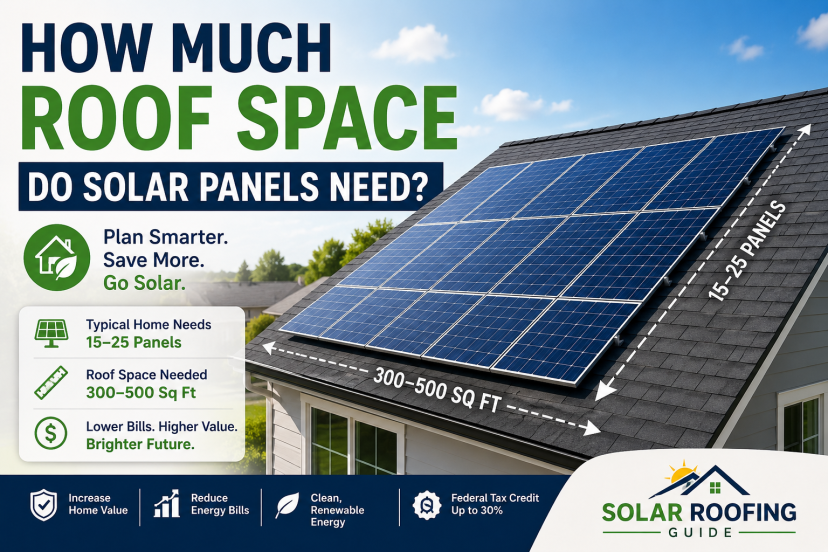
A typical residential solar panel requires about 17–21 square feet of roof space. Most U.S. homes need 15–25 solar panels, meaning the average installation requires approximately 300–500 square feet of usable roof area. Homes with high-efficiency panels may require even less space to produce the same amount of electricity.
Key Takeaways
Most likely cause: The amount of roof space required depends mainly on your household’s electricity usage, solar panel wattage and efficiency, and how much of your roof is actually usable for installation.
Usually serious? No. Limited roof space doesn’t automatically mean solar won’t work for your home. Higher-efficiency panels can often produce more electricity using fewer panels and less roof area.
First thing to check: Estimate your annual electricity consumption, then measure the usable, unshaded portions of your roof. Remember to account for chimneys, vents, skylights, roof shape, and required setbacks.
Best solution: If you’re wondering how much roof space do solar panels need, most residential systems require roughly 300–500 square feet of usable roof area. A professional solar assessment can determine the ideal panel size, number, placement, and system capacity for your specific home.
☀️ Why Roof Space Matters For Solar Panels
When asking how much roof space do solar panels need, it’s important to understand that installers evaluate more than just square footage.
Several factors determine whether your roof can support enough panels to meet your energy needs:
- Your Annual Electricity Usage
- Panel Efficiency
- Roof Orientation
- Roof Pitch
- Shade From Trees Or Buildings
- Available Unobstructed Roof Area
- Local Climate
For example, a family using 12,000 kWh annually generally requires a larger solar system than a household using only 6,000 kWh.
🏡 How Much Roof Space Do Solar Panels Need By System Size
The easiest way to estimate your required roof area is by system size.

| Solar System Size | Approximate Panels | Roof Space Needed |
|---|---|---|
| 4 kW | 10–12 | 180–250 sq ft |
| 6 kW | 15–18 | 270–360 sq ft |
| 8 kW | 20–24 | 360–500 sq ft |
| 10 kW | 25–30 | 450–650 sq ft |
| 12 kW | 30–36 | 550–750 sq ft |
These estimates assume standard residential solar panels measuring roughly 65 x 39 inches.
High-efficiency models can reduce the required roof area significantly.
🌞 Roof Orientation And Sunlight Matter More Than Size
Many homeowners worry about roof size when they should also consider sunlight.
The best roofs typically face:
- South
- Southwest
- Southeast
East- and west-facing roofs can still perform well but usually generate slightly less electricity.
North-facing roofs often produce less energy, although they may still be worthwhile in some locations.
A roof with excellent sun exposure can outperform a much larger roof that’s shaded throughout the day.
📏 How Much Roof Space Do Solar Panels Need On Different Roof Types
Different roofing materials work well with solar panels.
Asphalt Shingle Roofs
The easiest and most common roofing material for residential solar installation.
Metal Roofs
Excellent for solar because installers can often attach panels without drilling through the roof.
Tile Roofs
Can support solar but installation usually takes longer and costs slightly more.
Standing Seam Metal Roofs
Often considered one of the best roofing options for solar because mounting systems are simple and durable.
Flat Roofs
Panels are mounted on angled racks to maximize sunlight exposure.
⚡ How Panel Efficiency Affects Roof Space
Not all solar panels produce the same amount of electricity.
Typical efficiency ranges include:
- Standard Panels: 18–20%
- Premium Panels: 21–23%+
Higher-efficiency panels:
- Produce more power per square foot
- Require fewer panels
- Save roof space
- Work well on smaller homes
Although premium panels cost more upfront, they can make solar possible on roofs with limited available space.
💰 Costs Of Installing Solar Panels
While homeowners often focus on how much roof space do solar panels need, cost is another major consideration.
Average residential solar installation costs before incentives:
| System Size | Estimated Cost |
|---|---|
| 4 kW | $10,000–$14,000 |
| 6 kW | $15,000–$21,000 |
| 8 kW | $20,000–$28,000 |
| 10 kW | $25,000–$35,000 |
Costs vary depending on:
- Equipment quality
- Roof complexity
- Local labor rates
- Electrical upgrades
- Battery storage
Fortunately, incentives can significantly reduce these costs.
💵 Federal And State Solar Incentives
One reason many homeowners decide to install solar is financial assistance.
Available incentives may include:
- Federal Solar Tax Credit (Residential Clean Energy Credit)
- State tax credits
- Utility rebates
- Net metering programs
- Local incentives
These programs can lower installation costs substantially, although availability varies by state.
Always verify current incentive programs before purchasing.
🔧 Roof Condition Before Installing Solar
Solar panels often remain in place for 25–30 years.
Before installation, inspect your roof for:
- Missing shingles
- Leaks
- Soft decking
- Structural damage
- Aging roofing materials
If your roof is nearing replacement age, replacing it first often saves money by avoiding future panel removal and reinstallation.

🛠️ Solar Panel Maintenance Requirements
One benefit of residential solar systems is minimal maintenance.
Most homeowners only need to:
- Inspect panels annually
- Remove leaves or heavy debris
- Keep nearby trees trimmed
- Monitor production through the solar app
- Schedule professional inspections every few years
Rain naturally washes away much of the accumulated dirt in many regions.
📈 Long-Term Savings And Home Value
Understanding how much roof space do solar panels need helps homeowners estimate potential savings.
Benefits often include:
- Lower monthly electric bills
- Protection against rising utility rates
- Increased home value
- Reduced carbon emissions
- Greater energy independence
Many systems pay for themselves over time through utility savings, especially in areas with high electricity prices.
🔄 Solar Panels Vs Larger Roofs
Bigger roofs aren’t always better.
Consider this comparison:
| Smaller Efficient Roof | Larger Less Efficient Roof |
|---|---|
| High-efficiency panels | Older low-efficiency panels |
| Better sunlight | Partial shade |
| South-facing | North-facing |
| New roof | Aging roof |
In many cases, the smaller, sunnier roof generates more electricity.
Roof quality and sunlight often matter more than total square footage.

✅ Tips To Maximize Limited Roof Space
If your roof isn’t very large, you can still improve solar production.
Consider:
- Choose High-Efficiency Panels
- Remove Shade Trees When Appropriate
- Replace Old Panels With Newer Models
- Optimize Panel Placement
- Consider Battery Storage
- Improve Home Energy Efficiency
- Upgrade To Energy Star® Appliances
Lower household energy usage means you may need fewer panels.
🏠 Roof Warranties And Solar Installations
Many homeowners worry that installing solar will void their roof warranty.
Generally:
- Professional installations typically preserve warranties.
- Certified installers follow manufacturer guidelines.
- Roof penetrations are carefully sealed.
- Workmanship warranties often accompany installation.
Always review both roofing and solar warranties before signing a contract.
👷 When To Call A Professional
Contact a certified solar installer or roofing contractor if:
- Your roof is over 15–20 years old.
- You notice leaks or structural issues.
- Trees heavily shade your roof.
- You’re unsure how much roof space do solar panels need for your home.
- You want an accurate production estimate.
- You’re comparing roofing replacement with solar installation.
Professional assessments include roof measurements, shading analysis, electrical evaluations, and projected energy production.
❓ Frequently Asked Questions
1. How much roof space do solar panels need for a 2,000-square-foot house?
Roof size doesn’t determine panel count. Energy usage does. Many homes of this size need about 18–24 panels, requiring approximately 350–500 square feet of usable roof area.
2. Can I install solar panels on a small roof?
Yes. High-efficiency panels allow many smaller roofs to generate significant electricity.
3. Do solar panels work on cloudy days?
Yes. They still produce electricity during cloudy weather, although output is lower than on sunny days.
4. What happens if my roof isn’t large enough?
You may install fewer panels, reduce electricity usage, choose higher-efficiency panels, or consider ground-mounted solar if your property allows.
5. Does roof angle affect solar production?
Yes. Proper roof pitch improves sunlight exposure and overall energy production.
6. Should I replace my roof before installing solar?
If your roof is approaching the end of its lifespan, replacing it first is often the most cost-effective option.
7. How long do residential solar panels last?
Most quality solar panels are designed to last 25–30 years, with many continuing to generate electricity beyond that period.
🎯 Final Thoughts On How Much Roof Space Do Solar Panels Need
Knowing how much roof space do solar panels need is one of the first steps toward planning a successful solar installation. Most U.S. homes require 300–500 square feet of usable roof space, but actual requirements depend on your electricity usage, roof layout, panel efficiency, and local sunlight conditions.
Even if your roof isn’t especially large, today’s high-efficiency solar panels make renewable energy possible for many homeowners. Pairing a healthy roof with a professionally designed solar system can reduce utility bills, increase property value, and provide decades of reliable clean energy.
If you’re considering solar, schedule a professional roof and solar assessment. You’ll receive a customized estimate based on your home’s unique roof, energy needs, and available incentives, helping you make an informed investment in your home’s future.
Disclaimer: Solar panel costs, energy production, tax credits, rebates, and installation requirements vary by location, utility provider, roof condition, and local regulations. Always consult a licensed solar installer or roofing professional before making installation decisions.
 Explore more:
- PV Panels On Flat Roof
- Best Solar Panels For Small Homes With Limited Roof Space
- Should I Buy Or Lease Solar Panels?