What Happens If A Solar Panel Breaks? 7 Things Every Homeowner Should Know
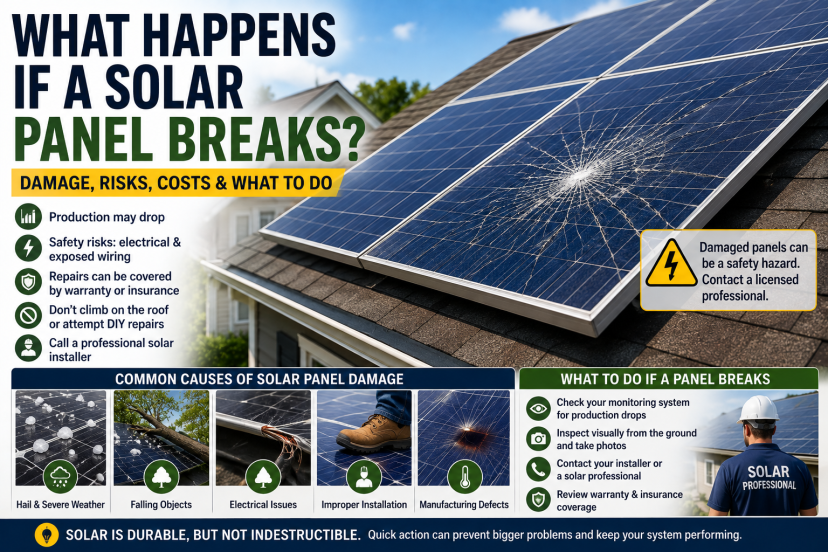
Solar panels are built to spend decades outdoors, but they’re not indestructible. Severe hail, falling tree limbs, extreme weather, electrical problems, installation damage, or equipment defects can occasionally cause a panel to fail. So, what happens if a solar panel breaks? In many cases, the immediate result is reduced solar production rather than the entire system suddenly stopping.
The bigger concern is determining exactly what broke. A visible crack in the glass, damaged wiring, a failed connector, internal cell damage, and a malfunctioning inverter can produce very different symptoms and safety concerns.
For U.S. homeowners, the best response is usually to monitor the system, stay off the roof, document visible damage from a safe location, and contact a qualified solar professional. Understanding warranties, homeowners insurance, repair options, and preventive maintenance can also help protect the long-term value of your solar investment.
☀️ Quick Answer: What Happens If A Solar Panel Breaks?
What happens if a solar panel breaks? The affected panel may produce less electricity or stop producing, while the rest of the solar array may continue operating depending on the system design and type of failure. Broken glass, exposed wiring, electrical faults, or storm damage can create safety concerns. Don’t attempt a DIY rooftop repair. Check your monitoring system, document the problem safely, and contact a qualified solar installer or electrician.
Key Takeaways
Most likely cause: Solar panel problems may result from severe weather, physical impact, electrical faults, manufacturing defects, damaged connections, or installation-related issues.
Usually serious? Not always. A single underperforming panel may only reduce system production, but shattered glass, exposed electrical components, overheating, or damaged wiring should be treated seriously.
First thing to check: Look at your solar monitoring system for unusual production drops or fault alerts, and visually inspect the array only from a safe ground-level location.
Best solution: If you’re wondering what happens if a solar panel breaks, avoid touching or repairing the equipment yourself. Contact a qualified solar professional to diagnose the problem and determine whether warranty, insurance, repair, or panel replacement applies.
🔍 1. Your Solar System May Produce Less Electricity
One of the first signs of a broken or malfunctioning solar panel can be a drop in electricity production.
However, how much production you lose depends on the system configuration and the nature of the failure.
Many modern residential systems use microinverters or power optimizers that provide panel-level operation or monitoring. A problem with one module may therefore be easier to identify and may have a more localized effect.
Traditional string-inverter systems operate differently, and faults within a string can affect production in different ways.
Don’t assume that one broken panel means the entire solar array is useless.
Instead, compare current system production with:
- Previous Production.
- Similar Days Or Seasons.
- Installer Estimates.
- Individual Panel Data, If Available.
- Monitoring-System Alerts.
Keep in mind that clouds, snow, shading, high temperatures, seasonal changes, and utility interruptions can also affect production.
⚡ 2. A Broken Panel Can Create An Electrical Safety Concern
When asking what happens if a solar panel breaks, it’s important to distinguish between poor performance and physical electrical damage.
Solar panels can continue producing DC electricity whenever sufficient sunlight reaches them. Turning off a household breaker doesn’t necessarily mean every part of the rooftop solar array is electrically inactive.
That’s one reason homeowners shouldn’t attempt DIY repairs.
Potential warning signs include:
- Exposed Or Damaged Wiring.
- Burn Marks.
- Melted Connectors.
- Electrical Arcing.
- Unusual Odors.
- Visible Shattered Glass.
- Inverter Fault Messages.
- Damaged Junction Boxes.
If you see serious physical damage after a storm, keep people away from the affected area and contact a qualified professional.
Never climb onto a wet, storm-damaged, or solar-equipped roof to investigate.
🪟 3. What Happens If The Solar Panel Glass Cracks?
Modern solar panels typically use durable tempered glass designed to withstand outdoor conditions, but severe impacts can still cause cracking.
A tiny crack isn’t necessarily the same as a completely shattered module.
Some damage may be visible, while microcracks in solar cells can be difficult to detect without professional testing.
A damaged module could potentially experience:
- Reduced Electricity Production.
- Moisture Intrusion.
- Electrical Insulation Problems.
- Accelerated Degradation.
- Hot Spots.
- Long-Term Reliability Issues.
Don’t apply sealant, tape, resin, or another DIY patch to cracked solar glass.
A temporary cosmetic repair may not restore the module’s electrical safety, weather resistance, or warranty status.
Have the panel professionally evaluated.
⛈️ 4. Can Hail Break Solar Panels?
Yes, although solar modules are designed and tested for outdoor weather exposure.
Solar panels sold for residential installations commonly undergo standardized mechanical and impact testing. However, exceptionally large or fast-moving hail can exceed the conditions a product was tested to withstand.
Hail damage may range from no visible damage to cracked glass or internal cell damage.
After a major hailstorm:
- Stay off the roof.
- Check the monitoring app for production changes.
- Look for visible damage from the ground.
- Photograph anything you can safely see.
- Contact your installer if you notice problems.
- Review homeowners insurance if storm damage is confirmed.
Remember that the same storm may also damage roofing shingles, flashing, gutters, siding, vents, and skylights.
A combined solar and roof inspection can make sense after severe weather.
🌳 5. Falling Trees And Debris Can Damage Solar Equipment
Hail isn’t the only physical threat.
Falling tree limbs, windblown debris, ice, and other objects can strike rooftop solar equipment.
A strong impact may damage:
- Panel Glass.
- Aluminum Frames.
- Mounting Hardware.
- Wiring.
- Roof Attachments.
- Microinverters Or Optimizers.
- Roofing Material Beneath The Array.
This is where solar damage can become a roofing issue.
If mounting equipment moves during an impact, roof penetrations or flashing could also be affected, potentially creating a path for water intrusion.
After significant impact damage, have both the solar equipment and surrounding roofing evaluated.

🧰 6. Can A Broken Solar Panel Be Repaired?
Sometimes a solar-system problem can be repaired, but the solar module itself is often replaced when it has significant physical or internal damage.
The right solution depends on what actually failed.
| Problem | Possible Solution |
|---|---|
| Loose Electrical Connection | Professional Repair |
| Damaged Wiring | Repair Or Replace Wiring |
| Failed Microinverter | Replace Component |
| Monitoring Failure | Diagnose Software/Hardware |
| Shattered Panel Glass | Panel Replacement Often Appropriate |
| Internal Cell Failure | Panel Replacement May Be Needed |
| Damaged Mounting Hardware | Repair Or Replace Mounting |
| Roof Flashing Problem | Solar/Roofing Repair |
Don’t assume the panel is the problem simply because production has fallen.
The actual fault could be the inverter, wiring, monitoring equipment, shading, or another system component.
Professional diagnostics can prevent replacing equipment unnecessarily.
💵 7. How Much Does A Broken Solar Panel Cost To Replace?
There is no single replacement price.
The panel itself is only one part of the cost.
A repair may involve:
Replacement Panel + Labor + Rooftop Access + Electrical Work + Diagnostics + Permits, If Required
The price can also depend on whether an exact replacement module is still available.

Older solar systems sometimes use panel models that are no longer manufactured. The installer may need to identify a compatible solution that works safely with the existing system.
Before paying for replacement, investigate whether the failure is covered by:
- Manufacturer Product Warranty.
- Installer Workmanship Warranty.
- Equipment Warranty.
- Homeowners Insurance.
- Other Applicable Coverage.
Get a written diagnosis before assuming you’re responsible for the entire cost.
🛡️ Will A Solar Warranty Cover A Broken Panel?
It depends on why the panel broke and the terms of the warranty.
Solar warranties aren’t all the same.
Product Warranty
A manufacturer’s product warranty may cover certain defects in materials or manufacturing during the warranty period.
Performance Warranty
A performance warranty generally addresses the panel’s ability to retain a specified level of power output over time. It isn’t necessarily insurance against physical storm damage.
Workmanship Warranty
The solar installer may provide a separate workmanship warranty covering certain installation-related problems.
Homeowners Insurance
Physical damage caused by a covered event, such as certain storms or falling objects, may fall under homeowners insurance rather than the solar manufacturer’s warranty.
Coverage, deductibles, and exclusions vary.
Review both your solar documents and insurance policy before filing a claim.
🏠 Can A Broken Solar Panel Damage Your Roof?
The panel itself doesn’t automatically damage the roof when it fails.
However, the event that damaged the panel could also damage roofing components.
For example, a falling branch could crack a module while also damaging shingles and mounting equipment.
Watch for:
- Ceiling Water Stains.
- Missing Or Damaged Shingles.
- Damaged Flashing.
- Bent Solar Racking.
- Loose Mounting Hardware.
- Water Intrusion.
- Visible Roof Impact Damage.
If you suspect a leak, don’t wait for solar production to decline.
Water intrusion can damage insulation, roof decking, ceilings, walls, and other parts of the home.
A qualified roofer familiar with solar-equipped roofs may need to work alongside your solar contractor.
📱 How Do You Know If A Solar Panel Has Failed?
A completely shattered panel is obvious.
Other failures can be much harder to spot.
Your first warning might be an unexpected change in your solar monitoring system.
Possible signs include:
- Lower-Than-Normal Energy Production.
- One Panel Producing Less Than Nearby Panels.
- Inverter Error Codes.
- Monitoring Alerts.
- Repeated System Shutdowns.
- Visible Cracks.
- Discoloration Or Burn Marks.
Avoid judging performance based on one cloudy afternoon.
Compare production over similar weather conditions and look for persistent patterns.
If you’re unsure, send monitoring information to your installer for review.
🔧 Should You Replace One Panel Or The Entire Solar System?
Usually, one failed module doesn’t automatically mean the entire array needs replacement.
Solar systems are designed from multiple components, and individual equipment can often be serviced or replaced.
The situation can become more complicated with older systems.
If your original module is no longer available, a replacement needs to be electrically and mechanically appropriate for the existing system.
A professional should evaluate compatibility involving:
- Voltage.
- Current.
- Wattage.
- Physical Dimensions.
- Mounting.
- Inverter Configuration.
- Electrical Codes.
Never purchase a random panel online and assume it can simply replace the old one.
Compatibility matters.
🌞 Does One Broken Solar Panel Stop The Whole System?
Not necessarily.
The effect depends on system architecture and the type of fault.
With some microinverter-based systems, individual modules operate more independently, so a problem at one module may leave most of the array producing normally.
String-based systems behave differently because several panels are electrically connected within a string.
Even then, the outcome depends on the specific failure.
This is another reason monitoring data is valuable.
A professional can determine whether the problem is isolated to one module, one string, an inverter, or the entire system.
💰 How A Broken Panel Affects Your Long-Term Solar Savings
A malfunctioning solar panel reduces the value of your investment if it remains unrepaired.
Suppose one module stops generating electricity for months or years. The lost production may be relatively small compared with the entire array, but those losses accumulate.
Early diagnosis helps maintain expected solar production.
Good monitoring and maintenance habits include:
- Review Production Periodically.
- Respond To Persistent Error Messages.
- Inspect From Ground Level After Major Storms.
- Keep Trees Properly Maintained.
- Maintain Warranty Records.
- Save Installation Documents.
- Keep Installer Contact Information.
Solar systems generally require limited routine maintenance, but “low maintenance” doesn’t mean problems should be ignored.
💡 Do Solar Incentives Cover Replacement Panels?
Usually, homeowners shouldn’t assume that replacing a damaged panel automatically qualifies for the same incentives that applied to the original solar installation.
Federal, state, and utility incentive rules depend on current programs and qualifying expenses.
Residential clean-energy tax provisions can also change over time.
If you’re replacing, expanding, or substantially modifying an existing solar system, verify current rules through official government and utility sources and consult a qualified tax professional when necessary.
Never base a repair decision on an assumed tax credit.
👷 When To Call A Professional
Contact a qualified solar installer or licensed electrician if you notice cracked or shattered panels, exposed wiring, burn marks, inverter faults, significant production losses, loose equipment, or storm damage.
Contact a qualified roofing professional if you also notice water stains, damaged shingles, bent mounting hardware, or signs of a roof leak.
Avoid climbing onto the roof or touching damaged solar equipment. Even a malfunctioning solar panel may generate electricity when exposed to sunlight.
❓ Frequently Asked Questions
1. Can A Broken Solar Panel Still Produce Electricity?
Yes, depending on the damage. A cracked or partially damaged panel may continue generating electricity, but its output, electrical insulation, or long-term reliability could be compromised. Have damaged equipment professionally inspected.
2. Is A Cracked Solar Panel Dangerous?
It can be. Cracked glass may expose the module to moisture and potentially compromise electrical insulation. Damaged wiring or electrical components create additional concerns. Avoid touching damaged equipment.
3. Can You Repair A Cracked Solar Panel?
Significant panel damage often makes replacement more appropriate than attempting to repair the module itself. A professional should first determine whether the problem is actually the panel or another component.
4. Will One Broken Solar Panel Affect The Others?
Possibly. The effect depends on the system design, inverter technology, and type of failure. Some systems can isolate a poorly performing module more effectively than others.
5. Does Homeowners Insurance Cover Broken Solar Panels?
It may if your rooftop solar system is covered under your policy and the damage resulted from a covered event. Coverage limits, deductibles, exclusions, and treatment of ground-mounted or leased systems vary by insurer.
6. How Do I Know If My Solar Panel Is Damaged?
Look for persistent production drops, monitoring alerts, error codes, visible cracks, discoloration, or obvious storm damage. Don’t climb onto the roof to inspect the panels yourself.
7. Do I Need To Turn Off My Solar System If A Panel Breaks?
Don’t attempt to disconnect or electrically isolate damaged solar equipment unless you’re qualified to do so. If there is significant physical or electrical damage, keep away from the equipment and contact your installer or an appropriately licensed electrician for instructions.
🌞 Final Thoughts: Don’t Ignore A Broken Solar Panel
So, what happens if a solar panel breaks? In many cases, you lose some electricity production while the rest of the system continues working. But physical or electrical damage can also create safety, water-intrusion, and long-term reliability concerns.
Start by checking your solar monitoring system and observing the roof from a safe location. Document visible damage, locate your warranty information, and contact your solar installer for professional diagnostics.
If a storm or falling object also damaged your roof, arrange a roofing inspection before small leaks turn into larger repairs.
A well-maintained roof and professionally serviced solar system work together to protect your investment, maintain energy production, and help your home remain efficient and resilient for years to come.
Disclaimer: This article is for general informational purposes only. Solar equipment, warranties, insurance coverage, repair costs, tax incentives, electrical requirements, and roofing conditions vary. Damaged solar equipment can present electrical and fall hazards. Consult appropriately licensed solar, electrical, roofing, insurance, tax, or other professionals before attempting repairs or making financial decisions.
Explore more:
- Solar For Small Homes: Is It Really Worth It
- How To Pick The Best Solar Kits For Small Homes
- Solar Tax Credits: How Homeowners Can Save Thousands