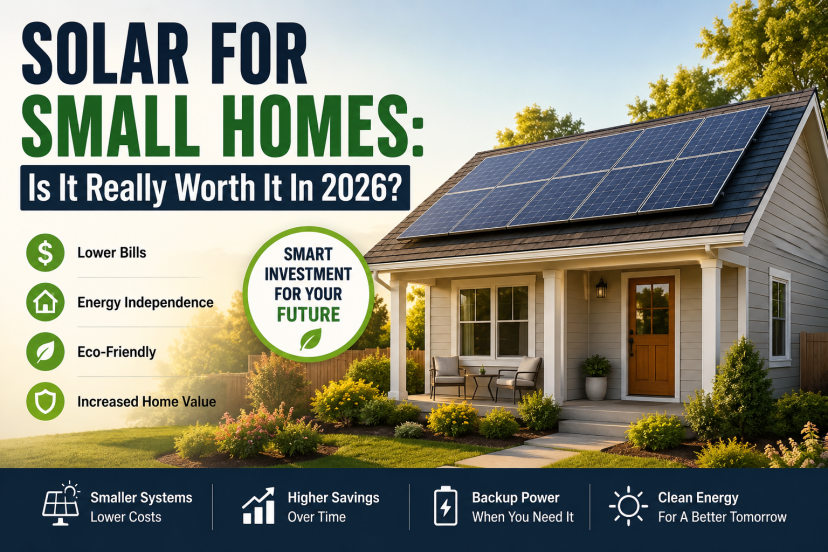
Solar For Small Homes: Is It Really Worth It In 2026?
🌞 The Growing Appeal Of Solar For Small Homes
Electric bills keep climbing. Power outages are becoming more common in some areas. And many homeowners with smaller houses are starting to ask the same question: Would solar finally make financial sense for my home?
In 2026, solar is no longer just for large suburban homes with massive roofs. Smaller homes are becoming one of the fastest-growing segments in residential solar — especially among homeowners who want lower monthly expenses, energy independence, and a simpler lifestyle.
The surprising part?
Small homes may actually benefit more from solar in certain situations.
Because smaller homes usually consume less electricity, homeowners can often install smaller, more affordable systems while still covering a large percentage of their energy needs.
But solar is not automatically a smart investment for every small house.
Roof size, local electricity rates, shading, battery costs, and daily energy habits all matter more than most people realize.
⚡ Quick Answer: Is Solar For Small Homes Worth It In 2026?
For many homeowners, yes, solar for small homes can absolutely be worth it in 2026.
Especially if:
- Your electric bills are high
- Your roof gets good sunlight
- You plan to stay in the home for several years
- Your home is energy-efficient
- Local incentives or tax credits are available
Smaller homes often need fewer solar panels, which lowers installation costs and shortens the potential payback period.
However, solar may not be worth it if:
- Your roof has heavy shade
- Your energy use is already extremely low
- Your roof is old or damaged
- You plan to move soon
- Financing costs are too high
The key is understanding your actual energy needs instead of assuming “bigger is better.”
🔍 Why Solar For Small Homes Makes Sense In 2026
Rising Utility Costs
Electricity prices continue rising in many parts of the U.S.
For small homeowners on tight budgets, even moderate monthly savings can make a noticeable difference over time.
A smaller solar setup may reduce:
- Monthly utility bills
- Dependence on the grid
- Exposure to future rate hikes
Better Solar Technology
Modern solar panels are more efficient than older systems.
That means smaller roofs can now generate far more electricity than they could just a few years ago.
In 2026, many panels will produce higher output while using less roof space.
This is especially important for:
- Small homes
- Tiny houses
- Cabins
- Compact suburban homes
- Narrow roof layouts
Federal Tax Credits Still Help
Federal solar incentives continue making residential solar more affordable for many homeowners.
Depending on your location, additional state or utility incentives may further reduce installation costs.
For small systems, these savings can significantly improve return on investment.
🏠 Real-Life Situations Where Solar Works Well For Small Homes
Small Home With High Energy Bills
Some small homes still have surprisingly high electricity costs because of:
- Older appliances
- Poor insulation
- Heavy air conditioner use
- Electric water heaters
In these situations, even a modest solar setup can create meaningful savings.
Retirees Trying To Reduce Monthly Expenses
Many retirees downsizing into smaller homes want predictable monthly costs.
Solar can help reduce long-term utility uncertainty while making the home more energy-efficient.
Tiny Homes And Off-Grid Living
Tiny homes and cabins are increasingly using solar for:
- Basic lighting
- Internet
- Refrigeration
- Water pumps
- Portable power storage
Smaller homes often require smaller battery systems, which lowers costs.
Homes In Sunny States
Solar tends to perform best in states with strong sunlight and high electricity rates.
Examples include:
- California
- Arizona
- Nevada
- Texas
- Florida
In these areas, small-home solar systems can sometimes pay for themselves faster.
🛠️ Practical Tips Before Installing Solar On A Small Home
Check Your Roof First
Roof condition matters more than many homeowners expect.
Before installing solar:
- Look for roof damage
- Check the roof age
- Identify shaded areas
- Evaluate usable roof space
Installing panels on an aging roof can become expensive if repairs are needed later.
Understand Your Actual Energy Usage
Do not guess.
Review at least 12 months of electric bills to understand:

- Average monthly usage
- Seasonal spikes
- High-cost appliances
Some homeowners overspend on systems that are larger than necessary.
Improve Efficiency Before Buying Solar
In many cases, reducing energy waste first gives faster savings.
Examples include:
- LED lighting
- Better insulation
- Smart thermostats
- Efficient appliances
- Window sealing
A more efficient home may need a smaller and cheaper solar system.
Compare Multiple Quotes
Solar pricing varies heavily between installers.
Always compare:
- Equipment quality
- Warranty terms
- Financing rates
- Battery options
- Installation timelines
Low-cost systems are not always the best long-term value.
☀️ Common Mistakes Small Homeowners Make With Solar
Buying Too Many Panels
Some companies push oversized systems that exceed actual needs.
For small homes, efficiency often matters more than system size.
Ignoring Shade Problems
Trees, chimneys, and nearby buildings can reduce solar production significantly.

Even partial shading can affect output.
Focusing Only On Monthly Payments
Some financing plans make solar appear “cheap” while increasing total long-term costs.
Always calculate:
- Total repayment amount
- Interest costs
- Estimated payback period
Forgetting About Roof Repairs
A failing roof may require removing and reinstalling panels later.
That can become expensive.
Assuming Solar Eliminates Electric Bills Completely
Most homeowners still have:
- Grid connection fees
- Seasonal usage fluctuations
- Higher winter usage in some climates
Solar usually reduces bills — not necessarily eliminates them.
❓ FAQ: Solar For Small Homes In 2026
Is solar cheaper for small homes?
Usually yes, because smaller homes often require fewer panels and less equipment.
However, cost per watt can sometimes be slightly higher on smaller systems.
How many solar panels does a small home need?
It depends on:
- Energy usage
- Climate
- Roof size
- Panel efficiency
Many small homes use between 6 and 14 panels.
Can a small home run fully on solar?
Some can — especially energy-efficient homes in sunny areas.
But full energy independence often requires battery storage.
Are solar batteries worth it for small homes?
Solar batteries can be helpful during outages and for off-grid setups.
However, batteries still add a high upfront cost in 2026.
What is the biggest advantage of solar for small homes?
Lower operating costs with a smaller investment compared to larger residential systems.
Does solar increase home value?
In many markets, buyers view solar as a positive feature — especially when electric bills are reduced.
🎯 Final Thoughts On Solar For Small Homes
Solar for small homes is becoming far more practical in 2026 than many people expected.
Modern panels are more efficient. Smaller systems are more accessible. And homeowners are increasingly looking for ways to lower monthly expenses while becoming less dependent on rising utility costs.
The biggest mistake is assuming solar is automatically good — or automatically bad.
For some small homeowners, solar can create long-term savings and peace of mind.
For others, improving insulation, replacing old appliances, or reducing energy waste may provide better short-term value first.
The smartest approach is usually simple:
- Understand your energy usage
- Improve efficiency first
- Compare realistic solar options
- Focus on long-term value instead of hype
For the right small home, solar can absolutely be worth it in 2026.
Disclaimer: This article is for informational purposes only and should not be considered financial, electrical, or professional installation advice. Always consult qualified solar and roofing professionals before making major home energy decisions.
Explore more:
- Is Now A Good Time To Install Solar Panels?
- How To Pick The Best Solar Kits For Small Homes
- Solar Tax Credits: How Homeowners Can Save Thousands