Can You Install Solar Panels On Any Roof? What Homeowners Need To Check First
Solar panels can generate electricity for decades, but the roof underneath them has an equally important job. If you’re considering going solar, you may be wondering: Can you install solar panels on any roof? The short answer is no—not every roof is immediately ready for solar, although many common U.S. roofing systems can support a properly designed installation.
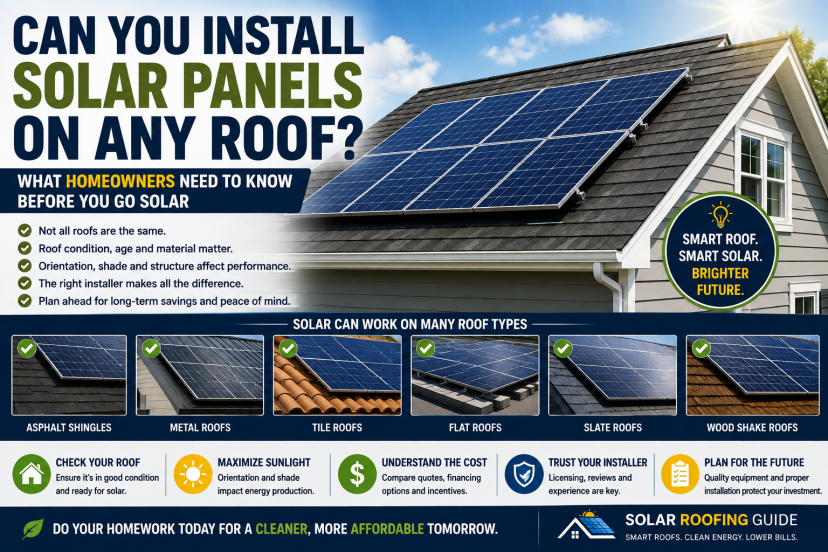
Asphalt shingles, standing-seam metal, tile, and some flat roofs can all work with solar. The bigger concerns are often the roof’s age, structural condition, usable space, orientation, shade, and the mounting method required for the roofing material.
Installing panels over an aging or damaged roof can create expensive problems later because the array may need to be removed before roofing repairs can be completed. Before choosing solar equipment, evaluate the entire roof-and-solar system together. A little planning now can help protect your home while improving energy efficiency and long-term savings.
☀️ Quick Answer: Can You Install Solar Panels On Any Roof?
Can you install solar panels on any roof? Not necessarily. Most common residential roofs can potentially support solar, but the roof must be structurally sound, in good condition, have adequate usable space, and be compatible with an appropriate mounting system.
Asphalt shingles and standing-seam metal roofs are often straightforward options. Tile, wood, slate, and flat roofs may require specialized mounting techniques. An aging or damaged roof should usually be evaluated—and potentially replaced—before solar installation.
Key Takeaways
- Most likely cause: Homeowners asking whether you can install solar panels on any roof usually need to know whether their roofing material, roof age, structure, or available space is suitable for solar.
- Usually serious? Not usually, but structural problems, leaks, severe deterioration, or an aging roof should be addressed before panels are installed.
- First thing to check: Determine your roof’s age, condition, roofing material, orientation, shade, usable area, and remaining service life.
- Best solution: Have the roof and solar layout evaluated before installation so the mounting system, roofing material, and long-term maintenance plan work together.
🏠 Which Roof Types Work Best With Solar Panels?
Most residential solar arrays are mounted on roofs because the space is already available and typically receives more sunlight than ground-level areas.
But different roofing materials require different installation methods.
Here’s a general comparison:

| Roofing Type | Solar Compatibility | Installation Consideration |
|---|---|---|
| Asphalt Shingles | Excellent | Common mounting methods available |
| Standing-Seam Metal | Excellent | Clamps may attach to seams |
| Corrugated Metal | Good | Specialized attachments required |
| Concrete/Clay Tile | Good | More complex and labor-intensive |
| Flat Roofing | Good | Tilted or ballasted systems may be used |
| Slate | Possible | Fragile and specialized installation |
| Wood Shakes | More Challenging | Fire, age, and attachment concerns |
Compatibility also depends on the specific roofing product, structure, local building codes, and solar equipment.
🔨 Asphalt Shingle Roofs And Solar Panels
Asphalt shingles are among the most common roofing materials in the United States and generally work well with rooftop solar.
Installers typically secure mounting hardware to structural roof members and use appropriate flashing and sealing methods to protect penetrations against water intrusion.
The main concern is roof age.
Solar panels may continue generating useful electricity for 25 to 30 years or longer. If your shingles have only a few years of expected life remaining, installing panels now could mean paying to remove them when the roof needs replacement.
Before installing solar on an older asphalt roof, look for:
- Curling shingles.
- Missing shingles.
- Significant granule loss.
- Previous leaks.
- Soft or damaged roof decking.
- Damaged flashing.
- Storm damage.
If replacement is approaching, completing the roof first may be more practical.
🔩 Metal Roofs Can Be Excellent For Solar
If you’re asking can you install solar panels on any roof, a quality metal roof is one of the more solar-friendly options.
Standing-seam metal roofs are particularly attractive because specialized clamps can often attach solar racking to the raised seams without penetrating the roofing surface.
Metal roofing can also have a long service life that aligns well with the lifespan of solar equipment.
Advantages Of Metal Roofs For Solar
- Long Service Life: A quality metal roof may remain in service for decades.
- Strong Solar Compatibility: Standing seams can simplify attachment.
- Good Durability: Metal handles many weather conditions well when properly installed.
- Long-Term Planning: Homeowners may be less likely to need roof replacement during the solar array’s useful life.
Corrugated and exposed-fastener metal roofs can also support solar, but their mounting requirements differ.
The installer should use hardware designed specifically for the roof profile.
🧱 Can Solar Panels Be Installed On Tile Roofs?
Yes, solar panels can often be installed on concrete and clay tile roofs, but installation requires more care.
Tiles can crack when walked on or handled incorrectly. Solar installers may need to temporarily remove individual tiles, install mounting hardware beneath them, and then carefully restore the roofing.
Specialized replacement tiles or tile-compatible mounts may also be used.
Labor costs can therefore be higher than for a basic asphalt-shingle installation.
Before hiring a solar company, ask:
- How many tile roofs have you worked on?
- Who pays for broken tiles?
- Do you keep matching replacement tiles?
- What attachment system will you use?
- How are penetrations flashed?
- Who is responsible if the roof leaks?
Experience with your specific roof type matters.
🏢 Can You Put Solar Panels On A Flat Roof?
Yes. Flat and low-slope roofs can provide excellent opportunities for solar.
Because the roof itself does not provide much panel tilt, installers can use racking systems that position the modules at an appropriate angle.
Depending on the roof and engineering requirements, the array might use mechanical attachments, ballast, or a combination of methods.
Flat roofs can provide flexibility because installers may have more freedom to optimize panel orientation.
However, system design must consider:
- Drainage.
- Roof membrane protection.
- Wind uplift.
- Ballast weight.
- Structural capacity.
- Panel spacing.
- Maintenance access.
Never assume a flat roof can safely support a heavily ballasted solar array without appropriate structural evaluation.
🪨 What About Slate And Wood Roofs?
Solar installation may be technically possible on slate or wood roofing, but these materials can create additional challenges.
Slate is durable but brittle. Walking on or drilling through slate tiles incorrectly can cause expensive damage.
Wood shakes and shingles introduce different concerns involving age, condition, fire resistance, attachment methods, and long-term roof maintenance.
Some solar contractors may decline these installations altogether, while specialists may be willing to design appropriate systems.

If your roof is unusually complex or made from a specialty material, consult both a roofing professional familiar with that material and an experienced solar installer.
📐 Does Roof Direction Matter For Solar Panels?
Yes, but your roof doesn’t have to face perfectly south.
In the Northern Hemisphere, south-facing solar arrays often provide strong annual electricity production. However, southeast-, southwest-, east-, and west-facing roofs may also be suitable.
West-facing panels can sometimes be particularly useful when household electricity demand is higher in the afternoon.
The best orientation depends on:
- Your location.
- Roof geometry.
- Electricity usage patterns.
- Utility rate structure.
- Shade.
- Available roof space.
A professional solar model can estimate expected annual production from each roof section.
🌳 How Much Shade Is Too Much For Solar?
Shade can significantly affect solar production.
Trees, chimneys, neighboring houses, dormers, mountains, and other obstacles may cast shadows across panels at different times of the day and year.
Modern solar technologies such as microinverters and power optimizers can help manage certain shading conditions, but they cannot create sunlight where none exists.
If a large tree shades the roof throughout much of the day, solar production may be substantially reduced.

Before installing panels, ask for a shade analysis that considers seasonal changes rather than evaluating only the roof’s appearance at one moment.
⚖️ Can Your Roof Support The Weight Of Solar Panels?
Most properly constructed residential roofs can potentially support a solar installation, but structural capacity should never be assumed.
Solar panels, racking, mounting hardware, and—in some flat-roof designs—ballast add weight.
Snowy areas introduce additional structural requirements because the roof may need to handle solar equipment plus significant snow loads.
Your installer should consider:
- Roof framing.
- Rafter or truss spacing.
- Roof decking.
- Existing structural damage.
- Local wind loads.
- Local snow loads.
- Solar equipment weight.
Older homes, unusually constructed roofs, and properties with known structural problems may require engineering review.
💰 Does Roof Type Affect Solar Installation Cost?
Yes.
A simple asphalt-shingle installation is generally easier and faster than working on fragile tile or slate.
Factors that can increase costs include:
- Specialized mounting hardware.
- Tile removal and replacement.
- Structural reinforcement.
- Steep roof slopes.
- Multiple roof levels.
- Difficult access.
- Roof repairs.
- Electrical upgrades.
- Flat-roof engineering.
- Complex panel layouts.
When comparing quotes, make sure contractors are pricing the same scope of work.
A cheaper proposal is not necessarily better if it excludes necessary roofing repairs or uses a less appropriate mounting method.
🛡️ Will Solar Panels Cause Roof Leaks?
Properly installed solar panels should not automatically cause a roof to leak.
Problems are more likely when roof penetrations are improperly flashed, roofing materials are damaged during installation, or panels are installed over an already deteriorating roof.
Ask the installer how roof penetrations will be waterproofed and what the workmanship warranty covers.
Also ask whether solar installation could affect your existing roofing warranty.
Some roofing manufacturers have specific requirements for rooftop equipment and penetrations.
💵 What About Solar Incentives In 2026?
Homeowners researching solar should be cautious with older financial information.
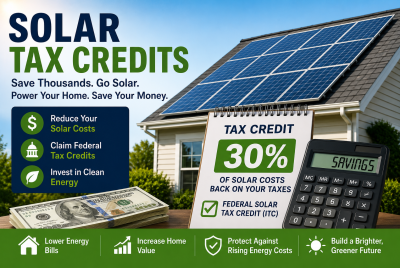
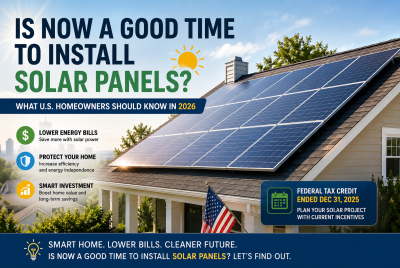
The federal Residential Clean Energy Credit that previously provided eligible homeowners a 30% credit for qualifying residential solar expenditures ended for expenditures after December 31, 2025.
That means homeowners planning a new installation in 2026 should not automatically assume they can deduct 30% of their project cost through the former homeowner federal solar credit.
Depending on location, other programs may still include:
- State Solar Rebates
- Utility Incentives
- Property-Tax Exemptions
- Sales-Tax Exemptions
- Renewable Energy Certificates
- Local Clean-Energy Programs
Verify current programs before using incentives to calculate your solar payback period.
🌱 Roof Compatibility And Long-Term Solar Savings
When considering can you install solar panels on any roof, remember that compatibility is about more than physically attaching panels.
The best solar roof is one that can support the array reliably for decades.
Replacing an aging roof before solar installation may increase your upfront home-improvement budget, but it can potentially save you from expensive solar removal and reinstallation later.
Think of the project as one system:
Healthy Roof + Proper Mounting + Quality Solar Equipment + Professional Installation = Better Long-Term Value
Your lowest-cost option today isn’t always your lowest-cost option over 25 years.
👷 When To Call A Professional
Call a licensed roofing contractor before installing solar if your roof is aging, leaking, sagging, storm-damaged, made from fragile specialty materials, or approaching replacement.
Contact a qualified solar installer for shade analysis, panel layout, structural considerations, electrical design, production estimates, permitting, and utility interconnection.
For older or unusual roofs, having separate roofing and solar professionals evaluate the property can provide a clearer picture before you sign a long-term solar contract.
❓ Frequently Asked Questions
Can Solar Panels Go On Any Type Of Roof?
Not every roof is equally suitable. Asphalt shingles, metal, tile, and flat roofs commonly support solar when appropriate mounting systems are used. Fragile, deteriorated, or structurally inadequate roofs may require repairs, replacement, or specialized installation.
What Roof Is Best For Solar Panels?
Standing-seam metal and asphalt-shingle roofs are often among the easiest residential surfaces for solar installation. However, roof condition, sunlight, orientation, and available space can matter more than roofing material alone.
Is My Roof Too Old For Solar Panels?
There is no universal age limit. What matters is the roof’s remaining service life and condition. If replacement will probably be needed soon, doing the roofing work before installing solar may be more economical.
Can Solar Panels Be Installed On A Flat Roof?
Yes. Flat roofs can use specialized racking to position panels for solar production. The system must account for structural loads, drainage, wind uplift, roof membrane protection, and maintenance access.
Can You Put Solar Panels On A North-Facing Roof?
Potentially, but annual production may be lower than on better-oriented roof sections in many U.S. locations. Whether it makes financial sense depends on roof pitch, location, shade, electricity rates, and system costs.
Do Solar Panels Damage Roof Shingles?
Proper professional installation should minimize damage. Problems can occur if shingles are cracked, mounting penetrations are poorly flashed, or installers use inappropriate attachment methods.
Should I Replace My Roof Before Installing Solar?
If your roof is approaching the end of its useful life or already needs significant repairs, replacement before solar installation is often the more practical option. Otherwise, you may have to pay to remove and reinstall the solar array later.
🌞 Conclusion: Can You Install Solar Panels On Any Roof?
So, can you install solar panels on any roof? Not quite—but most common residential roofing systems can potentially support solar when they are in good condition, and the right mounting system is used.
Asphalt shingles and standing-seam metal roofs are often relatively straightforward. Tile and flat roofs can also work very well with specialized installation methods. Slate, wood, aging, or structurally questionable roofs require more careful evaluation.
Before requesting a final solar proposal, find out how old your roof is, whether repairs are needed, how much unshaded space is available, and whether the structure can support the planned equipment.
If the roof is nearing replacement, consider getting a roofing quote before installing panels. Coordinating your roofing and solar decisions can reduce future costs and help both systems perform properly for decades.
A strong solar investment begins with a strong roof. Get the roof right first, then design the solar system around your home’s actual energy needs, sunlight, and long-term goals.
Disclaimer: Solar compatibility, roofing costs, structural requirements, warranties, incentives, permitting rules, and electricity savings vary by property and location. Always consult qualified solar, roofing, structural, electrical, insurance, and tax professionals before installation.
 Explore more:
- Eco-Friendly Solar Roofing Options
- Are Portable Power Stations Worth Buying?
- Can I Add More Solar Panels Later?