Which Roof Color Is Best For Solar Efficiency? A Homeowner’s Guide To Smarter Roofing Choices
Choosing a new roof is one of the biggest investments you’ll make as a homeowner. If you’re planning to install solar panels—or already have them—you may also be wondering: Which roof color is best for solar efficiency?
It’s a great question because roof color affects how much heat your roof absorbs, how comfortable your home stays, and potentially how efficiently your solar system operates. While many people assume a black roof is best for solar because the panels are black, the answer is more nuanced.
The good news is that roof color has much less impact on solar panel performance than factors like sunlight exposure, roof orientation, shading, and ventilation. However, selecting the right roofing color can still improve your home’s energy efficiency and help maximize your long-term savings.
In this guide, we’ll explain how roof color influences solar performance, compare popular roofing colors, discuss installation considerations, and help you choose the best option for your climate and home.
⭐ Quick Answer: Which Roof Color Is Best For Solar Efficiency?
The best roof color for solar efficiency depends on your climate. Lighter-colored roofs generally stay cooler by reflecting more sunlight, which may help reduce attic temperatures and improve overall home efficiency. However, roof orientation, panel placement, ventilation, and sunlight exposure have a much greater impact on solar panel performance than roof color alone.
☀️ Does Roof Color Affect Solar Panel Efficiency?
Many homeowners ask which roof color is best for solar efficiency because they assume darker roofs produce more electricity.
In reality, roof color has only a small indirect effect on solar panel performance.
Solar panels generate electricity from sunlight—not from heat.

In fact, excessive heat can actually reduce solar panel efficiency slightly.
The biggest performance factors include:
- Roof orientation
- Roof pitch
- Sun exposure
- Shade from trees or buildings
- Panel quality
- Inverter efficiency
- Proper ventilation
Roof color primarily affects the temperature beneath the panels rather than the amount of electricity they generate.
🌞 How Roof Color Influences Roof Temperature
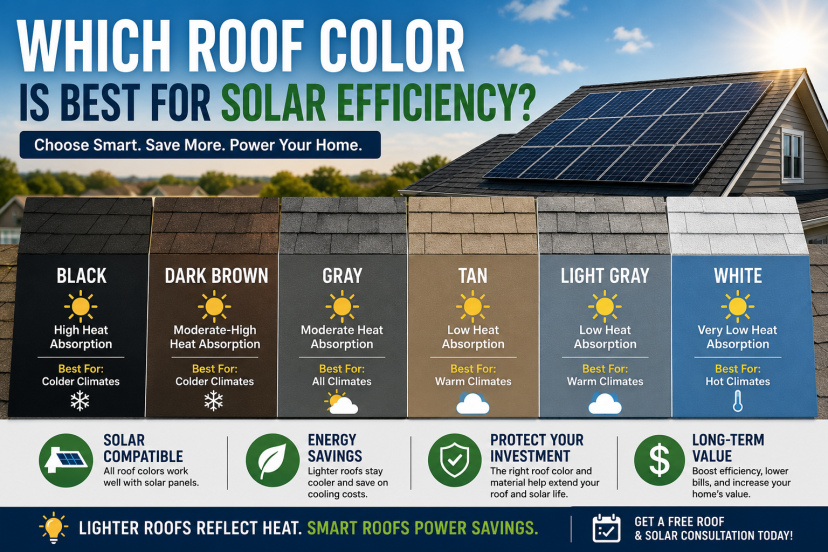
Different roofing colors absorb different amounts of solar heat.
Generally:
- Black roofs absorb the most heat.
- Dark brown roofs absorb significant heat.
- Gray roofs offer moderate heat absorption.
- Tan roofs reflect more sunlight.
- Light gray roofs remain cooler.
- White roofs reflect the most sunlight.
Lower roof temperatures can reduce attic heat, easing the workload on your air conditioning system during hot summers.
🏠 Which Roof Color Is Best For Solar Efficiency In Different Climates?
Climate plays a major role in choosing roof color.
Hot Southern States
Homeowners in states such as:
- Arizona
- Texas
- Florida
- Nevada
- Southern California
often benefit from:
- White roofs
- Light gray roofs
- Light tan roofing
These colors reflect more sunlight and help lower cooling costs.
Colder Northern States
In cooler climates such as:
- Minnesota
- Wisconsin
- Maine
- Vermont
Medium or darker roofing colors may provide modest heating benefits during colder months.
However, roof color still has a relatively small effect compared to insulation and attic ventilation.
🌡️ Do Cooler Roofs Help Solar Panels?
Yes—to a degree.
Although solar panels absorb sunlight directly, they also lose efficiency as temperatures rise.
Research shows that solar panels generally perform best when operating in cooler conditions.
A cooler roof can:
- Reduce heat buildup beneath panels
- Improve airflow
- Slightly improve operating efficiency
- Extend roofing material lifespan
Proper ventilation beneath the panels is often more important than roof color itself.
⚖️ Roof Color Comparison For Solar Homes
| Roof Color | Heat Absorption | Cooling Benefits | Solar Compatibility |
|---|---|---|---|
| White | Very Low | Excellent | Excellent |
| Light Gray | Low | Very Good | Excellent |
| Tan | Low | Very Good | Excellent |
| Medium Gray | Moderate | Good | Excellent |
| Brown | Moderate-High | Fair | Excellent |
| Black | High | Lower | Excellent |
All of these roof colors can successfully support solar panels when installed correctly.
🛠️ Roof Materials Matter More Than Color
If you’re asking which roof color is best for solar efficiency, it’s also important to consider roofing material.
Popular solar-compatible materials include:
Asphalt Shingles
- Most common
- Affordable
- Easy solar installation
Metal Roofing
- Long lifespan
- Excellent durability
- Easy mounting options
- Highly reflective coatings available
Composite Roofing
- Attractive appearance
- Good durability
- Compatible with most solar mounting systems
Tile Roofing
- Long-lasting
- Beautiful appearance
- Requires specialized installation techniques
Roof condition and structural integrity matter far more than color when preparing for solar.
💰 Does Roof Color Affect Energy Bills?
Indirectly, yes.
Lighter-colored roofs can help reduce cooling costs during hot weather by reflecting more sunlight.
Benefits may include:
- Cooler attic temperatures
- Reduced air conditioning use
- Improved indoor comfort
- Lower summer electricity bills
When combined with solar panels, these savings can further reduce overall household energy costs.
🏡 Roof Compatibility Before Installing Solar Panels
Before installing solar panels, have your roof inspected.
Professionals evaluate:

- Roof age
- Structural condition
- Shingle quality
- Roof orientation
- Ventilation
- Drainage
- Remaining roof lifespan
If your roof will likely need replacement within the next 10 years, replacing it before installing solar can save significant money later.
🔧 Installation Tips For Maximum Solar Efficiency
Roof color is only one piece of the puzzle.
To maximize energy production:
Choose The Best Roof Orientation
South-facing roofs typically receive the most sunlight in the United States.
East- and west-facing roofs can also perform very well.
Minimize Shade
Trim trees when possible.
Avoid nearby obstructions that block sunlight.
Improve Roof Ventilation
Proper airflow helps reduce heat buildup beneath the solar panels.
Select High-Efficiency Panels
Modern monocrystalline panels generally produce more electricity in limited space than older technologies.
Use Professional Installers
Certified installers optimize panel placement for maximum annual production.

🌎 Long-Term Savings And Incentives
Choosing the right roof and solar system helps maximize savings over decades.
Homeowners may benefit from:
- Lower monthly electricity bills
- Increased home value
- Reduced carbon emissions
- Greater energy independence
- Protection from rising utility prices
Many installations may also qualify for:
- Federal Solar Investment Tax Credit (ITC), if eligibility requirements are met
- State solar rebates
- Local utility incentives
- Net metering programs
- Property tax exemptions in qualifying locations
Your installer can explain which programs are available in your area.
🛡️ Maintenance Tips For Solar Roofs
Proper maintenance helps preserve both roofing materials and solar equipment.
Best practices include:
- Inspect Panels Annually
- Clean Heavy Dirt Or Debris
- Monitor Energy Production
- Trim Nearby Trees
- Check Roof Flashing
- Inspect After Severe Storms
Most solar systems require very little routine maintenance beyond periodic inspections.
👨🔧 When To Call A Professional
Contact a certified roofing contractor or solar installer if:
- Your roof needs replacement before installing solar.
- You notice roof leaks around panel mounts.
- Solar production drops unexpectedly.
- Storm damage affects your roof or panels.
- You want to upgrade to a more energy-efficient roofing system.
- You’re unsure whether your roof can support solar panels.
- Your attic experiences excessive heat despite solar installation.
Professional evaluations help prevent costly mistakes and maximize system performance.
❓ Frequently Asked Questions
1. Which roof color is best for solar efficiency?
Light-colored roofs generally stay cooler and may improve overall home energy efficiency, although roof orientation and sunlight exposure have a much greater impact on solar production.
2. Do black roofs reduce solar panel efficiency?
Not significantly. Black roofs become hotter, but proper panel ventilation usually minimizes any effect on solar performance.
3. Are white roofs better for solar panels?
White roofs reflect more sunlight and help reduce roof temperatures, making them an excellent option in hot climates.
4. Does roof color change how much electricity solar panels generate?
Very little. Solar panels rely on sunlight rather than roof color to generate electricity.
5. Should I replace my roof before installing solar panels?
Yes, if your roof is nearing the end of its lifespan. Doing both projects together helps avoid future removal and reinstallation costs.
6. Does roof color affect home cooling costs?
Yes. Lighter-colored roofs typically reduce heat absorption and may lower summer cooling expenses.
7. Is roof ventilation more important than roof color?
In most cases, yes. Good ventilation helps keep both your roof and solar panels operating more efficiently.
🎯 Final Thoughts
So, which roof color is best for solar efficiency? While lighter-colored roofs generally reflect more heat and help improve overall home energy efficiency, roof color alone has only a minor effect on solar panel performance. Factors such as roof orientation, panel placement, ventilation, shading, and equipment quality play a much larger role in determining how much electricity your system produces.
If you’re planning a new roof and a solar installation, work with experienced roofing and solar professionals who can recommend the best combination of roofing material, color, ventilation, and panel placement for your local climate. A well-designed roof paired with a high-quality solar system can deliver decades of reliable energy savings, improved comfort, and increased home value.
Disclaimer: Roofing costs, solar incentives, tax credits, rebates, warranties, and energy savings vary by location and utility provider. Always consult a licensed roofing contractor and certified solar installer before making decisions about roofing materials or solar energy systems.
 Explore more:
- What Happens If My Solar Inverter Fails?
- Eco-Friendly Roofing Solutions
- Why Are My Solar Panels Producing Less Power?