What Happens If My Solar Inverter Fails? Warning Signs, Costs, And What To Do Next
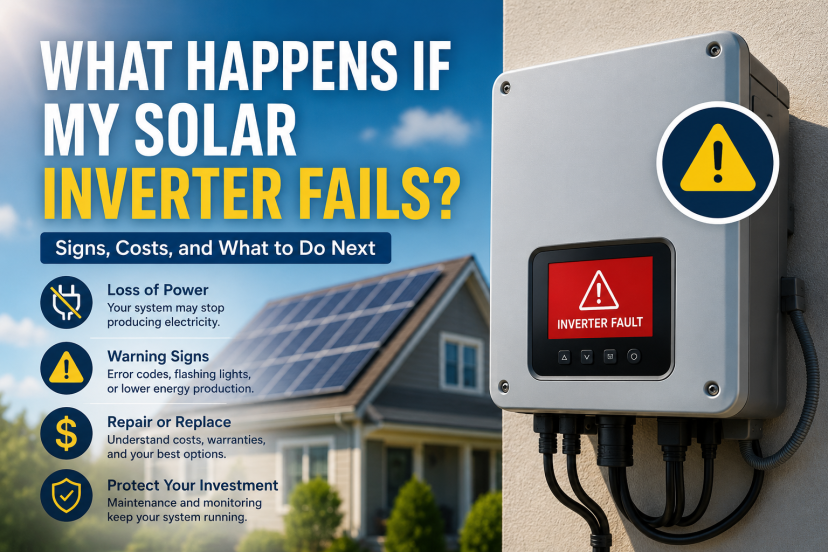
If you’ve invested in solar panels, you’ve already taken a smart step toward lower electric bills and greater energy independence. But many homeowners overlook one of the most important parts of the system—the solar inverter. So, what happens if my solar inverter fails?
The short answer is that your solar panels may still produce electricity, but your home often won’t be able to use it efficiently. Since the inverter converts solar energy into usable household electricity, a failure can dramatically reduce or completely stop your system’s power production.
The good news is that inverter problems are often easy to diagnose, and many are covered under warranty. Understanding the warning signs and knowing what to do can help you restore your system quickly while protecting your long-term investment.
⭐ Quick Answer
If your solar inverter fails, your solar panels usually stop supplying usable electricity to your home. Energy production may drop significantly or stop completely until the inverter is repaired or replaced. Most modern systems display error codes or monitoring alerts, making it easier to identify the issue quickly.
☀️ Why A Solar Inverter Is So Important
Many homeowners focus on solar panels, but the inverter is often called the “brain” of the solar energy system.
Its job is to:
- Convert DC electricity from solar panels into AC electricity
- Monitor system performance
- Protect against electrical faults
- Communicate with monitoring apps
- Optimize energy production
- Manage battery charging (if applicable)
Without a functioning inverter, even perfectly working solar panels cannot deliver electricity efficiently to your home’s electrical system.
⚡ What Happens If My Solar Inverter Fails?
If you’re wondering what happens if my solar inverter fails, the effects depend on your system design.
String Inverter Systems
A failed string inverter usually causes:
- Complete loss of solar production
- Higher electricity bills
- Reduced energy savings
- Greater reliance on the utility grid
Microinverter Systems
If one microinverter fails:
- Only one panel may stop producing power.
- The rest of the system usually continues operating normally.
Hybrid Inverter Systems
If you have solar batteries:
- Battery charging may stop.
- Backup power may become unavailable.
- Energy management features may not function correctly.
🔍 Signs Your Solar Inverter May Be Failing
Several warning signs can indicate inverter problems.
Reduced Energy Production
One of the earliest symptoms is a sudden drop in solar generation.
Check your monitoring app regularly for unexpected production declines.
Error Messages
Modern inverters often display:
- Grid Fault
- Isolation Fault
- Ground Fault
- Arc Fault
- Communication Error
- DC Voltage Error
These alerts help identify the source of the problem.
Flashing Warning Lights
Most manufacturers use colored LEDs.
Typical meanings include:
- Green: Operating normally
- Yellow: Warning
- Red: System fault
Always consult your inverter manual for specific meanings.
Unexpected Utility Bills
If your electric bills suddenly increase despite sunny weather, your inverter may no longer be converting solar energy efficiently.
No Data In Monitoring App
If your solar monitoring platform stops updating, the inverter may have lost communication or completely shut down.
💰 Common Causes Of Solar Inverter Failure
Most solar inverters last many years, but failures do happen.
Common causes include:
- Age-related component wear
- Power surges
- Lightning strikes
- Excessive heat
- Moisture intrusion
- Manufacturing defects
- Poor installation
- Loose wiring
- Ventilation problems
- Software issues
Proper installation and regular maintenance significantly reduce these risks.
🛠️ Can A Solar Inverter Be Repaired?
Sometimes.
Minor issues often include:
- Software updates
- Fuse replacement
- Resetting the inverter
- Loose electrical connections
- Communication repairs
However, major internal failures usually require replacing the entire inverter rather than repairing individual electronic components.
💵 Solar Inverter Repair Vs Replacement
| Issue | Repair | Replacement |
|---|---|---|
| Software problem | ✔ Usually | ✘ No |
| Loose wiring | ✔ Usually | ✘ No |
| Communication fault | ✔ Often | ✘ Rarely |
| Internal electronics failure | ✘ Rarely | ✔ Usually |
| Burned circuit board | ✘ No | ✔ Yes |
| End-of-life inverter | ✘ No | ✔ Yes |
If your inverter is nearing the end of its expected lifespan, replacement often makes more financial sense than repeated repairs.
🏡 How Much Does It Cost To Replace A Solar Inverter?
Costs vary depending on:
- System size
- Inverter type
- Brand
- Labor rates
- Warranty coverage
Typical U.S. estimates include:
| Inverter Type | Estimated Replacement Cost |
|---|---|
| String inverter | $1,000–$3,000 |
| Microinverter (single unit) | $150–$400 per panel |
| Hybrid inverter | $2,000–$5,000+ |
If your system is under warranty, equipment costs may be greatly reduced or fully covered.
🔋 Does Inverter Failure Damage Solar Panels?
Fortunately, no.
One common concern behind the question what happens if my solar inverter fails is whether the panels themselves become damaged.
In most cases:
- Solar panels remain fully functional.
- Roof mounting systems remain unaffected.
- Wiring often remains intact.
- Production resumes after inverter replacement.
The inverter acts as the conversion device, not the energy generator.
🌞 How Long Do Solar Inverters Last?
Average lifespans include:

- String inverters: 10–15 years
- Hybrid inverters: 10–15 years
- Microinverters: 20–25 years
Since solar panels often last 25–30 years or more, many homeowners replace at least one inverter during the life of their system.
🏠 How To Prevent Solar Inverter Failure
Preventive maintenance helps maximize system performance.
Perform Regular Monitoring
Check your production monthly.
Most manufacturer apps quickly reveal abnormal performance.
Keep The Inverter Cool
Heat is one of the biggest enemies of electronics.
Install inverters:
- Out of direct sunlight
- In well-ventilated areas
- Away from excessive moisture
Schedule Professional Inspections
A certified solar installer can identify:
- Loose wiring
- Corrosion
- Overheating
- Grounding problems
- Firmware updates
Protect Against Power Surges
Whole-home surge protection may help reduce damage from lightning or utility voltage spikes.
💡 Warranties And Solar Inverter Coverage
Warranty coverage varies by manufacturer.
Typical warranties include:

- Standard warranty: 10–12 years
- Extended warranty: Up to 20–25 years
Many installers also provide workmanship warranties covering installation-related issues.
Always keep:
- Purchase documents
- Warranty registration
- Installation records
- Maintenance history
These documents can speed up warranty claims.
💵 Federal Incentives And Long-Term Savings
Replacing an inverter can help restore your home’s energy savings.
Although replacement alone may not qualify for every incentive, complete solar system installations often benefit from programs such as:
- Federal Solar Investment Tax Credit (ITC), when applicable
- State solar rebate programs
- Local utility incentives
- Net metering programs where available
A properly functioning inverter ensures your solar panels continue producing the electricity needed to maximize long-term savings.
🏠 Roof Compatibility During Inverter Replacement
Most inverter replacements do not require removing your roof or solar panels.
However, installers may inspect:
- Roof penetrations
- Flashing
- Wiring pathways
- Mounting hardware
- Conduit connections
If your roof is nearing replacement age, some homeowners choose to coordinate roofing work with major solar upgrades to reduce future labor costs.
👨🔧 When To Call A Professional
Contact a certified solar installer or licensed electrician if:
- The inverter displays persistent fault codes.
- Solar production suddenly drops to zero.
- You smell burning or notice overheating.
- Water has entered the inverter enclosure.
- Circuit breakers repeatedly trip.
- Your monitoring system reports ongoing communication failures.
- You suspect roof or wiring damage after severe weather.
Avoid opening the inverter yourself, as it contains high-voltage electrical components even when the system is turned off.
❓ Frequently Asked Questions
1. What happens if my solar inverter fails completely?
Your solar panels may continue generating DC electricity, but your home typically cannot use it until the inverter is repaired or replaced.
2. Can I still use electricity if the inverter fails?
Yes. Your home can still receive electricity from the utility grid, but your solar system may stop contributing power.
3. How do I know if my inverter has stopped working?
Common signs include error codes, flashing warning lights, zero energy production, monitoring alerts, or unexpectedly high electric bills.
4. Is inverter failure covered under warranty?
Many manufacturers provide warranties ranging from 10 to 12 years, with optional extended coverage available. Check your specific warranty terms.
5. Can weather damage a solar inverter?
Yes. Lightning, flooding, excessive heat, and moisture can contribute to inverter failure, especially if the unit is improperly installed or lacks surge protection.
6. Should I repair or replace my inverter?
Minor issues may be repairable, but older inverters with major internal damage are usually more cost-effective to replace.
7. How can I make my solar inverter last longer?
Keep the inverter cool, ensure proper ventilation, monitor system performance regularly, install surge protection, and schedule periodic inspections by a qualified professional.
🎯 Final Thoughts
If you’ve been asking what happens if my solar inverter fails, the answer is reassuring: while your system’s energy production may stop or decline, the problem is usually isolated to the inverter and doesn’t mean your solar panels are ruined.
By monitoring your system, understanding warning signs, keeping up with maintenance, and choosing a quality installer, you can minimize downtime and protect your investment for years to come.
If you’re planning a new solar installation or upgrading an older system, request quotes from certified solar professionals who can recommend the right inverter, evaluate your roof, explain available incentives, and help you maximize long-term energy savings.
Disclaimer: Solar equipment pricing, warranties, tax credits, rebates, and incentive programs vary by location and installer. Always consult a licensed solar professional or qualified electrician before repairing, replacing, or modifying any solar energy system.
 Explore more:
- How Much Weight Do Solar Panels Add To A Roof?
- Eco-Friendly Roofing Solutions
- Why Are My Solar Panels Producing Less Power?