Should I Buy Or Lease Solar Panels? Which Option Saves You More Money?
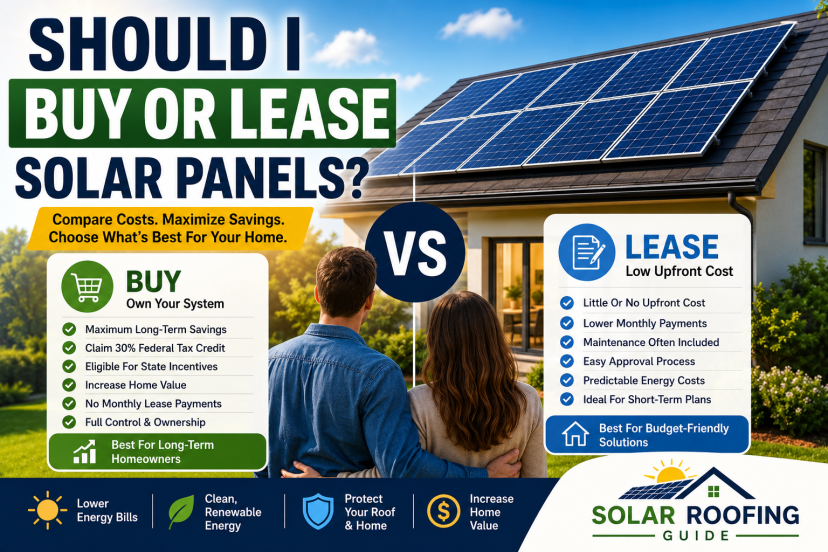
If you’re considering going solar, one of the biggest decisions you’ll face is should I buy or lease solar panels? Both options can reduce your electricity bills and help you use cleaner energy, but they work very differently when it comes to ownership, long-term savings, tax incentives, and home value.
For many U.S. homeowners, solar panels are a smart investment that can provide decades of lower utility costs and greater energy independence. However, not everyone has the budget for an upfront purchase, making solar leasing an attractive alternative.
Understanding the pros, cons, and costs of each option can help you make the best financial decision for your home and future.
⭐ Quick Answer: Should I Buy Or Lease Solar Panels?
For most homeowners who plan to stay in their home for many years, buying solar panels usually provides the greatest long-term savings and allows you to claim valuable tax incentives. Leasing can be a good option if you want lower upfront costs and don’t qualify for financing, but your long-term savings are generally smaller because the solar company owns the system.
Key Takeaways
- Most likely cause: Homeowners asking should I buy or lease solar panels are usually trying to balance upfront costs with long-term savings, tax incentives, and overall return on investment.
- Usually serious? Yes. Choosing the wrong financing option can affect your long-term energy savings, eligibility for tax credits, monthly expenses, and even your home’s resale value.
- First thing to check: Review your budget, available financing, expected length of time in your home, local electricity rates, and whether you qualify for federal, state, or utility solar incentives.
- Best solution: Buying solar panels is typically the better financial choice for homeowners planning to stay long-term, while leasing may be a practical alternative for those who want little or no upfront investment and prefer maintenance to be handled by the provider.
☀️ Why Homeowners Ask: Should I Buy Or Lease Solar Panels?
Solar technology has become more affordable than ever, but installation is still a major investment. That’s why many homeowners compare purchasing and leasing before making a decision.
When deciding whether to buy or lease solar panels, consider:
- Your Budget
- How Long You Plan To Stay In Your Home
- Available Tax Credits
- Monthly Electricity Bills
- Roof Condition
- Financing Options
- Long-Term Financial Goals
Your answers to these questions can make one option much more attractive than the other.
💰 Buying Solar Panels: How It Works
When you purchase a solar system, you own it outright or finance it with a solar loan.
Ownership gives you full control over:
- Energy production
- Equipment upgrades
- Warranty choices
- Home resale value
- Future savings
Although buying requires a larger investment initially, the financial benefits often increase over time.
Benefits Of Buying Solar Panels
- Maximum Long-Term Savings
- Federal Solar Tax Credit Eligibility
- Potential State Rebates
- Higher Home Value
- No Lease Payments
- Freedom To Upgrade Equipment
- Greater Return On Investment
Many systems continue producing electricity for 25–30 years or longer.
🏠 Leasing Solar Panels: How It Works
With a solar lease, another company owns the solar panels.
Instead of purchasing equipment, you pay:
- A monthly lease payment
- Or a reduced electricity rate through a Power Purchase Agreement (PPA)
Leasing usually requires little or no upfront cost.
Benefits Of Leasing Solar Panels
- Minimal Initial Investment
- Professional Maintenance
- Equipment Monitoring
- Predictable Monthly Payments
- Simple Installation Process
Leasing allows homeowners to enjoy solar energy without purchasing expensive equipment.
📊 Buy Vs Lease Solar Panels Comparison
| Feature | Buy Solar Panels | Lease Solar Panels |
|---|---|---|
| Ownership | Homeowner | Solar Company |
| Upfront Cost | Higher | Low Or None |
| Tax Credit | Yes | No |
| State Incentives | Often Yes | Usually No |
| Monthly Payments | Loan Or None | Lease Payment |
| Home Value | Often Increases | May Be Limited |
| Maintenance | Usually Owner | Often Included |
| Long-Term Savings | Higher | Moderate |
Buying typically delivers greater financial rewards over the system’s lifetime.
💵 Costs Of Buying Solar Panels
Average residential solar installation costs before incentives:
| System Size | Estimated Cost |
|---|---|
| 4 kW | $10,000–$14,000 |
| 6 kW | $15,000–$21,000 |
| 8 kW | $20,000–$28,000 |
| 10 kW | $25,000–$35,000 |
Actual costs depend on:
- Roof complexity
- Panel efficiency
- Local labor rates
- Electrical upgrades
- Battery storage
- Permitting
Many homeowners reduce these costs through financing and available incentives.
🌞 Federal Solar Tax Credit And Other Incentives
One major advantage when asking should I buy or lease solar panels is incentive eligibility.
Homeowners who purchase solar systems may qualify for:
- Federal Residential Clean Energy Credit
- State tax credits
- Utility rebates
- Local renewable energy incentives
- Net metering programs
These incentives can reduce installation costs significantly.
With leased systems, these incentives generally go to the leasing company instead of the homeowner.
🏡 Roof Compatibility Before Installing Solar
Before purchasing or leasing solar panels, your roof should be evaluated carefully.
Important considerations include:
- Roof age
- Structural condition
- Shingle quality
- Roof orientation
- Available sunlight
- Shade from nearby trees
- Roof pitch
If your roof needs replacement soon, many experts recommend replacing it before installing solar panels.
⚡ Long-Term Savings: Buy Vs Lease
For homeowners planning to stay in their home for many years, buying often provides much greater savings.
Buying offers:
- Lower lifetime electricity costs
- Greater protection from rising utility prices
- Better return on investment
- Increased home equity
Leasing offers:
- Immediate bill reduction
- Lower upfront costs
- Less financial risk
- Smaller long-term savings
Your expected length of homeownership plays a major role in determining the better choice.
🔧 Maintenance And Warranties
Modern solar panels require very little maintenance.
Typical maintenance includes:
- Annual visual inspections
- Removing heavy debris
- Monitoring system performance
- Occasional professional cleaning if needed
Purchased Systems
Most include:
- 25-year panel performance warranties
- Product warranties
- Inverter warranties
- Installation workmanship warranties
Leased Systems
Maintenance is often handled by the leasing company, reducing homeowner responsibility.
📈 Home Value Considerations
Research suggests that owned solar systems may increase home value.
Potential benefits include:

- Lower future utility costs
- Attractive feature for buyers
- Energy-efficient home appeal
- Faster resale in some markets
Leased systems can sometimes complicate a home sale because buyers may need to assume the lease or negotiate its transfer.
🌎 Energy Independence And Battery Storage
Many homeowners purchasing solar also consider battery storage.
Battery systems can:
- Store excess daytime electricity
- Provide backup power during outages
- Reduce reliance on the electric grid
- Increase energy independence
While batteries increase upfront costs, they can add resilience in areas prone to power outages.
💡 Tips For Choosing The Right Solar Option
If you’re still wondering should I buy or lease solar panels, consider these practical tips.
Buying May Be Best If You:
- Plan To Stay In Your Home 10+ Years
- Want Maximum Savings
- Qualify For Tax Credits
- Can Finance The System
- Want To Increase Home Value
Leasing May Be Best If You:
- Have Limited Upfront Funds
- Want Lower Initial Costs
- Prefer Maintenance Included
- Do Not Qualify For Financing
- Need Immediate Utility Bill Savings
👷 When To Call A Professional
Contact a certified solar installer or roofing contractor if:
- Your roof is over 15–20 years old.
- You are unsure whether your roof can support solar panels.
- Trees or nearby buildings create significant shade.
- You want an accurate estimate of your energy savings.
- You are comparing buying, financing, and leasing options.
- You need a roof inspection before installation.
A professional evaluation can provide customized recommendations based on your roof, energy usage, local incentives, and budget.
❓ Frequently Asked Questions
1. Is buying solar panels better than leasing?
For most homeowners planning to stay long term, buying usually offers greater lifetime savings and access to tax credits.
2. Can I claim the Federal Solar Tax Credit if I lease panels?
No. The tax credit generally goes to the company that owns the solar system.
3. Is maintenance included with leased solar panels?
In many leases, maintenance and equipment monitoring are included, though terms vary by provider.

4. Does buying solar panels increase home value?
Owned solar systems may increase resale value because future buyers benefit from lower electricity costs.
5. What happens if I sell my home with leased solar panels?
The solar lease may need to be transferred to the new owner or bought out before the sale.
6. How long do solar panels last?
Most high-quality residential solar panels are designed to produce electricity for 25–30 years or more.
7. Can I finance solar panels instead of paying cash?
Yes. Many homeowners use solar loans that spread payments over several years while allowing them to own the system.
🎯 Conclusion: Should I Buy Or Lease Solar Panels?
When deciding should I buy or lease solar panels, there isn’t a one-size-fits-all answer. Buying generally delivers the greatest long-term financial benefits, higher home value, and access to valuable federal and state incentives. Leasing, however, offers a lower-cost entry into solar energy with little upfront investment and maintenance often included.
The right choice depends on your budget, how long you plan to stay in your home, your roof’s condition, and your long-term financial goals. By comparing total costs, incentives, warranties, and expected savings, you can confidently choose the solar solution that best supports your home’s energy future.
If you’re ready to make the switch, schedule a professional solar assessment or request a roof inspection to determine which option is the best fit for your home.
Disclaimer: Solar panel pricing, financing options, tax credits, rebates, lease terms, and energy savings vary by location, utility provider, and roof condition. Always consult a licensed solar installer or qualified roofing professional before making a purchasing or leasing decision.
 Explore more:
- PV Panels On Flat Roof
- Can Solar Panels Charge Batteries Directly?
- Can I Remove And Reinstall Solar Panels?