Can I Add More Solar Panels Later? Everything Homeowners Should Know
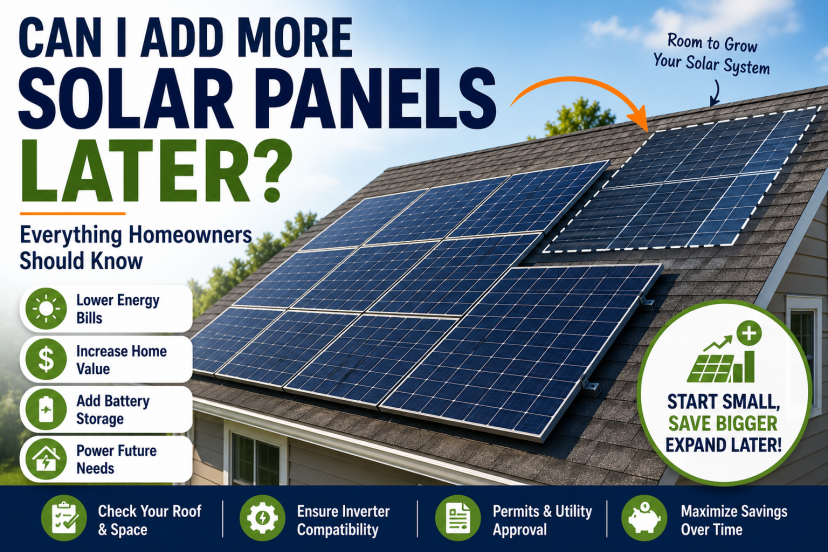
If you’re considering solar power but aren’t ready to install a large system, you’re probably asking. Can I add more solar panels later? The answer is good news for many homeowners—yes, in most cases, you can expand your solar system in the future.
Many people begin with a smaller installation to fit their budget or current electricity needs. Later, they add more panels after purchasing an electric vehicle, installing a heat pump, adding battery storage, or simply wanting to reduce utility bills even further.
However, expanding a solar system isn’t always as simple as attaching a few extra panels. Your roof, inverter, electrical panel, utility company, and available roof space all influence whether expansion is practical and cost-effective.
In this guide, you’ll learn when adding more solar panels makes sense, what factors to consider, how much it may cost, and how to plan your original installation with future expansion in mind.
⭐ Quick Answer: Can I Add More Solar Panels Later?
Yes, can I add more solar panels later is a question that often has a positive answer. Most homeowners can expand their solar system if their roof has available space, the inverter and electrical system can support additional capacity, and local utility requirements allow system expansion. A professional installer can determine the best upgrade path.
Key Takeaways
Most likely cause: Homeowners usually want to expand because their electricity use has increased, they started with a smaller system, or they now have enough roof space and budget for additional panels.
Usually serious? No. If you’re wondering Can I add more solar panels later? Expansion is often possible, but the existing inverter, electrical panel, roof layout, and utility requirements can affect how simple the upgrade will be.
First thing to check: Ask a qualified solar installer to evaluate your available roof space, current inverter capacity, electrical panel, existing system design, and local utility interconnection rules.
Best solution: If you expect your energy needs to grow, plan for expansion from the beginning. Choosing appropriately sized electrical equipment and leaving usable roof space can make adding panels later easier and potentially less expensive.
☀️ Why Homeowners Add More Solar Panels Later
Many homeowners don’t install their maximum solar capacity during the initial project.
Instead, they expand their systems as their energy needs grow.
Common reasons include:

- Buying an electric vehicle
- Installing a heat pump
- Adding a swimming pool
- Building a home addition
- Switching from gas appliances to electric
- Increasing household size
- Preparing for future energy independence
Planning for future expansion can make these upgrades easier and more affordable.
🏠 Can I Add More Solar Panels Later? Key Requirements
Several factors determine whether your existing system can be expanded.
Available Roof Space
The simplest requirement is enough usable roof area.
Installers evaluate:
- Open roof sections
- Sun exposure
- Shade patterns
- Roof orientation
- Structural integrity
If your roof has little remaining space, expansion may require higher-efficiency panels or ground-mounted solar.
Roof Condition
Your roof should still have many years of life remaining.
If roof replacement is expected soon, installers often recommend completing that project before adding additional panels.
⚡ Your Inverter May Determine Expansion Options
The inverter is one of the most important pieces of your solar system.
Some inverters have extra capacity for future panels.
Others are already operating near their maximum output.
Possible options include:
- Connecting additional panels to existing capacity
- Replacing the inverter with a larger model
- Installing a second inverter
- Using microinverters for new panels
An experienced installer can recommend the most efficient solution.
🌞 Matching New Solar Panels With Existing Panels
Many homeowners wonder whether they must buy the exact same solar panels.
Fortunately, that’s not always necessary.
Modern systems can often combine different:
- Panel brands
- Wattage ratings
- Efficiency levels
- Manufacturing years
However, matching panel performance usually produces the best overall results.
Your installer can design a system that minimizes compatibility issues.
💰 Cost Of Adding More Solar Panels
Expansion costs vary depending on equipment and installation complexity.
Typical expenses may include:
| Expense | Estimated Cost |
|---|---|
| Additional Solar Panels | $250–$500 Per Panel |
| Installation Labor | Varies By Project |
| Inverter Upgrade | $1,000–$3,000+ |
| Electrical Upgrades | If Needed |
| Permits And Inspections | Local Requirements |
Smaller expansion projects sometimes cost more per panel because setup costs are spread across fewer panels.
Request quotes from multiple qualified installers before making a decision.
🔋 Can Battery Storage Be Added At The Same Time?
Yes.
Many homeowners choose to add battery storage while expanding their solar system.
Benefits include:
- Backup power during outages
- Greater energy independence
- Reduced peak electricity costs
- Better use of excess solar production
Popular home battery systems can often be integrated into existing solar installations.
🏡 Roof Compatibility Still Matters
Your roof continues to play an important role during expansion.
A suitable roof should offer:
- Good structural condition
- Minimal shading
- Adequate remaining lifespan
- Secure mounting locations
- Enough available space
If your roof has changed significantly since the original installation, a new assessment may be necessary.

📈 Long-Term Savings From Expanding Your Solar System
Adding more panels can increase your long-term financial benefits.
Potential advantages include:
- Lower monthly electricity bills
- Reduced dependence on utility companies
- Higher renewable energy production
- Increased home value
- Better return on investment
Homes with growing electricity usage often benefit the most from system expansion.
🇺🇸 Federal And State Solar Incentives
Depending on your location, adding more solar panels may still qualify for financial incentives.
Potential programs include:
- Residential Clean Energy Credit (Federal Solar Tax Credit) for eligible installations
- State solar rebate programs
- Utility company incentives
- Net metering programs where available
- Battery storage incentives in certain states
Eligibility depends on current laws, project timing, and local utility rules.
🧰 Maintenance Tips After Expanding Your System
A larger solar system still requires only minimal maintenance.
To keep it performing efficiently:
- Inspect panels several times each year.
- Remove leaves, branches, and debris.
- Monitor production through your solar app.
- Trim nearby trees as they grow.
- Schedule professional inspections every few years.
- Check equipment after major storms.
Routine maintenance helps maximize electricity production throughout the system’s lifespan.
📊 Expand Now Vs Wait Later
| Expand Now | Wait Until Later |
|---|---|
| Lower Installation Costs Per Panel | Smaller Initial Investment |
| Maximizes Current Savings | Fits Tight Budgets |
| Simplifies Equipment Matching | Upgrade As Energy Needs Grow |
| Avoids Future Labor Costs | Better Future Technology May Be Available |
| May Maximize Incentives | Greater Planning Flexibility |
The right choice depends on your budget, future energy goals, and available roof space.

🛡 Warranties And Existing Equipment
Before expanding your system, review your current warranties.
Important coverage may include:
- Solar panel product warranty
- Performance warranty
- Inverter warranty
- Installation workmanship warranty
- Roof warranty
Your installer should explain how additional equipment affects existing warranty coverage.
👷 When To Call A Professional
Contact a certified solar installer or roofing contractor if:
- Your electricity usage has increased significantly.
- You’re planning to purchase an electric vehicle.
- Your inverter may be at full capacity.
- You need a roof inspection before expansion.
- You want to add battery storage.
- Your utility company requires updated interconnection approval.
- You’re unsure whether your electrical panel can support additional solar.
A professional assessment can determine the safest and most cost-effective way to expand your system.
❓ Frequently Asked Questions
1. Can I add more solar panels later if my roof is already full?
Possibly. Some homeowners use higher-efficiency panels, add a ground-mounted system, or install a solar carport if roof space is limited.
2. Will I need a new inverter?
Not always. If your current inverter has unused capacity, it may support additional panels. Otherwise, an upgrade or second inverter may be necessary.
3. Can I mix different brands of solar panels?
Yes, in many cases. However, matching panel specifications generally provides the best system performance.
4. Will expanding my solar system require new permits?
Often, yes. Most expansion projects require updated permits and utility approval depending on local regulations.
5. Can I add battery storage later too?
Yes. Many modern solar systems allow homeowners to install battery storage months or years after the original installation.
6. Does adding more panels increase home value?
An expanded solar system may increase a home’s appeal, particularly if it significantly lowers electricity costs.
7. Is it cheaper to install all solar panels at once?
Generally, yes. Installing a larger system initially often reduces labor and permitting costs compared to multiple installation projects.
🎯 Conclusion: Can I Add More Solar Panels Later?
If you’ve been asking can I add more solar panels later, the answer is usually yes—but careful planning makes the process much easier. Choosing expandable equipment, preserving roof space, and working with an experienced installer can save time and money when you’re ready to grow your system.
Whether you’re planning for an electric vehicle, battery backup, or simply higher energy usage, expanding your solar array can help lower utility bills, improve your home’s energy resilience, and increase long-term savings. If you’re considering future expansion, schedule a professional solar assessment to explore your options and ensure your roof and electrical system are ready for the next step.
Disclaimer: Solar panel costs, tax credits, utility requirements, rebates, warranties, and expansion options vary by manufacturer, utility provider, and location. Always consult a licensed solar installer and qualified roofing professional before expanding your solar energy system.
 Explore more:
- Eco-Friendly Solar Roofing Options
- Are Portable Power Stations Worth Buying?
- Solar Roofing Materials Residential