How Often Should I Replace A Solar Inverter? A Complete Homeowner’s Guide
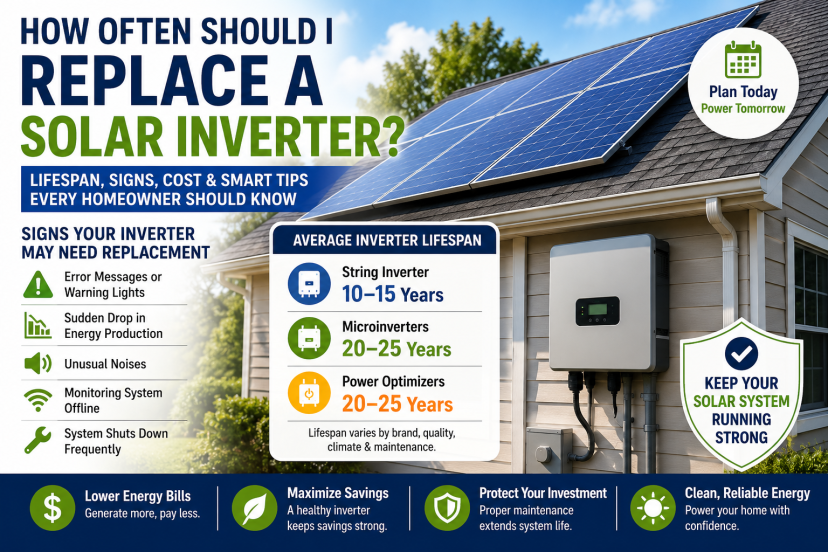
How often should I replace a solar inverter? Solar panels often get most of the attention, but your solar inverter is the true workhorse of your system. While panels generate electricity from sunlight, the inverter converts that electricity into usable power for your home. Without a properly functioning inverter, even the best solar panels can’t deliver energy to your appliances.
If you’re wondering, How often should I replace a solar inverter? You’re asking one of the most important maintenance questions for any solar homeowner. Unlike solar panels that often last 25 to 30 years or more, inverters usually have a shorter lifespan and may need replacement at least once during your system’s lifetime.
The good news is that inverter technology continues to improve, offering greater efficiency, smarter monitoring, and longer warranties than ever before.
In this guide, you’ll learn when solar inverters typically need replacement, what warning signs to watch for, expected costs, and how proper maintenance can help maximize your solar investment.
⭐ Quick Answer: How Often Should I Replace A Solar Inverter?
If you’re asking how often should I replace a solar inverter, most string inverters last about 10–15 years, while microinverters and power optimizers often last 20–25 years. Replacement depends on equipment quality, usage, climate, and maintenance. Regular inspections can help identify problems before complete failure occurs.
Key Takeaways
Most likely cause: Solar inverters naturally wear out faster than solar panels because their electronic components constantly convert DC electricity into usable AC power.
Usually serious? Not if caught early. Most inverters are designed to provide many years of service, but an aging or failing inverter can reduce or completely stop your solar system’s energy production.
First thing to check: Review your inverter’s age, warranty, monitoring data, warning lights, and error messages. If you’re asking how often should I replace a solar inverter, your inverter type and manufacturer warranty are good starting points for estimating its remaining lifespan.
Best solution: Monitor system performance regularly and have persistent faults inspected by a qualified solar professional. Plan ahead for eventual inverter replacement so a failure doesn’t leave your solar system offline for an extended period.
⚡ Why The Solar Inverter Is So Important
The inverter converts the direct current (DC) electricity produced by your solar panels into alternating current (AC) electricity used by your home’s electrical system.
Without it:
- Solar panels cannot power your home.
- Excess electricity cannot be sent to the utility grid.
- Battery storage may not function properly.
- Your system monitoring may stop reporting production.
Because the inverter operates every day, it naturally experiences wear over time.
☀️ How Often Should I Replace A Solar Inverter?
The answer depends largely on the type of inverter installed.
Typical Inverter Lifespans
| Inverter Type | Average Lifespan |
|---|---|
| String Inverter | 10–15 Years |
| Hybrid Inverter | 10–15 Years |
| Microinverters | 20–25 Years |
| Power Optimizers | 20–25 Years |
Most homeowners with traditional string inverter systems should expect at least one inverter replacement during the lifetime of their solar panels.
🔍 Signs Your Solar Inverter May Need Replacement
Inverters rarely fail without warning.
Watch for these common signs:
- Error messages on the inverter display
- Frequent system shutdowns
- Reduced energy production
- Flashing warning lights
- Monitoring app alerts
- Unusual noises
- Burnt electrical smell
- Unexpected increases in utility bills
If your system suddenly stops producing electricity, the inverter is often one of the first components installers inspect.
🌡 Factors That Affect Inverter Lifespan
Several conditions influence how long your inverter lasts.
Climate
High temperatures place additional stress on electronic components.
Hot climates may shorten inverter life compared to cooler regions.
Installation Location
Indoor installations generally experience:
- More stable temperatures
- Less moisture exposure
- Better protection from weather
Outdoor units are designed for weather resistance but still experience greater environmental wear.

System Usage
Larger systems operating near maximum capacity every day may place additional strain on inverter components over many years.
🏠 Can You Upgrade Instead Of Simply Replacing?
Yes.
Many homeowners replace older inverters with newer models that provide:
- Higher efficiency
- Better monitoring apps
- Battery compatibility
- Improved reliability
- Longer warranties
- Smart home integration
An upgrade can improve system performance even if your solar panels remain the same.
💰 Solar Inverter Replacement Costs
Replacement costs depend on inverter type, system size, and labor.
Typical U.S. estimates include:
| Item | Estimated Cost |
|---|---|
| String Inverter | $1,000–$2,500 Installed |
| Hybrid Inverter | $2,000–$4,000+ |
| Microinverter Replacement | Varies By Number Of Units |
| Labor | Depends On Installation Complexity |
Prices vary by manufacturer, location, and installer.
Always request quotes from multiple certified professionals.
🔋 Should You Replace The Inverter When Adding Battery Storage?
Many homeowners install battery storage years after their original solar system.
Sometimes the existing inverter can support batteries.
Other times, homeowners choose to install:
- Hybrid inverters
- Battery-ready systems
- Dedicated battery inverters
Planning future battery storage during inverter replacement can reduce installation costs later.
🛡 Solar Inverter Warranties
Warranty coverage varies by manufacturer.
Typical warranty periods include:
| Equipment | Typical Warranty |
|---|---|
| String Inverter | 10–12 Years |
| Extended Warranty | Up To 20 Years |
| Microinverter | 20–25 Years |
| Solar Panels | 25–30 Years |
Some manufacturers allow homeowners to purchase extended warranty coverage before the original warranty expires.
Review your warranty documents before scheduling replacement.
🔧 Maintenance Tips To Extend Inverter Life
Although inverters require relatively little maintenance, proper care can improve longevity.
Helpful practices include:

- Inspect the inverter periodically for warning lights.
- Keep ventilation openings clear.
- Remove dust from surrounding areas.
- Protect outdoor units from unnecessary impacts.
- Monitor system performance monthly.
- Schedule professional inspections every few years.
Good airflow helps prevent overheating and improves long-term reliability.
📊 Replace Vs Repair
Sometimes repair is possible, while other situations require full replacement.
| Repair | Replacement |
|---|---|
| Minor Electrical Issue | Complete Internal Failure |
| Lower Immediate Cost | New Warranty Coverage |
| Suitable For Newer Units | Better Long-Term Reliability |
| May Extend Service Life | Access To New Technology |
A qualified technician can determine which option offers the best value.
💵 Financial Benefits Of A New Inverter
Replacing an aging inverter may improve:
- Energy conversion efficiency
- System reliability
- Monitoring capabilities
- Battery compatibility
- Long-term electricity savings
Although the improvement may be modest, greater reliability often helps homeowners maximize solar production.
🌎 Federal And State Incentives
While inverter replacement alone may not always qualify for federal tax incentives, larger solar upgrades or battery storage additions may be eligible under certain circumstances.
Depending on your location, homeowners may also find:
- Residential Clean Energy Credit for qualifying projects
- State solar rebate programs
- Utility company incentive programs
- Battery storage incentives
- Net metering benefits
Ask your installer or tax professional about current eligibility requirements.
👷 When To Call A Professional
Contact a certified solar installer if:
- Your inverter is over 10 years old.
- Your system suddenly stops producing electricity.
- Error codes continue after restarting the system.
- Production drops significantly.
- You notice unusual noises or burning odors.
- You’re planning to add battery storage.
- You want to upgrade to newer inverter technology.
Professional diagnostics can identify whether repair or replacement is the most cost-effective solution.

❓ Frequently Asked Questions
1. How often should I replace a solar inverter?
Most string inverters last about 10–15 years, while microinverters and power optimizers often last 20–25 years.
2. Can a solar inverter last 20 years?
Some premium inverters may approach 20 years, but traditional string inverters usually require replacement sooner.
3. What happens if my inverter fails?
Your solar panels may still generate electricity, but it cannot be converted into usable AC power for your home until the inverter is repaired or replaced.
4. Is replacing a solar inverter expensive?
Costs vary, but replacing a residential string inverter typically ranges from about $1,000 to $2,500, depending on equipment and labor.
5. Can I replace a solar inverter myself?
No. Solar inverter replacement involves high-voltage electrical systems and should be performed by a licensed solar or electrical professional.
6. Does replacing an inverter improve efficiency?
Newer inverter models may provide modest efficiency improvements along with better monitoring features and enhanced reliability.
7. Should I replace my inverter before it fails?
If your inverter is nearing the end of its expected lifespan or showing signs of failure, replacing it proactively may help avoid unexpected downtime.
🎯 Final Thoughts On How Often Should I Replace A Solar Inverter?
If you’ve been asking how often should I replace a solar inverter, the answer depends on the type of equipment you own, but most homeowners with traditional string inverters should expect replacement after about 10 to 15 years. Fortunately, newer inverter technology offers improved efficiency, smarter monitoring, and better compatibility with battery storage and future energy upgrades.
Routine maintenance, regular system monitoring, and professional inspections can help extend your inverter’s lifespan and ensure your solar system continues delivering reliable savings for decades. If your inverter is aging or showing signs of trouble, schedule an inspection with a certified solar installer to explore your repair or replacement options.
Disclaimer: Solar inverter lifespans, replacement costs, warranties, tax incentives, rebates, and installation requirements vary by manufacturer, utility provider, and location. Always consult a licensed solar installer or qualified electrician before repairing or replacing any solar equipment.
 Explore more:
- Do Solar Panels Increase Homeowners Insurance?
- How To Choose The Best Solar Setup For My House?
- How Do I Clean Solar Panels Safely?