Hidden Solar Roofing Panels That Look Like Slate: 7 Smart Options, Costs And Benefits For Homeowners
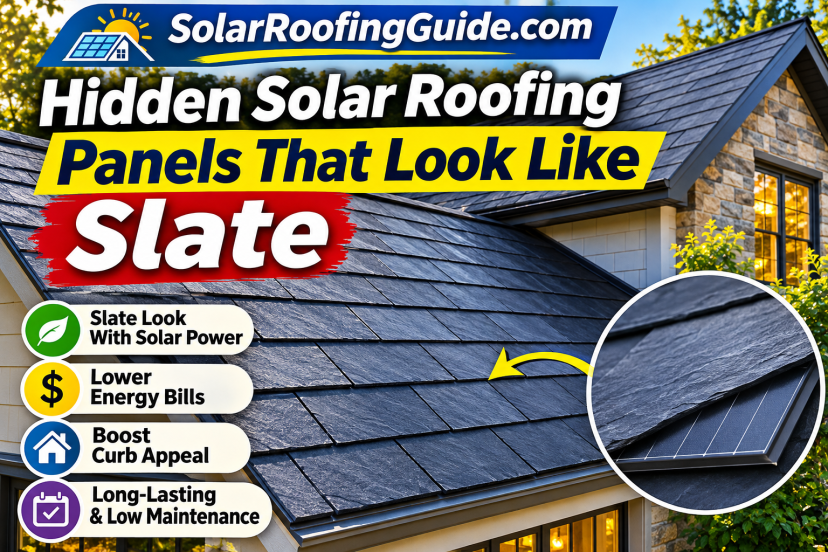
For homeowners with historic properties, luxury houses, or traditional architectural designs, conventional rooftop solar panels may feel out of place. Slate-style solar roofing can help preserve the home’s character while providing some of the financial and environmental benefits of renewable energy.
However, not all solar slate products are equally efficient, affordable, or widely available. Some replace existing roof tiles, while others are designed to blend with surrounding roofing materials. Understanding these differences can help you choose a system that protects your roof, supports long-term savings, and improves your home’s energy efficiency.
☀️ Quick Answer: Hidden Solar Roofing Panels That Look Like Slate
Hidden solar roofing panels that look like slate are building-integrated photovoltaic (BIPV) products designed to resemble traditional slate roofing while generating electricity. They replace selected roof tiles instead of sitting above the roof on conventional mounting racks. These systems can preserve curb appeal and reduce the visual impact of solar installations. However, they generally cost more than standard solar panels, and their availability, efficiency, and installation requirements vary by manufacturer.
Key Takeaways
-
Most Likely Cause Of Concern: Traditional solar panels may clash with the appearance of slate or historic roofing.
-
Usually Serious? No, appearance is mainly a design preference, but improper roof integration can cause serious leaks or electrical problems.
-
First Thing To Check: Roof condition, architectural restrictions, available sunlight, and product compatibility.
-
Best Solution: Compare professionally installed hidden solar roofing panels that look like slate with conventional low-profile solar panels before choosing a system.
🏠 What Are Slate-Look Solar Roofing Panels?
Slate-look solar roofing uses photovoltaic cells incorporated into roof tiles or shingles designed to blend with traditional roofing materials.
Unlike conventional solar panels, which are mounted above the existing roof, building-integrated solar products become part of the roof covering.
Some products have dark, smooth surfaces that resemble slate from a distance. Others use textured finishes or specialized glass to create a more traditional appearance.
The technology works similarly to standard solar panels:
-
Sunlight Reaches The Solar Cells: Photovoltaic materials absorb solar energy.
-
Electricity Is Generated: The cells produce direct-current electricity.
-
An Inverter Converts Electricity: The system produces usable alternating-current power.
-
The Home Uses Solar Energy: Electricity supplies household appliances, with excess production handled according to the utility agreement.
Although these systems may look like ordinary roofing, their electrical connections and waterproofing details require specialized installation.
🏡 7 Hidden Solar Roofing Options That Can Preserve A Slate-Look Roof
1. Solar Slate Roof Tiles
Individual photovoltaic tiles are designed to blend with natural slate roofing. Products such as PV Slate illustrate this approach, although availability and approvals differ by market.
Best for: Traditional homes where matching the existing roof matters.
2. Textured Glass Solar Roof Tiles
Dark glass roofing tiles can create a sleek appearance similar to modern slate. Tesla Solar Roof is one example of an integrated solar roofing concept, though it is not a direct natural-slate replica.
Best for: Homeowners replacing an entire roof.
3. Low-Profile Solar Shingles
Solar shingles integrate electricity generation into a roofing system with a relatively flat appearance. GAF Timberline Solar is an example, but its design resembles asphalt shingles more than slate.
Best for: Homeowners prioritizing low-profile installation over an exact slate appearance.
4. Frameless Black Solar Panels
All-black modules with discreet mounting can appear less noticeable than traditional silver-framed panels.
Best for: Homeowners who want a more affordable alternative to integrated solar roofing.
5. Mixed Solar And Natural Slate Roofing
Active solar tiles can be installed alongside compatible non-solar slate or slate-look tiles to create a coordinated roof.
Best for: Homes requiring only part of the roof to generate electricity.
6. Concealed Rear-Roof Solar Arrays
Conventional panels are placed on a roof slope that is less visible from the street.
Best for: Historic-style homes where preserving the front elevation is important.
7. Separate Solar Carports Or Ground Arrays
Solar panels are installed away from the main house, leaving the slate roof unchanged.
Best for: Properties with strict architectural restrictions or limited roof compatibility.
These options differ significantly in appearance and technology. Only some are genuine slate-look photovoltaic roofing products.
📊 Solar Slate Tiles Vs. Traditional Solar Panels
Before choosing hidden solar roofing panels that look like slate, compare their practical advantages and limitations.
| Feature | Solar Slate-Style Tiles | Traditional Solar Panels |
|---|---|---|
| Appearance | Blends With Roofing | More Visible |
| Installation | Specialized Roofing Work | Standard Solar Mounting |
| Initial Cost | Usually Higher | Usually Lower |
| Energy Efficiency | Product Dependent | Often Higher Per Unit Area |
| Roof Replacement | Often Required | Usually Not Required |
| Maintenance | Specialized Repairs May Be Needed | More Established Service Network |
| Best Application | Design-Sensitive Homes | Maximum Value And Production |
The biggest advantage of slate-style solar roofing is appearance.
However, conventional panels often provide more electricity per dollar because they benefit from larger-scale manufacturing and established installation methods.
💰 How Much Do Hidden Solar Roofing Panels That Look Like Slate Cost?
Solar slate roofing is a premium home improvement product.
Unlike standard rooftop solar installations, integrated systems may require replacing a significant portion of the existing roof.
The following figures are broad U.S. budgeting illustrations rather than verified quotes for a specific slate-style product.
| Roofing Option | Illustrative Installed Cost |
|---|---|
| Conventional 5 kW Solar Array | $12,000–$20,000 |
| Premium Integrated Solar Roof | $30,000–$70,000+ |
| Natural Slate Roof Replacement | $20,000–$50,000+ |
| Custom Solar Slate Roofing | Project-Specific Quote |
Actual costs depend on roof size, system capacity, materials, structural work, location, and installer availability.
For an accurate comparison, request separate estimates for the roofing work and electricity-generating components.
This is especially important because not every roofing expense qualifies for energy incentives.
Are Solar Slate Tiles Worth The Extra Cost?
They may be worthwhile when architectural appearance is a major priority or when the existing roof already needs replacement.
However, homeowners focused primarily on electricity savings will often achieve a better financial return with conventional solar panels.
The strongest value proposition is usually a combination of roof replacement, architectural improvement, and long-term energy generation.
⚡ Solar Efficiency And Long-Term Electricity Savings
The performance of hidden solar roofing panels that look like slate depends on their active solar cell area, conversion efficiency, orientation, and exposure to sunlight.
Decorative textures, inactive roofing sections, and complex roof shapes can reduce total system output.
For example, consider a 5 kW system producing approximately 6,500 kilowatt-hours annually.
At an assumed electricity value of $0.18 per kWh, that production represents approximately $1,170 in potential annual electricity savings.
Actual savings may be lower because of utility export rates, seasonal production, financing, and system losses.
Homeowners can improve overall performance by:
-
Reducing Shading: Keep trees and roof structures from blocking sunlight.
-
Choosing Efficient Equipment: Compare verified power ratings and product certifications.
-
Improving Home Efficiency: Use ENERGY STAR-certified appliances and effective insulation.
-
Monitoring Production: Track system output to identify unexpected performance changes.
-
Maintaining The Roof: Address damaged tiles, drainage issues, and electrical faults promptly.
A well-designed system may operate for decades, but individual components can require repair or replacement during that period.
🛠️ Roof Compatibility, Installation And Warranty Considerations
Not every slate roof is suitable for integrated solar tiles.
The installer must evaluate the roof structure, slope, underlayment, flashing, ventilation, and local wind or snow requirements.
For existing natural slate roofs, removing individual tiles can be difficult because older slate may crack during handling.
A complete roof replacement may be more practical than attempting to integrate new solar products into aging materials.
What To Check Before Installation
-
Structural Capacity: Confirm the roof can support the selected system.
-
Waterproofing: Review flashing, underlayment, and drainage details.
-
Electrical Certification: Verify applicable UL listings and code compliance.
-
Installer Experience: Choose contractors familiar with integrated solar roofing.
-
Warranty Coverage: Compare roofing, electrical equipment, workmanship, and weatherproofing terms.
Traditional solar panels frequently carry performance warranties lasting 25 years or longer.
Integrated solar roof warranties vary considerably. Some cover power production separately from roof weather protection.
Always read the written warranty rather than assuming every part of the system receives identical coverage.
🇺🇸 Federal Solar Tax Credits And State Incentives
For U.S. homeowners planning installations in 2026, incentive rules require careful attention.
The federal Residential Clean Energy Credit under Section 25D is generally unavailable for new qualifying residential solar expenditures made after December 31, 2025, following federal legislation enacted in 2025.
Therefore, homeowners should not automatically assume a new 2026 solar slate roof qualifies for the previously available 30% federal credit.
State and local programs may still provide rebates, property tax benefits, or other incentives.
Useful resources include the Database of State Incentives for Renewables and Efficiency and the IRS Residential Clean Energy Credit Guidance.
👷 When To Call A Professional
Contact a qualified roofing contractor and solar installer before purchasing integrated solar tiles.
Professional assessment is especially important for historic homes, steep roofs, aging slate, complex rooflines, and properties with architectural restrictions.
Ask whether the installer has completed similar projects and can provide product documentation, permit-ready plans, and a detailed written quote.
❓ FAQs About Slate-Look Solar Roofing
1. Can Solar Panels Really Look Like Slate Roof Tiles?
Yes. Certain building-integrated solar products are designed to resemble natural slate roofing. However, appearance varies, and some products are noticeably smoother or darker than genuine slate.
2. Are Hidden Solar Roofing Panels More Expensive?
Usually. Integrated solar roofing often costs more than conventional solar panels because it combines specialized roofing materials, electrical equipment, and installation work.
3. Do Solar Slate Tiles Generate As Much Electricity As Regular Solar Panels?
Not necessarily. Output depends on the specific product and available active area. Conventional panels often deliver greater power per dollar, although individual solar tile products can still provide useful electricity generation.
4. Can Solar Slate Tiles Be Installed On An Existing Slate Roof?
Sometimes, but compatibility must be evaluated carefully. Many integrated products work best during a full roof replacement rather than as a retrofit.
5. How Long Do Solar Slate Roofs Last?
Lifespan depends on the manufacturer, roofing materials, climate, and installation quality. Some systems offer warranties extending 25 years or longer, but warranty duration does not guarantee that every component will last that long.
6. Are Solar Slate Roofs Suitable For Historic Homes?
Possibly. Their discreet appearance can be attractive for historic properties, but local preservation boards and building authorities may restrict visible changes or require special approvals.
7. Are Hidden Solar Roofing Panels That Look Like Slate Worth Buying?
They can be a good choice for homeowners who value architectural appearance and are already planning a roof replacement. For those focused mainly on financial savings, conventional solar panels may offer better value.
📌 Conclusion: Is Slate-Look Solar Roofing Right For Your Home?
Hidden solar roofing panels that look like slate offer an attractive alternative to traditional rooftop solar installations.
They allow homeowners to combine renewable electricity generation with a more traditional roof appearance, potentially preserving curb appeal while reducing long-term energy costs.
However, these systems require careful consideration of product availability, installation complexity, warranties, and financial return.
Start by requesting a professional roof assessment and comparing quotes for integrated solar slate roofing and conventional low-profile panels. The right choice will balance architectural style, energy production, long-term durability, and your home improvement budget.
Disclaimer: Solar roofing prices, incentives, product availability, and installation requirements vary by location. This article provides general educational information. Always consult qualified roofing and electrical professionals before making installation decisions.
Explore more:
- Small Roof Design: Smart Ideas To Maximize Solar
- Can Solar Panels Survive Hurricanes?
- How To Build A Solar Roof For A Yurt?