Can Solar Panels Survive Hurricanes? What Every Homeowner Should Know
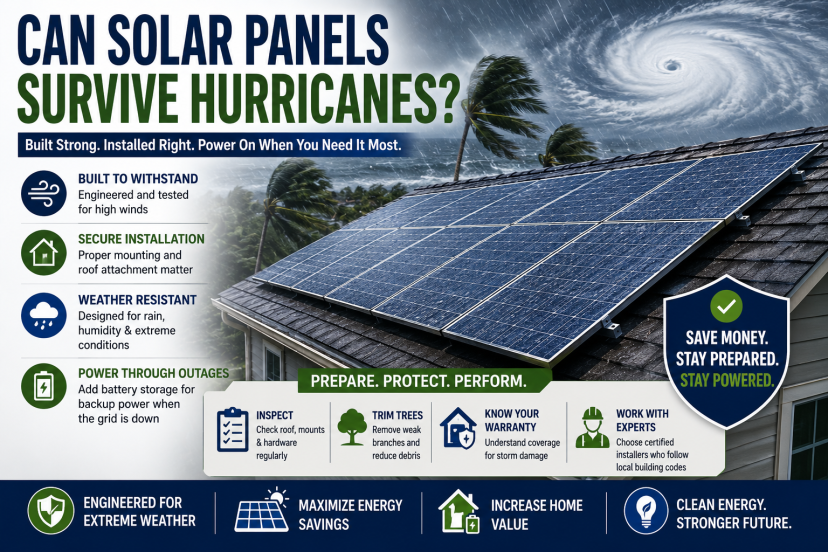
Modern solar panels can survive hurricanes if they are properly engineered, certified, and installed. Hurricanes can bring destructive winds, heavy rain, flying debris, and extended power outages. If you’re considering solar energy—or already own a rooftop system—you may be wondering, Can solar panels survive hurricanes?
The encouraging news is that modern solar panels are engineered to withstand severe weather. When properly installed, many residential solar systems can tolerate hurricane-force winds and continue producing electricity after the storm passes. However, not every system performs the same, and factors such as installation quality, roof condition, mounting hardware, and local building codes all play important roles.
Understanding how solar panels are designed for extreme weather can help you protect your investment while making your home more energy-efficient and resilient.
In this guide, you’ll learn how solar panels perform during hurricanes, how to prepare your system before storm season, and what to inspect afterward.
Quick Answer: Can Solar Panels Survive Hurricanes?
Yes. Most modern solar panels are tested to withstand high winds, and properly installed systems can endure many hurricane conditions. However, survival depends on wind speed, flying debris, roof strength, mounting quality, and compliance with local building codes.
🌪️ Can Solar Panels Survive Hurricanes?
Modern residential solar panels are much stronger than many homeowners realize.
Most high-quality solar panels undergo rigorous testing for:
- High wind loads
- Heavy rain
- Hail impacts
- Snow loads
- Temperature extremes
- Long-term outdoor exposure
Many systems installed in hurricane-prone states such as Florida continue operating successfully after major storms.
Proper installation is often just as important as the equipment itself.
🏠 Roof Strength Matters Just As Much
Even the strongest solar panels rely on a secure roof.
Before installation, your roof should have:
- Good structural condition
- Proper framing
- Secure decking
- Healthy shingles or roofing material
- Adequate remaining lifespan
A weak roof is more likely to fail than properly mounted solar panels.
If your roof needs repairs, complete them before installing solar.
💨 Wind Ratings For Modern Solar Panels
Solar panels are tested under industry standards for wind resistance.
Many residential systems are designed to withstand wind loads equivalent to approximately:
| Wind Rating | Typical Performance |
|---|---|
| 90 mph | Moderate Storms |
| 120 mph | Severe Storms |
| 140–160+ mph | Many Hurricane Zones (Depending On System And Code Requirements) |
Actual performance depends on the complete installation—not just the panels.
Always verify that your installer follows local hurricane building codes.
🔩 Why Installation Quality Is Critical
A quality installation dramatically improves storm resistance.
Professional installers use:
- Engineered mounting systems
- Stainless steel hardware
- Proper flashing
- Roof attachment points
- Wind-load calculations
- Manufacturer-approved components
Improper installation creates far greater risk than the solar panels themselves.
Choose an experienced installer familiar with hurricane-prone regions.
🌧️ Heavy Rain And Water Resistance
Solar panels are designed for outdoor use.
They include weather-resistant construction that protects internal electrical components from:
- Heavy rainfall
- Humidity
- Moisture
- Snow
- Ice
Proper roof flashing also helps prevent water intrusion around mounting points.
🪨 Flying Debris Is Often The Greatest Risk
Although panels handle wind extremely well, airborne debris remains one of the biggest hurricane hazards.
Potential impacts include:
- Tree branches
- Roof shingles
- Outdoor furniture
- Fence materials
- Storm debris
Keeping your yard clear before storms helps reduce the chance of impact damage.
🔋 Battery Storage During Hurricanes
Many homeowners pair solar panels with battery storage for added resilience.
Benefits include:
- Backup power during outages
- Reduced reliance on the electrical grid
- Operation of essential appliances
- Greater energy independence
Without battery storage, most grid-connected solar systems automatically shut down during outages for utility worker safety.
⚡ What Happens During A Power Outage?
Many people assume rooftop solar continues powering the home during an outage.
In most grid-tied systems:
- The inverter automatically shuts down.
- Panels stop supplying electricity to the home.
- Utility workers remain protected.
Systems equipped with battery storage or specialized backup equipment may continue supplying selected circuits.
💵 Hurricane-Resistant Solar Is A Long-Term Investment
A properly installed solar system offers benefits beyond energy savings.
Potential advantages include:
- Lower electricity bills
- Increased home value
- Greater resilience
- Reduced carbon footprint
- Protection against rising utility costs
Homes in hurricane-prone regions often benefit from combining solar with battery backup.
🛡 Warranties And Storm Damage
Most solar panels include warranties covering manufacturing defects—not hurricane damage.
Typical warranty coverage includes:
| Warranty Type | Typical Coverage |
|---|---|
| Product Warranty | 10–25 Years |
| Performance Warranty | 25–30 Years |
| Installation Warranty | 5–25 Years |
Storm damage may instead be covered under your homeowner’s insurance policy.
Review both your insurance policy and solar warranty before hurricane season.
🧰 Preparing Solar Panels Before Hurricane Season
Routine preparation can reduce potential damage.
Helpful steps include:
- Schedule an annual inspection.
- Tighten loose mounting hardware if recommended by your installer.
- Trim nearby tree branches.
- Secure outdoor furniture.
- Clean debris from gutters.
- Review your monitoring system.
- Verify insurance coverage.
Preparation helps protect both your roof and your solar investment.
🌎 Federal And State Incentives
If you’re installing a new solar system or adding battery storage, financial incentives may reduce your costs.
Depending on your location, you may qualify for:
- Residential Clean Energy Credit (Federal Solar Tax Credit)
- State solar rebate programs
- Utility incentives
- Battery storage incentives
- Net metering where available
These programs vary by state and utility provider.

📈 Solar Maintenance After A Hurricane
Once conditions are safe, inspect your system carefully.
Look for:
- Cracked panels
- Loose mounts
- Exposed wiring
- Roof damage
- Water intrusion
- Broken glass
- Debris covering panels
Do not climb onto a damaged roof.
Instead, schedule a professional inspection if you suspect any problems.
⚖️ Solar Panels Vs Traditional Roofing During Hurricanes
| Solar Panels | Traditional Roof Alone |
|---|---|
| Generates Electricity | No Energy Production |
| Professionally Anchored | Standard Roofing Materials |
| Wind-Tested Equipment | Depends On Roofing Material |
| May Pair With Battery Backup | No Backup Power |
| Long-Term Energy Savings | No Energy Savings |
When installed properly, solar panels can be a durable addition to many hurricane-resistant roofing systems.
👷 When To Call A Professional
Contact a certified solar installer or roofing contractor if:
- Your roof experiences storm damage.
- You notice loose solar panels.
- Energy production suddenly drops.
- Panels appear cracked.
- Mounting hardware becomes loose.
- Water leaks develop around roof penetrations.
- Your inverter displays warning messages after a storm.
Professional inspections can identify hidden structural or electrical damage before it becomes more serious.
❓ Frequently Asked Questions
1. Can solar panels survive Category 4 or Category 5 hurricanes?
Many modern systems are engineered for high wind resistance, but actual performance depends on wind speeds, debris impacts, installation quality, and local building codes.
2. Should I remove my solar panels before a hurricane?
No. Properly installed panels are designed to remain attached during severe weather. Removing them is generally unnecessary and impractical.
3. Will my solar panels keep working if the power goes out?
Most standard grid-tied systems automatically shut down during outages unless they include battery storage or backup capabilities.
4. Can hurricanes damage solar panels?
Yes. Flying debris, fallen trees, or severe roof damage can affect solar panels, even if the panels themselves are built for high winds.
5. Do solar panels make my roof more vulnerable?
When installed correctly by qualified professionals, solar panels should not weaken a structurally sound roof.
6. Does homeowner’s insurance cover hurricane damage to solar panels?
Many homeowner’s insurance policies provide coverage, but benefits vary by insurer and policy. Review your coverage before storm season.
7. Should I inspect my solar system after every hurricane?
Yes. Once conditions are safe, inspect the system from the ground and schedule a professional inspection if you notice any signs of damage.
🎯 Final Thoughts
If you’ve been wondering can solar panels survive hurricanes, the answer is encouraging. Modern solar panels are built to withstand severe weather, and when paired with a strong roof and installed by qualified professionals, they can remain secure through many hurricane events. While no system is completely immune to extreme storms, proper installation, regular maintenance, and routine inspections greatly improve durability.
If you live in a hurricane-prone region, consider combining your solar system with battery storage for greater energy resilience during extended outages. A professional roof and solar assessment can help ensure your home is prepared for both clean energy production and severe weather.
Disclaimer: Wind ratings, installation requirements, insurance coverage, warranties, tax incentives, rebates, and solar system performance vary by manufacturer, installer, roof type, and location. Always consult a licensed roofing contractor, certified solar installer, and your insurance provider for recommendations specific to your home and region.
Explore more:
- Small Roof Design: Smart Ideas To Maximize Solar
- Translucent Solar Panels For Patio Roof Coverings
- How To Build A Solar Roof For A Yurt?