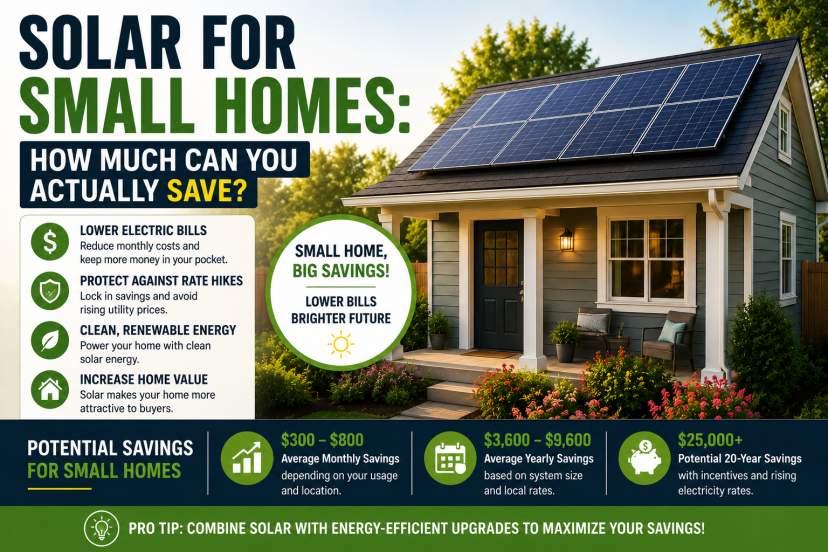
Solar For Small Homes: How Much Can You Actually Save In 2026?
☀️ Why Small Homeowners Are Asking Bigger Questions About Solar
For many homeowners, utility bills no longer feel predictable.
Electricity costs continue rising in many parts of the U.S., and even small homes are becoming surprisingly expensive to power — especially during hot summers or cold winters.
That is why more homeowners are asking:
“If my house is small, could solar actually save me more money than people think?”
In 2026, small-home solar is becoming one of the most practical parts of the residential solar market.
Why?
Because smaller homes usually need:
- Fewer solar panels
- Smaller systems
- Lower installation costs
- Less electricity overall
But the savings are not always as simple as solar companies advertise.
Some homeowners save thousands over time.
Others barely notice a meaningful difference because of poor planning, shading issues, financing costs, or unrealistic expectations.
The key is understanding where the real savings actually come from.
⚡ Quick Answer: How Much Can Small Homes Save With Solar?
Many small homeowners can reduce electricity costs significantly with solar in 2026.
Actual savings depend on:
- Electricity rates
- Sunlight exposure
- Roof space
- Energy usage
- Local incentives
- System quality
For some small homes, solar may offset a large percentage of monthly electricity usage while using fewer panels than larger homes require.
Potential long-term benefits may include:
- Lower monthly utility bills
- Protection from rising energy prices
- Increased home value
- Lower dependence on the grid
However, savings vary heavily between homeowners.
A properly designed system usually matters more than simply installing the largest setup possible.
🔍 Why Small Homes Can Sometimes Save More Than Expected
Smaller Systems Cost Less
One major advantage of small homes is lower installation size.
Smaller systems often mean:

- Fewer solar panels
- Lower labor costs
- Reduced equipment needs
- Faster installation
This can improve the return on investment compared to oversized residential systems.
Energy Efficiency Helps More
Small homes are often naturally more energy-efficient because they have:
- Less square footage
- Fewer rooms
- Lower heating and cooling demands
When combined with efficient appliances, solar becomes far more effective.
Utility Prices Continue Rising
In many states, electricity costs continue to increase year after year.
Solar may help homeowners reduce exposure to future rate hikes.
For some families, predictable energy costs become just as important as the savings themselves.
🏡 Real-Life Situations Where Solar Savings Improve
Small Homes In Sunny States
Homes in states with strong sunlight often generate more solar energy throughout the year.
Examples include:
- Arizona
- Nevada
- Texas
- Florida
- California
In these locations, even compact systems may produce strong long-term savings.
Retirees Downsizing Into Smaller Homes
Many retirees want lower monthly expenses and fewer financial surprises.
Smaller solar systems can help reduce long-term operating costs while improving energy independence.
Energy-Efficient Small Homes
Homes using:
- LED lighting
- Smart thermostats
- Efficient HVAC systems
- Better insulation
- Energy-saving appliances
usually achieve stronger solar performance because they consume less power overall.
Tiny Homes And Minimalist Living
Tiny-home owners often reduce solar costs further by intentionally limiting energy consumption.
This makes smaller solar setups surprisingly practical.
🛠️ Practical Tips To Maximize Solar Savings For Small Homes
Understand Your Real Electricity Usage
Before buying solar:
- Review at least 12 months of electric bills
- Identify seasonal spikes
- Understand high-energy appliances
This prevents overspending on systems larger than necessary.
Improve Energy Efficiency First
Sometimes reducing energy waste provides faster savings than adding more panels.

Helpful upgrades include:
- LED bulbs
- Better insulation
- Window sealing
- Efficient refrigerators
- Smart thermostats
Lower energy usage means smaller solar systems can perform better.
Choose High-Efficiency Panels
Limited roof space makes panel efficiency extremely important.
High-efficiency monocrystalline panels often:
- Produce more energy
- Require fewer panels
- Improve long-term value
This matters especially for compact roofs.
Compare Multiple Solar Quotes
Pricing varies dramatically between installers.
Always compare:
- Panel efficiency
- Warranty coverage
- Financing rates
- Equipment quality
- Estimated production
The cheapest quote is not always the smartest investment.
Think Long-Term
Solar savings usually improve over time.
The biggest benefits often come years later as electricity prices continue rising.

🚫 Common Small Home Solar Mistakes That Reduce Savings
Buying Oversized Systems
Some homeowners install more solar capacity than they realistically need.
This can:
- Increase financing costs
- Extend payback periods
- Waste roof space
Smaller homes usually benefit most from carefully sized systems.
Ignoring Shade Problems
Trees, chimneys, and nearby buildings can reduce production significantly.
Even partial shading may impact overall performance.
Focusing Only On Monthly Financing Payments
Low monthly payments may hide:
- Higher interest costs
- Longer loan terms
- Reduced long-term savings
Always calculate total repayment costs.
Expecting Zero Electric Bills
Most homeowners still pay:
- Grid connection fees
- Seasonal electricity charges
- Utility minimums
Solar typically reduces bills — not always eliminates them.
Installing Solar On An Aging Roof
Roof replacement after installation can become expensive because panels may need removal and reinstallation.
❓ FAQ: Solar For Small Homes Savings
How much can solar reduce electric bills?
Savings vary heavily depending on energy usage, sunlight exposure, and system size.
Many homeowners reduce a large portion of their monthly electricity costs.

Are small homes better for solar?
In some cases, yes.
Smaller systems may cost less while still covering a large percentage of household electricity needs.
How many panels does a small home need?
Many small homes use between 6 and 14 panels, depending on usage and roof conditions.
Is solar still worth it in 2026?
For many homeowners, yes — especially in areas with rising electricity costs and strong sunlight.
Do solar panels increase home value?
In many markets, solar panels increase home value. Buyers view solar as a valuable upgrade because of lower utility costs.
What is the biggest mistake homeowners make?
Overspending on oversized systems or ignoring energy efficiency improvements before installation.
🌱 Final Thoughts On Solar Savings For Small Homes
Solar for small homes can absolutely create meaningful savings in 2026.
But the biggest savings usually come from smart planning — not simply buying the largest system possible.
The homeowners who benefit most often focus on:
- Energy efficiency
- Realistic energy usage
- High-efficiency panels
- Proper system sizing
- Long-term value
Small homes may actually have an advantage because they require less energy to begin with.
And when solar is paired with efficient living habits, even compact systems can help reduce utility costs, improve energy independence, and create more predictable monthly expenses for years to come.
Disclaimer: This article is for informational purposes only and should not be considered financial, electrical, or professional installation advice. Always consult qualified solar and roofing professionals before making major home energy decisions.
 Explore more:
- Best Home Solar Kit In 2026
- Is A Solar Roof Worth It For Small Homes In 2026?
- Integrated Solar Roof Tiles