Can You Install Solar Panels On A Flat Roof? Complete Guide For Homeowners
☀️ Thinking About Solar But Have A Flat Roof?
If your home or building has a flat roof, you might be wondering:
👉 Can you install solar panels on a flat roof—and is it worth it?
The short answer is yes—and in many cases, flat roofs are actually ideal for solar.
For U.S. homeowners looking to cut energy bills, increase home value, and improve efficiency, flat roofs offer unique advantages that pitched roofs don’t.
In this guide, you’ll learn how solar panels on flat roof systems work, the best mounting options, costs, and what to watch out for before installing.
🏠 Solar Panels On Flat Roof: Quick Answer
Yes, you can install solar panels on flat roof systems, and they often perform extremely well.
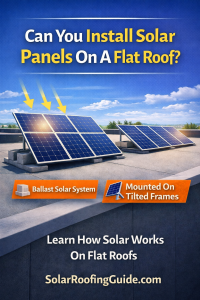
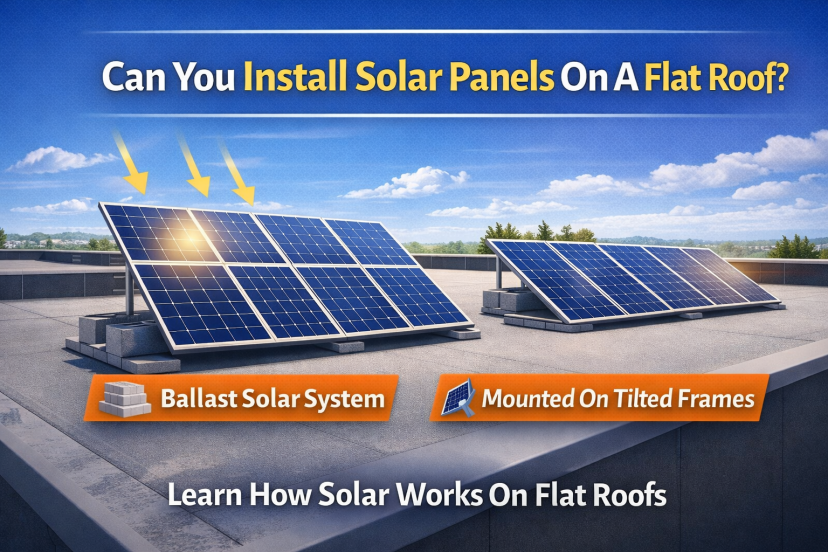
Instead of lying flat, panels are installed using tilted racking systems that:
- Optimize sun exposure
- Improve energy production
- Maintain proper drainage
👉 With the right setup, flat roof solar systems can match—or even outperform—sloped roof installations.

🔋 How Solar Panels On Flat Roof Systems Work
Unlike sloped roofs, flat roofs require specialized mounting systems.
🛠️ Key Components
- Solar panels
- Tilt frames (to angle panels toward the sun)
- Racking systems
- Ballast or anchors
⚙️ Why Tilt Matters
Flat panels would collect less sunlight.
That’s why installers use tilt angles (typically 10–30 degrees) to:
- Maximize energy production
- Reduce dirt buildup
- Improve efficiency
👉 This is a core advantage of flat roof solar mounting—you control the angle.
🧱 Flat Roof Solar Mounting Options
There are two main types of flat roof solar mounting systems:
🪨 Ballast Solar System (Most Common)
A ballast solar system uses weight (like concrete blocks) to hold panels in place—without drilling into the roof.
✅ Benefits
- No roof penetration
- Faster installation
- Lower risk of leaks
- Easier maintenance
⚠️ Considerations
- Adds extra weight to the roof
- Requires structural evaluation
🔩 Attached (Penetrating) Mounting System
This system anchors directly into the roof structure.
✅ Benefits
- Lighter than ballast systems
- More secure in high-wind areas
⚠️ Considerations
- Requires waterproof sealing
- Slightly higher installation complexity
⚖️ Ballast vs Attached Systems Comparison
| Feature | Ballast Solar System | Attached System |
|---|---|---|
| Roof penetration | No | Yes |
| Weight | Higher | Lower |
| Installation speed | Faster | Moderate |
| Leak risk | Very low | Depends on sealing |
| Best for | Commercial/strong roofs | Residential / wind zones |
👉 Choosing the right flat roof solar mounting depends on your roof structure and location.
☀️ Benefits Of Solar Panels On Flat Roof
Flat roofs offer several unique advantages.
✅ Key Benefits
- Optimal panel angle for maximum sun exposure
- Flexible panel layout and spacing
- Easier access for maintenance
- Better airflow under panels (improves efficiency)
👉 In some cases, flat roofs can outperform pitched roofs due to ideal positioning.
💰 Costs Of Installing Solar On A Flat Roof
💵 Average Costs In The U.S.
- Typical system: $15,000–$30,000 (before incentives)
- Flat roof mounting may add 5–15% extra cost
💡 Why Slightly Higher?
- Additional racking systems
- Engineering for ballast systems
- Custom layout design
🏡 Incentives That Offset Costs
- Federal Solar Tax Credit (ITC): 30% of system cost
- State rebates and local incentives
- Net metering programs
👉 These incentives can significantly reduce upfront costs.
🌧️ Drainage And Waterproofing Considerations
One of the biggest concerns with solar panels on flat roof systems is drainage.
⚠️ Potential Issues
- Water pooling
- Blocked drainage paths
- Roof membrane damage
✅ Best Practices
- Maintain clear drainage paths
- Elevate panels above the roof surface
- Use professional waterproofing methods
👉 Proper installation ensures your roof stays protected.
🏠 Roof Compatibility And Weight Limits
Flat roofs must handle additional load—especially with ballast systems.
📊 Typical Load Factors
- Solar panels + racking: 2–4 PSF
- Ballast system: additional weight varies
🧠 What Installers Check
- Structural load capacity
- Roof age and material
- Building codes
👉 Most commercial and modern homes can handle this—but verification is essential.
🔧 Installation Tips For Flat Roof Solar
✅ Smart Installation Strategies
- Use tilt angles optimized for your latitude
- Space panels to avoid shading
- Align rows for maximum airflow
- Choose corrosion-resistant materials
🛠️ Advanced Optimization
- East-west layouts for balanced production
- Microinverters for panel-level efficiency
- Monitoring systems for performance tracking
🔋 Long-Term Performance And Maintenance
Flat roof systems are easy to maintain.
🧼 Maintenance Tips
- Clean panels 1–2 times per year
- Inspect mounting systems annually
- Monitor system output
⏳ Lifespan
- Solar panels: 25–30 years
- Mounting systems: 20+ years
👉 Easy access makes flat roof systems simpler to service than pitched roofs.
⚡ Energy Production: Flat vs Sloped Roof
| Factor | Flat Roof Solar | Sloped Roof Solar |
|---|---|---|
| Angle control | Adjustable | Fixed |
| Efficiency potential | High | Moderate |
| Installation flexibility | Excellent | Limited |
| Aesthetics | Less visible | More visible |
👉 With proper design, solar panels on flat roof systems can achieve equal or better performance.
🏡 When Flat Roof Solar Makes The Most Sense
Flat roof solar is ideal if:
- You have a commercial building or a modern home
- Your roof has minimal shading
- You want maximum control over panel angle
- You prefer a low-visibility installation
🛠️ When To Call A Professional
Contact a certified installer if:
- You’re unsure about your roof’s load capacity
- Your roof has drainage issues
- You’re deciding between ballast and attached systems
- You want a custom solar layout
A professional will design a system that maximizes performance while protecting your roof.
❓ FAQs About Solar Panels On Flat Roof
1. Can solar panels be installed on a flat roof?
Yes. Solar panels on flat roof systems use tilt frames to optimize sunlight and work very efficiently.
2. What is a ballast solar system?
A ballast solar system uses weighted blocks to hold panels in place without drilling into the roof.
3. Do flat roof solar panels need drilling?
Not always. Ballast systems avoid drilling, while attached systems require secure anchoring.
4. Are flat roofs better for solar panels?
They can be, because you can adjust panel angles for maximum efficiency.
5. Will solar panels damage my flat roof?
No, if installed properly. Professional systems protect the roof and maintain waterproofing.
6. How much weight do flat roof solar systems add?
Typically 2–4 PSF for panels, plus additional weight if using ballast systems.
7. Do solar panels affect roof drainage?
They can if installed poorly. Proper design ensures water flows freely.

✅ Conclusion: Flat Roof Solar Is A Smart And Flexible Option
So, can you install solar panels on flat roof systems?
👉 Absolutely—and in many cases, it’s one of the best setups available.
With the right design:
- You maximize energy production
- Protect your roof
- Increase long-term savings
🚀 Next Step
If you’re considering solar:
- Get a professional roof evaluation
- Compare mounting system options
- Request a customized solar quote
👉 A properly designed flat roof system can power your home efficiently for decades.
⚠️ Disclaimer
Solar system performance, costs, and incentives vary by location and roof condition. Always consult a licensed solar installer or roofing professional for accurate recommendations tailored to your home.
 Explore more: