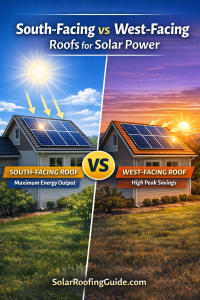
South-Facing vs West-Facing Roofs For Solar Power: What’s The Best Roof Direction For Solar?
☀️ Why Roof Direction Matters More Than Most Homeowners Think
If you’re thinking about going solar, one question can dramatically impact your savings:
What is the best roof direction for solar?
The answer directly affects how much electricity your system produces—and how fast it pays for itself.
For U.S. homeowners looking to cut energy bills, protect their roof, and gain energy independence, roof orientation isn’t just a detail—it’s a key decision factor.
In simple terms:
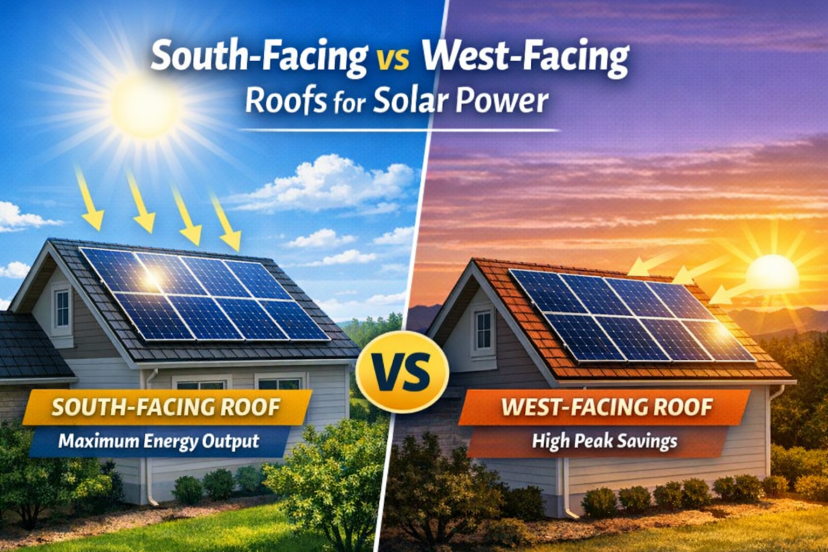
- South-facing roofs typically produce the most total energy
- West-facing roofs can produce slightly less overall—but often deliver power when you need it most
Understanding this trade-off is the difference between a good solar investment and a great one.
🏠 Best Roof Direction For Solar: Quick Answer
The best roof direction for solar in the U.S. is south-facing, because it captures the most sunlight throughout the day.
However:

- West-facing roofs can still generate 85–95% of the energy of south-facing systems
- In some cases, west-facing systems may save more money due to peak-time energy production
Bottom line: South is best for total output. West can be better for real-world savings.
☀️ Understanding Sun Path In The U.S.
Solar panel performance depends on how the sun moves across the sky.
In the United States:
- The sun rises in the east
- Travels across the southern sky
- Sets in the west
That means:
- South-facing roofs get consistent sunlight all day
- West-facing roofs get strong afternoon and evening sunlight
This sun path is why the best roof direction for solar is usually south—but not always the most practical choice.
🔋 South Facing Roof Solar: Maximum Energy Production
✅ Why South-Facing Roofs Are Considered Ideal
A south-facing roof solar setup is the gold standard for one reason: maximum exposure.
Benefits include:
- Higher total yearly energy production
- More consistent sunlight throughout the day
- Faster return on investment
- Ideal for net metering programs
📊 Typical Performance
- 100% baseline production (reference standard)
- Most efficient angle for fixed solar panels
- Best alignment with federal and state incentives
💰 Financial Advantage
With higher output, south-facing systems:
- Offset more electricity usage
- Maximize savings under net metering
- Increase eligibility for the Federal Solar Investment Tax Credit (ITC)
🌇 West Facing Roof Solar Output: Underrated But Powerful
⚡ Why West-Facing Roofs Still Make Sense
A west facing roof solar output system may produce slightly less energy overall—but it shines during peak hours.
Benefits include:
- Strong afternoon and evening production
- Better alignment with high electricity rates
- Ideal for households at home during the evening
📊 Typical Performance
- 85–95% of south-facing production
- Peak output between 3 PM and sunset
💰 Real-World Savings Potential
In many U.S. states, electricity rates are higher in the afternoon (Time-of-Use pricing).
That means:
- West-facing systems produce energy when it’s most valuable
- You may save more money—even with slightly lower output
⚖️ South vs West Facing Roofs: Side-By-Side Comparison
| Feature | South-Facing Roof | West-Facing Roof |
|---|---|---|
| Total energy production | Highest (100%) | Slightly lower (85–95%) |
| Peak production time | Midday | Afternoon/evening |
| ROI speed | Faster | Slightly slower |
| Best for net metering | Yes | Yes |
| Best for Time-of-Use plans | Moderate | Excellent |
| Ideal homeowner | Daytime usage | Evening usage |
👉 Choosing the best roof direction for solar depends on your lifestyle—not just your roof.
🔧 Roof Orientation And Installation Considerations
🏠 Roof Angle (Pitch)
Ideal solar angles in the U.S.:
- 15–40 degrees works well
- Close to your latitude is optimal
🌳 Shading Factors
Even the best roof direction for solar won’t help if your roof is shaded.
Watch for:
- Trees
- Chimneys
- Nearby buildings
🔩 Mounting Systems
Installers can optimize orientation using:
- Tilted racking systems
- Microinverters or power optimizers
- Panel layout adjustments
💰 Costs And Incentives In The U.S.
💵 Federal Solar Tax Credit (ITC)
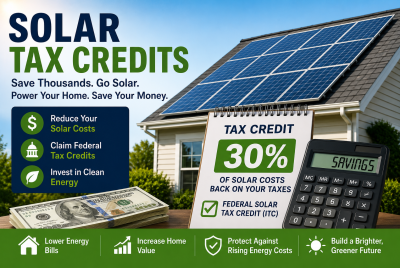
- Covers 30% of system cost (as of current policy)
- Applies to both south and west-facing systems
🏡 State And Utility Incentives
Depending on your state:
- Rebates for solar installation
- Net metering programs
- Time-of-Use rate benefits
💡 Key Insight
👉 The best roof direction for solar is the one that maximizes your financial return, not just energy output.
🔋 Battery Storage: A Game-Changer For West-Facing Roofs
Pairing solar with batteries can shift the equation.
Benefits:
- Store excess daytime energy
- Use it during peak evening hours
- Reduce reliance on the grid
For west-facing systems:
- Batteries amplify their natural advantage
- Increase overall savings potential
🧰 Maintenance And Long-Term Performance
Solar systems require minimal maintenance, regardless of orientation.
✅ Best Practices
- Clean panels 1–2 times per year
- Monitor system performance via the app
- Schedule annual inspection
⏳ Lifespan
- Panels: 25–30 years
- Inverters: 10–15 years
Orientation (south vs west) does not significantly affect lifespan.
🏠 Roof Compatibility And Warranties
Before installing solar:
- Ensure your roof has at least 10–15 years of life left
- Check roofing materials (asphalt shingles, metal, tile)
🔒 Warranty Considerations
- Solar panel warranty: 20–25 years
- The roof warranty may be affected if not installed properly
Always use certified installers to protect both warranties.
📍 When West-Facing Might Be Better Than South
There are real scenarios where west wins:
- You use most of the electricity in the evening
- Your utility uses Time-of-Use pricing
- Your south roof is shaded
- Your west roof has better condition or space
In these cases, the best roof direction for solar may actually be west.

🛠️ When To Call A Professional
Contact a certified solar or roofing installer if:
- You’re unsure about your roof’s condition
- You want a custom production estimate
- You need help comparing roof orientations
- You plan to replace your roof before solar
A professional can run a solar shading and production analysis to determine the best setup for your home.
❓ FAQs About The Best Roof Direction For Solar
1. What is the best roof direction for solar panels in the U.S.?
South-facing roofs are generally best because they receive the most consistent sunlight throughout the day.
2. Are west-facing solar panels worth it?
Yes. West-facing panels can produce 85–95% of south-facing output and may save more money during peak electricity hours.
3. How much less efficient is a west-facing roof?
Typically, about 5–15% less total energy production compared to south-facing systems.
4. Can east-facing roofs work for solar?
Yes, but they produce less energy than south or west-facing systems. They generate more power in the morning.
5. Does roof direction affect solar panel lifespan?
No. Orientation impacts production, not the durability or lifespan of the panels.
6. What if my roof faces multiple directions?
Installers can split panels across different roof sections to maximize total energy production.
7. Do solar trackers make direction less important?
Solar trackers can improve performance but are rarely used in residential systems due to cost and complexity.
✅ Conclusion: Choose The Best Roof Direction For Solar Based On Your Goals
If your goal is maximum energy production, south-facing roofs are the clear winner.

But if your goal is maximum savings and real-world efficiency, west-facing roofs can be just as powerful—sometimes even better.
The smartest move is to:
- Evaluate your energy usage patterns
- Compare production estimates
- Consider incentives and electricity pricing
Then choose the setup that delivers the best long-term value for your home.
⚠️ Disclaimer
Solar performance, costs, and incentives vary by location, utility provider, and system design. Always consult a licensed solar installer or roofing professional for accurate estimates tailored to your home.
 Explore more:
- Best Solar Roofing Setups For Emergency Backup In 2026
- Solar For Tiny Homes
- Can You Install Solar Panels On A Flat Roof?