Roof Inspection Solar: The Homeowner’s Step-By-Step Guide To Preparing Your Roof For Solar Panels In 2026
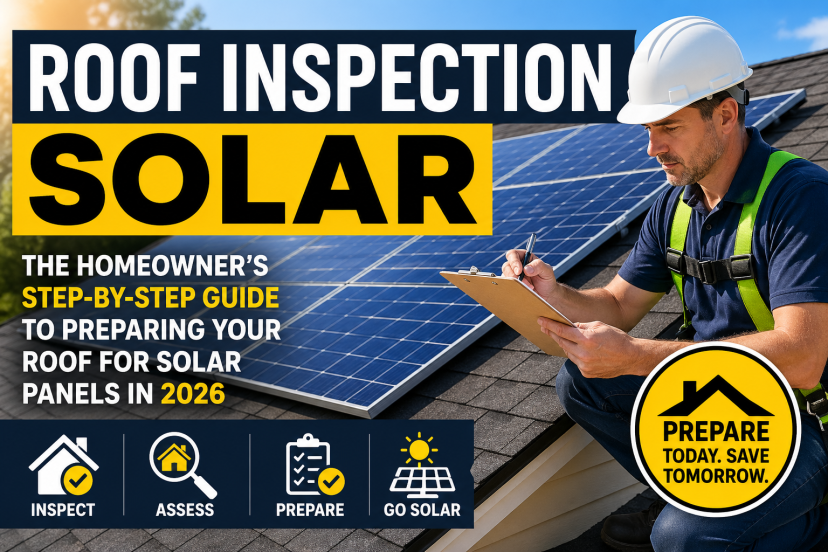
☀️ Thinking About Solar? Start With Your Roof
Installing solar panels is one of the smartest upgrades homeowners can make in 2026.
But here’s what most people overlook…
👉 Your roof condition can make or break your entire solar investment.
A proper roof inspection for solar helps you:
- Avoid unexpected repair costs
- Ensure maximum panel efficiency
- Extend the lifespan of your solar system
- Prevent installation delays or failures
If your roof isn’t ready, your solar project could cost thousands more than expected.
This guide walks you step-by-step through exactly how to prepare your roof the right way.
🔍 What Is A Roof Inspection For Solar?
A roof inspection solar process evaluates whether your roof is suitable for solar panel installation.
It focuses on three main areas:

- Structural integrity
- Remaining roof lifespan
- Sunlight exposure and orientation
Unlike a basic roof check, this inspection is specifically designed for solar compatibility.
⚠️ Why Roof Inspection Matters More In 2026
Solar adoption is growing rapidly in the U.S., and installation standards are becoming stricter.
In 2026, homeowners face:
- Stricter building codes
- Higher installation costs
- Longer system lifespans (25–30 years)
That means your roof must last just as long as your solar panels.
👉 Installing solar on a weak roof is one of the most expensive mistakes homeowners make.
🏠 Step-By-Step Roof Inspection Solar Checklist
Here’s exactly how to prepare your roof before installing solar panels.
1. Check Your Roof Age First
The first question to ask:
👉 How old is your roof?
Typical lifespans:
- Asphalt shingles: 20–25 years
- Metal roofing: 40–70 years
- Tile roofing: 50+ years
Rule of thumb:
- If your roof is older than 15–20 years → consider replacing it before solar
Why this matters:
- Removing solar panels later to fix your roof is expensive
- Reinstalling panels can cost thousands
2. Inspect For Visible Damage
Look for obvious warning signs:
- Cracked or curling shingles
- Leaks or water stains
- Sagging roof areas
- Mold or moss buildup
Even small issues can worsen after solar installation.
👉 Solar panels add weight and limit access, making repairs harder later.
3. Evaluate Roof Structure And Load Capacity
Solar panels typically add:
- 2–4 pounds per square foot
Your roof must safely support:
- Panel weight
- Mounting hardware
- Wind and weather loads
A professional inspector or structural engineer can confirm this.
4. Assess Roof Orientation And Sun Exposure
Not all roofs are ideal for solar.
Best conditions include:
- South-facing (in the U.S.)
- Minimal shade from trees or buildings
- Roof angle between 15–40 degrees
Even partial shading can reduce energy output significantly.
5. Check Roofing Material Compatibility
Some roofing materials are easier for solar installation:
Best options:
- Asphalt shingles
- Standing seam metal roofs
More complex (but possible):
- Tile roofs
- Slate
👉 Complex materials increase installation cost and time.
6. Review Roof Condition Around Flashing And Seals
Flashing protects areas like:
- Chimneys
- Vents
- Skylights
Damaged flashing can lead to leaks after installation.
👉 Solar mounting systems must integrate with these areas properly.
7. Inspect Attic Ventilation And Insulation
Good airflow helps:

- Prevent heat buildup
- Improve panel efficiency
- Extend roof life
Check for:
- Proper ventilation
- Insulation quality
Poor ventilation can reduce solar performance.
8. Hire A Professional Solar Roof Inspection
DIY checks are helpful, but not enough.
A professional inspection includes:
- Structural analysis
- Roof lifespan estimate
- Solar Readiness Assessment
👉 Many solar companies offer this for free or at a low cost.
💡 Should You Replace Your Roof Before Going Solar?
This is one of the most common homeowner questions.
Replace your roof if:
- It has less than 10–15 years left
- There are visible damage issues
- You plan to stay in your home long-term
Keep your roof if:
- It’s relatively new
- It’s structurally sound
- No major repairs are needed
👉 Combining roof replacement + solar installation can save money long-term.
💰 Cost Of Roof Inspection For Solar In 2026
Typical costs:
- Basic inspection: $150–$400
- Structural inspection: $300–$800
- Full solar assessment: often free with installers
Factors that affect cost:
- Roof size
- Complexity
- Location
- Accessibility
🚫 Common Mistakes Homeowners Make
Avoid these costly errors:

- Installing solar on an old roof
- Skipping professional inspection
- Ignoring minor roof damage
- Choosing the cheapest installer
- Not planning for long-term maintenance
👉 These mistakes can cost thousands later.
⚡ How Roof Condition Affects Solar Efficiency
Your roof directly impacts energy production.
Poor conditions can cause:
- Reduced panel output
- Overheating issues
- Water damage under panels
- Shortened system lifespan
A well-prepared roof ensures:
- Optimal sunlight capture
- Maximum ROI
- Fewer repairs
🛠️ How Long The Roof Inspection Solar Process Takes
Typical timeline:
- DIY inspection: 30–60 minutes
- Professional inspection: 1–2 hours
- Full solar evaluation: 1–3 days (including report)
🏡 Preparing Your Roof For Installation Day
Before installation, make sure to:
- Clear debris from roof
- Trim nearby trees
- Fix any minor damage
- Confirm permits and approvals
👉 Preparation speeds up installation and reduces risk.
🔮 Roof Inspection Solar Trends In 2026
New trends homeowners should know:
- Drone roof inspections
- AI-based solar analysis
- Integrated solar roofing systems
- Stricter safety regulations
These innovations make inspections faster and more accurate.
❓ FAQs: Roof Inspection Solar
Do I need a roof inspection before installing solar panels?
Yes. A roof inspection ensures your roof can support panels and avoid costly repairs later.
Can solar panels damage my roof?
Not if installed correctly. In fact, they can protect parts of your roof from the weather.
How long should my roof last before installing solar?
At least 20–30 years to match solar panel lifespan.
What happens if my roof fails after installation?
Panels must be removed and reinstalled, which can cost thousands.
Is roof inspection included in solar quotes?
Often yes, but always confirm with your installer.
🧠 Final Thoughts: Don’t Skip This Step
A proper roof inspection solar process is the foundation of a successful solar installation.
It protects your:
- Investment
- Home structure
- Long-term energy savings
👉 The smartest homeowners in 2026 aren’t just installing solar…
They’re preparing their roofs the right way first.
 Disclaimer
 Disclaimer
This content is for informational purposes only and does not replace professional roofing, engineering, or solar installation advice. Always consult licensed professionals for property-specific recommendations and safety requirements.
 Explore more:
- Best Solar Roofing Setups For Emergency Backup In 2026
- Small Home Solar Setup
- Can You Install Solar Panels On A Flat Roof?