How To Build A Solar Roof For A Yurt: 7 Smart Steps To Save Money And Avoid Costly Mistakes
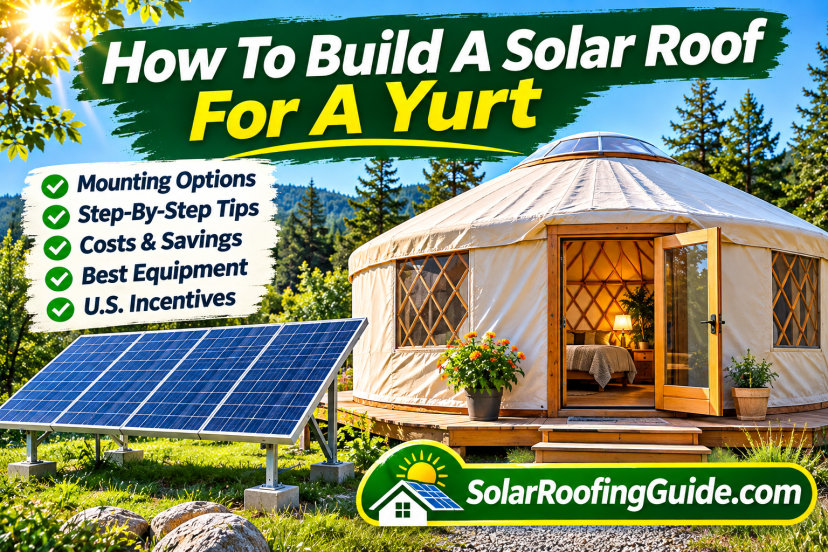
Yurts are becoming an attractive option for homeowners interested in smaller living spaces, off-grid lifestyles, and energy-efficient housing. Their circular design can provide a comfortable living environment, but their unique roof construction makes traditional solar installation more challenging.
Fortunately, there are several practical ways to power a yurt with solar energy. Whether you want to run lights, charge electronics, operate a refrigerator, or reduce dependence on the electrical grid, understanding mounting options, system costs, battery storage, and installation requirements can help you choose a safer, more affordable solution.
☀️ Quick Answer: How To Build A Solar Roof For A Yurt
The best way to build a solar roof for a yurt is to start with a structural assessment and choose a mounting system that can safely support the panels. Traditional fabric yurts generally need separate solar supports, while some engineered wooden-roof yurts may accommodate rooftop solar. Calculate your electricity needs, select appropriate panels and inverters, obtain required permits, and use qualified professionals for structural attachments and electrical work. Ground-mounted solar is often the simplest and safest choice.
Key Takeaways
Most Likely Cause: Solar installation difficulties usually come from the yurt’s curved roof, fabric covering, limited load capacity, and unusual framing.
Usually Serious? Potentially. Improper mounting can damage the roof, create leaks, or overload structural components.
First Thing To Check: Confirm the yurt manufacturer’s roof load limits, roofing material, and available sunlight.
Best Solution: When researching how to build a solar roof for a yurt, compare engineered roof-mounted systems with ground-mounted solar before purchasing equipment.
🏠 1. Understand Your Yurt’s Roof Structure
Before installing solar panels, identify what type of yurt you own.
Traditional yurts often feature a circular wooden lattice wall, radial roof rafters, a central compression ring, and a tension cable or band. The roof is typically covered with fabric or a flexible membrane.
Modern permanent yurts may use insulated rigid roofing, engineered timber framing, or other reinforced structural systems.
These differences are important because solar panels introduce additional weight and wind forces.
Traditional Fabric Yurts
Fabric-covered yurts are generally poor candidates for direct mounting of conventional rigid solar panels.
The roof membrane is designed to provide weather protection, not serve as a structural attachment surface.
Drilling through it can create leaks and damage the covering.
Permanent Wooden-Roof Yurts
Some permanent yurts have rigid roof systems that may support solar panels.
However, roof suitability must be confirmed by the manufacturer or a structural engineer.
The engineer must consider the panels, mounting hardware, snow accumulation, wind uplift, and the way loads transfer through the yurt’s frame.
Never assume that a strong-looking wooden roof can safely support solar equipment.
🔧 2. Choose The Best Solar Mounting Option
Choosing the right mounting system is one of the most important decisions when learning how to build a solar roof for a yurt.
Three approaches are worth considering.
| Solar Mounting Option | Best For | Main Drawback |
|---|---|---|
| Ground-Mounted Solar | Traditional Fabric Yurts | Requires Outdoor Space |
| Engineered Roof-Mounted Solar | Reinforced Permanent Yurts | Higher Structural Complexity |
| Solar Carport Or Canopy | Yurts With Nearby Parking Or Patio Space | Requires A Separate Structure |
Ground-Mounted Solar Panels
Ground mounting is often the most practical choice for yurt owners.
Panels can face the ideal direction for sunlight without being restricted by the yurt’s circular roof.
They are also easier to inspect, clean, and replace.
However, the installation may require concrete foundations, underground wiring, and protection against animals or accidental damage.
Engineered Roof-Mounted Solar
Roof-mounted solar can save yard space and reduce the distance between the panels and electrical equipment.
However, this option should only be considered when the roof structure has been specifically evaluated for solar loads.
Custom brackets and approved waterproofing details may be necessary.
Solar Canopies And Carports
A solar canopy offers another useful alternative.
It can generate electricity while creating shade for a vehicle, outdoor seating area, or equipment storage.
For homeowners who want to preserve the appearance of their yurt, a separate solar structure may be especially appealing.
📐 3. Calculate How Much Solar Power Your Yurt Needs
The next step is estimating daily electricity consumption.
A small off-grid yurt may need considerably less electricity than a conventional American house, but heating, cooling, and cooking choices make a major difference.
Example Daily Electricity Usage
| Appliance | Estimated Daily Use |
|---|---|
| LED Lighting | 0.20 kWh |
| Small Refrigerator | 0.80 kWh |
| Laptop And Electronics | 0.40 kWh |
| Water Pump | 0.30 kWh |
| Fans And Miscellaneous Devices | 0.30 kWh |
| Total | 2.00 kWh |
These are illustrative figures, not appliance ratings.
If your yurt uses approximately 2 kWh per day, a 1-kW solar array could cover much of that demand under favorable sunlight conditions.
However, battery charging losses, cloudy weather, seasonal sunlight changes, and equipment efficiency must be considered.
Estimate Solar Production
A simple planning formula is:
Daily Solar Energy = System Size (kW) × Peak Sun Hours × Performance Factor
For example:
1.5 kW × 4 peak sun hours × 0.75 = 4.5 kWh per day
This is an illustrative estimate. Actual production varies by location, season, shading, panel orientation, and equipment.
The NREL PVWatts Calculator can help estimate solar production for a specific U.S. location.
🔋 4. Select Solar Panels, Inverters, And Batteries
A complete yurt solar system needs more than photovoltaic panels.
The exact components depend on whether the yurt is connected to the utility grid.
Essential Solar Equipment
-
Solar Panels: Convert sunlight into direct-current electricity.
-
Inverter: Converts DC electricity into usable AC power for household appliances.
-
Charge Controller: Regulates charging in battery systems that require a separate controller.
-
Battery Storage: Stores energy for nighttime use or periods with limited sunlight.
-
Mounting Hardware: Secures panels to an approved support structure.
-
Electrical Protection: Includes properly designed disconnects, overcurrent protection, grounding, and other required safety equipment.
Grid-Tied Vs. Off-Grid Solar
A grid-connected yurt can use solar electricity while maintaining access to utility power.
An off-grid yurt requires careful battery and backup planning.
For example, a yurt consuming 2 kWh daily might need approximately 5 kWh of nominal battery capacity to provide about two days of storage, depending on usable battery capacity, system losses, and operating conditions.
Cold temperatures and winter solar production can also affect battery performance.
Lithium iron phosphate batteries are popular for residential energy storage, but homeowners should choose listed equipment designed for the intended application and follow manufacturer temperature limits.
💰 5. Compare Yurt Solar Installation Costs And Incentives
Solar installation costs vary depending on system size, mounting requirements, battery storage, and labor.
A small off-grid system may cost considerably less than a full residential solar installation.
Estimated Yurt Solar System Costs
| System Type | Illustrative Budget |
|---|---|
| Small 500W Solar Setup | $800–$2,000 |
| 1–2 kW Off-Grid System With Battery | $3,000–$8,000 |
| 3–5 kW Ground-Mounted System | $8,000–$18,000 |
| Custom Yurt Roof Solar Installation | $10,000–$25,000+ |
These are broad planning allowances, not verified market quotes. Battery size, site work, professional labor, and permitting can substantially increase costs.
Federal Solar Tax Credit In 2026
The federal Residential Clean Energy Credit previously provided a 30% tax credit for qualifying residential solar installations.
However, the credit is no longer available for residential solar installations completed after December 31, 2025, according to the IRS. Homeowners planning new installations in 2026 should not include that former credit in their savings calculations.
State rebates, utility incentives, and local programs may still be available.
Check the Database of State Incentives for Renewables & Efficiency for programs in your area.
You can also explore ENERGY STAR appliances to help reduce the electricity your yurt needs.
🛠️ 6. Follow A Safe Solar Installation Plan
Once you understand how to build a solar roof for a yurt, the next step is organizing the project.
The following process applies to professionally designed rooftop installations and separate ground-mounted systems.
Seven Steps To Plan Your Yurt Solar System
-
Inspect The Yurt: Identify roof materials, framing limitations, and existing damage.
-
Calculate Energy Demand: Estimate daily electricity use and seasonal peak demand.
-
Choose A Mounting Location: Compare sunlight exposure, available space, and structural suitability.
-
Select Solar Equipment: Choose compatible panels, inverters, batteries, and mounting hardware.
-
Obtain Required Permits: Confirm local zoning, building, and electrical requirements.
-
Arrange Qualified Installation: Have professionals complete structural work and electrical connections.
-
Test And Inspect The System: Complete required inspections before energizing the equipment.
For grid-connected systems, local permitting, inspection, and utility approval are generally required.
Protect The Roof And Equipment Warranties
Before approving any roof-mounted system, review the yurt manufacturer’s warranty.
Attaching equipment to unsupported roof components may void coverage.
Also compare solar panel performance warranties, inverter warranties, battery warranties, and installer workmanship coverage.
Keep all installation drawings and inspection records.
📈 7. Calculate Long-Term Savings And Maintenance
Solar power can reduce ongoing electricity expenses, particularly for grid-connected yurts with favorable electricity rates.
For example, suppose a solar system produces 3,000 kWh annually.
If every generated kilowatt-hour offsets electricity worth $0.20, its theoretical annual value is:
3,000 × $0.20 = $600 per year
A $6,000 installation would have a simplified payback period of approximately 10 years.
Actual savings depend on electricity use, export compensation, battery losses, maintenance, and financing.
For off-grid yurts, the financial comparison is different. Solar may reduce generator fuel consumption, but batteries and backup power add expenses.
Maintenance Tips For Yurt Solar Systems
-
Monitor Production: Check solar output regularly for unusual declines.
-
Inspect Mounting Hardware: Arrange periodic checks for corrosion or movement.
-
Check Wiring: Have damaged or exposed electrical components inspected promptly.
-
Maintain Batteries: Follow manufacturer temperature, ventilation, and maintenance requirements.
-
Keep Panels Clear: Remove excessive debris using approved methods and avoid unsafe roof access.
Well-maintained solar panels can continue producing electricity for decades, although output gradually decreases.
👷 When To Call A Professional
Contact a qualified solar installer or structural engineer whenever your project involves roof attachments, custom support frames, battery system design, or permanent electrical connections.
This is especially important for traditional fabric yurts, snow-prone locations, and areas with high winds.
Look for experienced installers with appropriate licenses and relevant NABCEP certifications.
❓ Frequently Asked Questions
1. Can You Put Solar Panels Directly On A Yurt Roof?
Sometimes, but conventional rigid panels should not be attached directly to unsupported fabric roofing. Reinforced permanent yurts may accommodate solar equipment if their structures are professionally evaluated.
2. How Many Solar Panels Do You Need To Power A Yurt?
A small yurt with modest electricity needs might use three or four 400-watt panels. Larger yurts with air conditioning, electric heating, or other high-demand appliances may need substantially more.
3. Can A Yurt Run Completely On Solar Power?
Yes, an appropriately designed off-grid solar system can power a yurt. However, battery storage and backup generation may be necessary during extended cloudy periods or winter weather.
4. Are Flexible Solar Panels Suitable For Yurt Roofs?
Flexible solar panels may be lighter than conventional rigid modules, but they are not automatically suitable for fabric roofs. Attachment methods, roof movement, heat buildup, and waterproofing must be evaluated.
5. How Much Does It Cost To Solar Power A Yurt?
A modest off-grid yurt solar system may cost several thousand dollars, while larger systems with substantial battery storage can exceed $15,000. Installation complexity and equipment selection determine the final price.
6. Do You Need A Permit To Install Solar Panels On A Yurt?
Often, yes. Permit requirements depend on local building codes, zoning regulations, electrical rules, and whether the system connects to the utility grid. Some portable systems may be treated differently.
7. Is Ground-Mounted Solar Better Than Roof-Mounted Solar For A Yurt?
Ground-mounted solar is often preferable for traditional yurts because it avoids adding loads and penetrations to the roof. It also allows easier maintenance and more flexible panel positioning.
🎯 Conclusion: Build A Smarter Solar-Powered Yurt
Learning how to build a solar roof for a yurt begins with understanding the structure, choosing a safe mounting approach, and calculating realistic energy needs.
Although rooftop solar may work on some reinforced yurts, ground-mounted systems are often the simpler and more practical choice.
The right system can reduce electricity expenses, support off-grid living, and make your yurt more energy independent.
Before purchasing solar equipment, compare mounting options, estimate your electricity demand, and request quotes from qualified solar installers.
A well-planned solar installation should provide reliable power without compromising the safety, appearance, or long-term durability of your yurt.
Disclaimer: Solar installation costs, incentives, permits, and structural requirements vary by location. Always consult qualified solar installers, licensed electricians, and structural professionals before beginning installation.
Explore more: