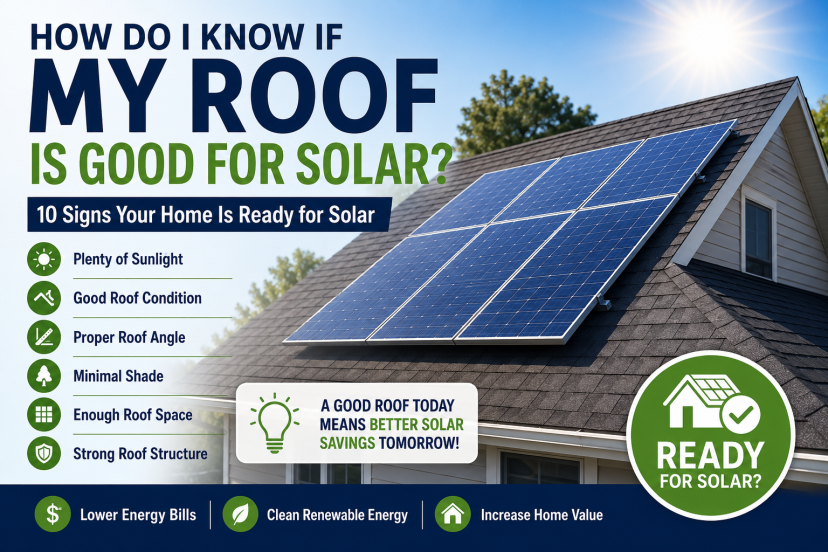
How Do I Know If My Roof Is Good For Solar? 10 Signs Your Home Is Ready
If you’ve been thinking about lowering your electricity bills and making your home more energy-efficient, solar panels are probably on your radar. But before comparing installers or calculating savings, there’s one important question to answer: How do I know if my roof is good for solar?
The good news is that many U.S. homes are excellent candidates for rooftop solar. However, factors like your roof’s age, condition, direction, slope, shading, and available space all play a major role in determining how much electricity your system can produce.
Understanding these factors before installation can help you maximize energy production, avoid costly surprises, and get the best return on your investment.
In this guide, you’ll learn exactly what makes a roof suitable for solar, what warning signs to watch for, and how professional roof and solar inspections can help you make a confident decision.
⭐ Quick Answer: How Do I Know If My Roof Is Good For Solar?
If you’re wondering how do I know if my roof is good for solar, look for a roof that is in good condition, receives plenty of direct sunlight, has minimal shade, offers enough usable space, and is expected to last at least another 15–20 years. A professional solar site assessment can confirm whether your roof is an excellent candidate.
Key Takeaways
Most likely cause: If you’re asking, “How do I know if my roof is good for solar?” the biggest factors are usually roof condition, sunlight exposure, shading, orientation, and available space.
Usually serious? Not usually, but an aging, damaged, heavily shaded, or poorly positioned roof may reduce solar performance or require repairs before installation.
First thing to check: Check your roof’s age and condition, then look at how much direct sunlight it receives throughout the day and whether trees, chimneys, or nearby buildings create significant shade.
Best solution: Schedule a professional roof inspection and solar site assessment before installing panels. This can confirm your roof’s structural condition, usable space, sun exposure, and expected solar production.
☀️ Why Roof Quality Matters For Solar Panels
Your roof is the foundation of your solar energy system.
Since solar panels often remain installed for 25 to 30 years, your roof should be able to support them throughout most of that lifespan.
A suitable roof helps:
- Maximize energy production
- Reduce installation challenges
- Prevent future roof repairs
- Improve long-term savings
- Increase home value
Installing solar on an aging or damaged roof can lead to unnecessary costs if the roof needs replacement shortly after installation.
🏠 How Do I Know If My Roof Is Good For Solar? Key Factors To Check
Several factors determine whether your roof is compatible with solar panels.
Roof Age
A newer roof is generally better.
If your asphalt shingle roof is already 20 years old, replacing it before installing solar may be the smarter financial decision.
Typical roof lifespans include:
| Roofing Material | Average Lifespan |
|---|---|
| Asphalt Shingles | 20–30 Years |
| Metal Roofing | 40–70 Years |
| Tile Roofing | 50+ Years |
| Slate Roofing | 75–100 Years |
If your roof has many years of life remaining, it’s usually a strong candidate.
Roof Condition
Look for signs of damage, including:
- Missing shingles
- Roof leaks
- Soft decking
- Curling shingles
- Water stains
- Sagging roof areas
Solar installers typically recommend repairing these issues before installation.
Available Roof Space
The larger the usable roof area, the larger your solar system can be.
Obstacles that reduce usable space include:

- Chimneys
- Skylights
- Roof vents
- Dormers
- HVAC equipment
More uninterrupted space generally means higher solar production.
🌞 Roof Direction And Sun Exposure
One of the biggest factors affecting solar performance is how much sunlight reaches your roof.
In most parts of the U.S.:
- South-facing roofs produce the most energy.
- Southwest and southeast-facing roofs also perform well.
- East- and west-facing roofs can still provide excellent savings.
- North-facing roofs are generally less productive.
Even if your roof isn’t perfectly south-facing, modern solar panels remain highly efficient.
🌳 Shade Can Affect Solar Performance
Too much shade lowers electricity production.
Common sources include:
- Mature trees
- Neighboring homes
- Chimneys
- Utility poles
- Nearby buildings
Even partial shading during peak sunlight hours can reduce overall system output.
Professional installers often use specialized tools to analyze year-round shading before recommending a system.
📐 Roof Pitch And Solar Installation
Roof pitch affects both energy production and installation.
Most residential solar systems perform well on roof slopes between 15 and 40 degrees.
Steeper roofs may require additional installation equipment, while very flat roofs often use specialized mounting systems to achieve an optimal angle.
Fortunately, modern mounting technology allows solar panels to work effectively on many roof styles.
🛠 Which Roofing Materials Work Best?
Most common roofing materials are compatible with solar installations.
| Roofing Material | Solar Compatibility |
|---|---|
| Asphalt Shingles | Excellent |
| Standing Seam Metal | Excellent |
| Composite Roofing | Very Good |
| Concrete Tile | Good |
| Clay Tile | Good (Special Care Needed) |
| Slate | Possible But More Complex |
| Wood Shake | Less Common |
Experienced installers understand how to safely install systems on nearly every roof type.
💵 How A Good Roof Saves Money Over Time
A suitable roof can increase the financial benefits of solar by:
- Lowering installation costs
- Reducing maintenance expenses
- Maximizing electricity production
- Increasing system lifespan
- Improving return on investment
Many homeowners recover installation costs through years of reduced utility bills.
⚡ Federal And State Solar Incentives
Installing solar may qualify you for valuable financial incentives.
Depending on your location, you may benefit from:

- 🇺🇸 Residential Clean Energy Credit (Federal Solar Tax Credit)
- 💰 State solar rebates
- ⚡ Utility company incentive programs
- 🔋 Battery storage rebates
- 🌱 Net metering where available
These programs can significantly reduce the total cost of going solar.
Always verify current incentive availability before beginning your project.
🔧 Solar Panel Maintenance After Installation
Solar panels require relatively little maintenance.
To keep your system operating efficiently:
- Inspect panels several times each year.
- Remove leaves and debris when safe.
- Trim nearby tree branches.
- Monitor system performance through your solar app.
- Schedule professional inspections every few years.
- Check after severe storms or hail.
Routine maintenance helps maximize long-term energy production.
🛡 Roof And Solar Warranties
Understanding warranties provides peace of mind.
Typical coverage includes:
| Warranty Type | Typical Coverage |
|---|---|
| Solar Panel Performance | 25–30 Years |
| Product Warranty | 10–25 Years |
| Inverter Warranty | 10–25 Years |
| Installation Workmanship | 5–25 Years |
| Roofing Warranty | Varies By Manufacturer |
Ask your installer how the solar installation may affect your existing roofing warranty.
📊 Should You Replace Your Roof Before Installing Solar?
Sometimes replacing the roof first is the smarter long-term decision.
Consider roof replacement if:

- The roof is nearing the end of its lifespan.
- Multiple repairs are already needed.
- Leaks are present.
- Structural issues exist.
- You plan to stay in the home for many years.
Replacing the roof before installation avoids paying to remove and reinstall panels later.
🔍 Professional Roof Inspection Vs DIY Evaluation
Here’s how the two compare:
| DIY Inspection | Professional Inspection |
|---|---|
| Identifies Visible Damage | Evaluates Structural Integrity |
| Checks Obvious Shading | Uses Advanced Solar Modeling |
| Free | May Have Inspection Fee |
| Good Starting Point | Best For Final Decision |
A certified roofing or solar contractor can identify issues that aren’t visible from the ground.
👷 When To Call A Professional
Contact a certified solar installer or roofing contractor if:
- Your roof is more than 15–20 years old.
- You notice leaks or damaged shingles.
- Large trees create significant shading.
- You’re unsure about roof strength.
- Your roof has multiple angles or complex architecture.
- You want an accurate estimate of energy production.
- You’re comparing solar installation quotes.
A professional assessment can help you avoid costly mistakes and determine whether your roof is truly ready for solar.
❓ Frequently Asked Questions
1. How do I know if my roof is good for solar without climbing on it?
Look for obvious signs like good sun exposure, minimal shade, and a roof in good condition. A professional inspection can confirm compatibility.
2. What roof direction is best for solar panels?
South-facing roofs generally produce the most electricity, although east-, west-, southeast-, and southwest-facing roofs can also perform well.
3. Can older roofs support solar panels?
Yes, if they’re structurally sound. However, roofs nearing the end of their lifespan are often replaced before solar installation.
4. What if my roof has some shade?
Partial shade doesn’t automatically rule out solar. Modern panel designs and power optimizers can reduce the impact of shading.
5. Does roof pitch matter?
Yes. Most residential roofs with moderate slopes are excellent candidates for solar installations.
6. Will solar panels damage my roof?
When installed by qualified professionals, solar panels should not damage a properly maintained roof.
7. Can I install solar if I plan to replace my roof later?
It’s usually more cost-effective to replace the roof before installing solar panels to avoid future removal and reinstallation costs.

📌 Conclusion: How Do I Know If My Roof Is Good For Solar?
If you’ve been asking how do I know if my roof is good for solar, the answer depends on a combination of roof condition, age, sunlight exposure, shading, available space, and structural integrity. Fortunately, many U.S. homes meet these requirements and can benefit from decades of clean, renewable energy.
Before moving forward, schedule a professional roof and solar assessment to confirm your home’s suitability. With the right roof and a properly designed system, you can lower your electricity bills, improve your home’s energy efficiency, and enjoy long-term savings while increasing your property’s value.
Disclaimer: Solar panel performance, installation costs, tax credits, rebates, warranties, and local building requirements vary by location. Always consult a licensed roofing contractor and certified solar installer before making decisions about your roof or solar energy system.
 Explore more:
- How Often Should I Replace A Solar Inverter?
- How To Choose The Best Solar Setup For My House?
- How Do I Clean Solar Panels Safely?