Invisible Solar Roof Tiles For Historic Conservation Zones: 7 Smart Ways To Preserve Your Home And Save Energy

For owners of historic homes, installing solar power presents a unique challenge. Modern photovoltaic panels can change the appearance of an older building, particularly when installed on highly visible roof sections. Local preservation rules may restrict these alterations to protect the character of historic neighborhoods.
Fortunately, discreet solar roofing technology offers several possible solutions. From slate-look photovoltaic tiles to solar shingles and concealed installations, homeowners have more choices than traditional rooftop panels. Understanding the costs, performance differences, approval requirements, and long-term savings can help you choose a system that respects your home’s history while improving energy efficiency.
☀️ Quick Answer: Invisible Solar Roof Tiles For Historic Conservation Zones
Invisible solar roof tiles for historic conservation zones are specialized photovoltaic roofing products designed to blend with traditional slate, clay, or other historic roofing materials. They generate electricity while reducing the visual impact of conventional solar panels. However, no solar tile is completely invisible, and approval depends on local historic preservation regulations. Homeowners should first consult their local preservation office, evaluate roof condition, and compare heritage-style solar tiles with less visible conventional solar installations.
Key Takeaways
Most Likely Cause: Historic preservation restrictions often limit visible changes to traditional roofing materials and architectural features.
Usually Serious? Not necessarily, but unapproved roofing alterations can lead to enforcement action, costly corrections, or damage to historic materials.
First Thing To Check: Confirm whether your property is subject to local historic district rules, landmark designation, or preservation easements.
Best Solution: When considering invisible solar roof tiles for historic conservation zones, prioritize approved heritage-compatible products, less visible roof sections, and professional preservation guidance.
🏛️ 1. Understand Historic Preservation Rules Before Installing Solar
Historic homes often face stricter renovation requirements than modern residential buildings.
In the United States, these restrictions may apply to properties located within local historic districts, designated landmarks, or buildings protected by preservation easements.
The term conservation zone is more common in some countries outside the United States. American homeowners are more likely to encounter local historic preservation commissions or architectural review boards.
What Do Historic Preservation Boards Consider?
Review boards may evaluate:
-
Street Visibility: Whether solar equipment can be seen from public roads or sidewalks.
-
Roof Materials: Whether new roofing matches existing slate, clay, wood, or metal.
-
Architectural Character: Whether alterations change important historic features.
-
Installation Reversibility: Whether solar equipment can be removed without damaging historic materials.
-
Roof Integrity: Whether the installation affects original roofing or structural components.
The National Park Service provides guidance through its Secretary of the Interior’s Standards for Rehabilitation.
These standards encourage preserving historic materials and minimizing changes to character-defining features.
Importantly, National Register listing alone does not automatically prohibit private homeowners from installing solar. Local rules and other legal protections determine applicable restrictions.
🏠 2. Compare The Best Invisible Solar Roofing Options
Several technologies can reduce the visual impact of residential solar installations.
However, not every product marketed as invisible or heritage-friendly will satisfy local preservation requirements.
Solar Roofing Comparison
| Solar Roofing Option | Historic Appearance | Main Limitation |
|---|---|---|
| Slate-Look Solar Tiles | Resembles Traditional Slate | Higher Cost And Limited Availability |
| Terracotta-Style Solar Tiles | Designed For Clay Tile Roofs | Product-Specific Performance |
| Low-Profile Solar Shingles | Blends With Some Modern Roofing | May Not Match Historic Materials |
| Concealed Standard Panels | Preserves Visible Roof Areas | Requires Suitable Hidden Space |
| Ground-Mounted Solar | Leaves Historic Roof Untouched | Requires Land And Possible Approval |
Slate-Look Solar Roof Tiles
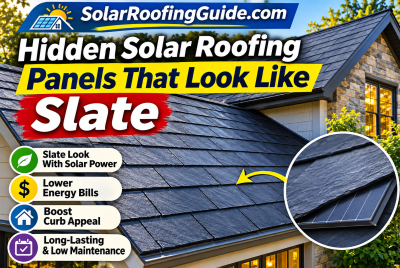
Slate-look photovoltaic tiles are designed to resemble traditional dark roofing.
They may be suitable for historic properties where conventional panels would create an obvious visual contrast.
However, homeowners should compare actual samples with the existing roof.
Differences in color, thickness, surface texture, and reflection can remain noticeable.
Terracotta-Style Solar Tiles
Terracotta-style solar tiles attempt to preserve the warm appearance of traditional clay roofing.
Some specialty products use colored or textured surfaces to conceal photovoltaic cells.
These designs may sacrifice some solar efficiency to achieve a closer visual match.
Product availability, certification, and installer support should be verified before purchasing.
Low-Profile Solar Shingles
Solar shingles integrate photovoltaic technology into a roofing system.
They generally sit closer to the roof surface than conventional framed solar panels.
However, many solar shingles are designed for modern asphalt-style roofing rather than historic slate or clay.
They may be appropriate for some older homes without being suitable for a protected historic roof.
📐 3. Check Roof Compatibility And Solar Performance
Before choosing invisible solar roof tiles for historic conservation zones, inspect the existing roof.
Older properties may have fragile materials, uneven roof surfaces, aging underlayment, or framing that requires reinforcement.
A roofing specialist familiar with historic buildings should evaluate the roof before installation.
Important Roof Compatibility Checks
-
Roof Structure: Confirm the framing can support the selected solar roofing system.
-
Roof Condition: Identify damaged materials, leaks, or deteriorated decking.
-
Material Compatibility: Verify that new tiles work with the existing roof assembly.
-
Waterproofing: Review flashing, underlayment, and drainage requirements.
-
Electrical Routing: Plan cable locations that minimize changes to historic features.
Do Invisible Solar Tiles Produce Less Electricity?
Sometimes. Decorative coatings, colored surfaces, and unusual tile shapes may reduce the amount of sunlight reaching photovoltaic cells.
However, performance varies significantly between products.
For example, a 5-kilowatt system producing 1,300 kWh per installed kilowatt annually would generate approximately:
5 × 1,300 = 6,500 kWh per year
A heritage-style system with a lower effective output might generate less electricity from the same roof area.
Use product-specific performance data and the NREL PVWatts Calculator to estimate annual production.
💰 4. Understand Installation Costs And Solar Incentives
Specialty solar roofing generally costs more than conventional rooftop solar panels.
The higher price may reflect custom materials, complex installation, specialized labor, and limited product availability.
Estimated Solar Roofing Costs
The following figures are illustrative planning ranges, not verified current market quotes.
| Installation Type | Approximate Cost |
|---|---|
| Conventional 5-kW Rooftop Solar | $12,000–$20,000 |
| Low-Profile 5-kW Solar Shingles | $20,000–$35,000+ |
| Heritage-Style 5-kW Solar Roofing | $25,000–$50,000+ |
| Ground-Mounted 5-kW Solar | $15,000–$25,000+ |
Specialty roof replacement costs may be additional, and some systems cannot be priced meaningfully by solar capacity alone.
Request itemized quotes separating roofing, electrical equipment, structural work, and preservation-related expenses.
Federal Solar Tax Credit In 2026
The federal Residential Clean Energy Credit previously allowed qualifying homeowners to claim 30% of eligible residential solar costs.
However, under legislation enacted in 2025, the credit is no longer available for residential installations completed after December 31, 2025.
Therefore, homeowners planning new solar projects in 2026 should not assume they qualify for the former 30% federal credit.
State and local incentives may still be available.
Check the Database of State Incentives for Renewables & Efficiency for relevant programs.
Historic rehabilitation incentives may also exist, but eligibility depends on the property, project, and program. Federal historic rehabilitation tax credits generally apply to qualifying income-producing properties rather than ordinary owner-occupied homes.
🔧 5. Plan A Historic-Friendly Solar Installation
Installing invisible solar roof tiles for historic conservation zones requires careful coordination between roofing contractors, solar specialists, and preservation authorities.
Seven Steps For A Successful Installation
-
Review Historic Designation: Determine which preservation restrictions apply to your property.
-
Contact The Preservation Office: Ask about approved solar technologies and required applications.
-
Inspect The Existing Roof: Evaluate structural condition and historic materials.
-
Compare Solar Products: Review appearance, efficiency, certifications, and warranty terms.
-
Prepare Installation Drawings: Include roof elevations, equipment specifications, and visibility details.
-
Obtain Written Approvals: Secure preservation, building, and electrical permits before construction.
-
Complete Professional Installation: Arrange inspections and utility authorization where required.
Why Reversible Installation Matters
Historic preservation guidance often favors changes that minimize permanent damage.
For example, installing conventional panels on a concealed rear roof may sometimes be preferable to replacing original slate with solar tiles.
A reversible mounting system can preserve more historic material and simplify future restoration.
However, even reversible installations must meet structural and electrical safety requirements.
⚡ 6. Calculate Long-Term Energy Savings
The financial value of solar roofing depends on installation costs, electricity rates, system output, and available incentives.
Consider a historic home with a solar roofing system producing 5,000 kWh annually.
If the electricity offsets purchases worth $0.20 per kWh, the potential annual value would be:
5,000 × $0.20 = $1,000 annually
For a $30,000 installation, the simplified payback period would be approximately 30 years.
That calculation excludes financing, maintenance, future electricity rates, and replacement costs.
It also assumes every generated kilowatt-hour provides the same value, which may not be true under utility export compensation rules.
Is Heritage Solar Roofing Worth The Premium?
For some homeowners, the benefits extend beyond electricity savings.
Heritage-compatible solar roofing may help preserve architectural appearance while introducing renewable energy technology.
However, homeowners should compare the premium against alternatives such as concealed standard panels or a separate solar structure.
If the existing historic roof remains in good condition, replacing it solely to install solar tiles may not be the most economical or preservation-friendly decision.
🛡️ 7. Protect Historic Roofing Materials And Warranties
Solar roofing can remain productive for decades, but maintenance is essential.
Historic properties may require more specialized inspections than modern homes.
Recommended Maintenance Practices
-
Inspect Roofing: Check for damaged tiles, leaks, and deteriorating flashing.
-
Monitor Solar Output: Watch for unexpected changes in electricity production.
-
Protect Historic Materials: Avoid abrasive cleaning or unauthorized roof alterations.
-
Check Electrical Components: Arrange professional inspections when damage is suspected.
-
Maintain Documentation: Keep product warranties, permits, installation drawings, and maintenance records.
Many solar modules carry performance warranties of approximately 25 years or longer, but coverage varies.
Solar roofing warranties may separately address power production, weather resistance, product defects, and workmanship.
Read the exclusions carefully, particularly those involving roof modifications and third-party repairs.
👷 When To Call A Professional
Contact a historic roofing specialist, structural engineer, or qualified solar installer before modifying a protected roof.
Professional guidance is especially important when the property has original slate, clay tiles, decorative roof features, or complex preservation restrictions.
Choose installers with appropriate licenses and experience working on historic properties. Relevant NABCEP certifications can help when evaluating solar expertise.
❓ Frequently Asked Questions
1. Are Invisible Solar Roof Tiles Really Invisible?
No. Invisible solar tiles are designed to blend with traditional roofing materials, but differences in color, reflection, texture, or shape may still be noticeable.
2. Can You Install Solar Panels In A Historic District?
Often, yes. However, local historic preservation rules may limit placement, visibility, roofing materials, and installation methods. Approval requirements vary by jurisdiction.
3. Do Solar Roof Tiles Look Like Real Slate?
Some specialty solar tiles closely resemble natural slate. However, the appearance depends on the manufacturer, installation pattern, and surrounding roofing materials.
4. Are Invisible Solar Roof Tiles More Expensive Than Regular Panels?
Generally, yes. Specialty solar roofing often involves higher material costs, complex installation, and fewer qualified installers.
5. Can Historic Homes Qualify For Solar Incentives?
Some may qualify for state, local, or utility incentives. The former federal residential solar tax credit is unavailable for new installations completed after December 31, 2025.
6. Do Solar Roof Tiles Damage Historic Buildings?
They can if installed improperly. Removing original materials, creating roof penetrations, or altering historic features may cause damage. Professional preservation planning helps reduce these risks.
7. What Is The Best Solar Alternative For A Protected Historic Roof?
Concealed conventional panels, ground-mounted systems, and solar carports may offer practical alternatives when heritage-style solar tiles are unsuitable or too expensive.
🎯 Conclusion: Can Historic Homes Benefit From Invisible Solar Roofing?
Invisible solar roof tiles for historic conservation zones offer an interesting way to combine renewable energy with traditional architecture.
However, the best solution depends on the property’s preservation status, roof condition, available sunlight, and project budget.
Specialty solar tiles may be appropriate when visual compatibility is essential, but they are not always the most affordable or least invasive option.
For many historic homeowners, discreet conventional panels or separate solar structures may provide better financial value while protecting original roofing materials.
Before investing in heritage-style solar roofing, contact your local preservation office, compare approved installation options, and request detailed quotes from qualified solar and historic roofing contractors.
A carefully planned installation can help reduce energy expenses while preserving the architectural character that makes your historic home special.
Disclaimer: Solar roofing costs, incentives, preservation regulations, and installation requirements vary by location. Always consult licensed installers, qualified roofing professionals, and local preservation authorities before beginning work.
Explore more: