What Is The Most Energy-Efficient Roofing? 7 Best Options For Lower Energy Bills
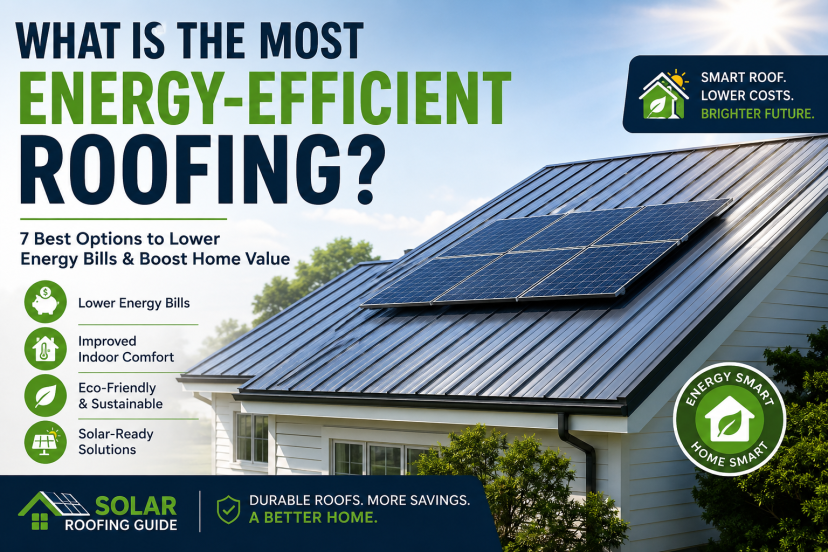
Your roof does much more than keep rain out. It also plays a major role in how much heat enters your home—and how hard your air conditioner has to work during hot weather. If you’re replacing an aging roof, you may naturally wonder, what is the most energy-efficient roofing for your home?
The answer depends on your climate, roof design, insulation, budget, and whether you plan to install solar panels. In sunny parts of the U.S., a highly reflective roof can reduce unwanted heat absorption. In colder regions, insulation, air sealing, durability, and proper ventilation may matter just as much as roof color.
Fortunately, homeowners now have several energy-efficient roofing options, including reflective metal roofing, cool-roof shingles, tile, and solar-ready roofing systems.
Choosing carefully can help improve indoor comfort, reduce cooling demand, protect your home, and potentially create an excellent foundation for a future solar installation.
⚡ Quick Answer: What Is The Most Energy-Efficient Roofing?
For many U.S. homes, reflective metal roofing is one of the most energy-efficient roofing choices, especially in warm and sunny climates. Cool-roof metal can reflect more sunlight and absorb less heat than many conventional dark roofing materials.
However, the best solution depends on your climate. ENERGY STAR-rated or otherwise highly reflective roofing, cool asphalt shingles, clay or concrete tile, and properly designed solar-ready roofs can also deliver excellent performance.
Key Takeaways
Most likely cause: High roof temperatures are often caused by dark, heat-absorbing roofing combined with strong sun exposure, inadequate insulation, or poor attic ventilation.
Usually serious? Not necessarily, but excessive heat gain can increase cooling demand, reduce indoor comfort, and contribute to higher electricity bills.
First thing to check: Look at your existing roofing material, roof color, attic insulation, ventilation, roof condition, and local climate before choosing a replacement.
Best solution: If you’re wondering what is the most energy-efficient roofing, consider a reflective cool roof or metal roofing system paired with good insulation, air sealing, and proper ventilation.
🏠 What Makes Roofing Energy-Efficient?
Energy-efficient roofing helps reduce unwanted heat transfer between the outdoors and your living space.
Two important characteristics are solar reflectance and thermal emittance. Solar reflectance describes how effectively a surface reflects sunlight, while thermal emittance relates to its ability to release absorbed heat.

A roof with strong performance in both areas can stay cooler under direct sunlight than a conventional dark roof.
However, roofing material is only one part of the equation. Overall home efficiency also depends on:
- Roof Color: Lighter and specially formulated reflective colors generally absorb less solar heat.
- Attic Insulation: Proper insulation slows heat transfer into conditioned rooms.
- Air Sealing: Sealing gaps helps prevent conditioned air from escaping.
- Attic Ventilation: Correctly designed ventilation can help manage attic heat and moisture.
- Roof Design: Slope, orientation, shading, and roof deck construction influence performance.
- Climate: The ideal roofing strategy in Arizona may differ significantly from one in Minnesota.
The most energy-efficient roofing system therefore combines good roofing materials with a well-designed building envelope.
☀️ 7 Most Energy-Efficient Roofing Options
1. Reflective Metal Roofing
Metal is often one of the strongest choices for homeowners seeking energy-efficient roofing.
Modern metal roofs are available with reflective coatings designed to reduce solar heat absorption. They can be especially attractive in regions with long, hot summers.
Metal roofing also offers excellent durability. Depending on the product, installation quality, and environmental conditions, a properly maintained metal roof can last several decades.
Another advantage is solar compatibility. Standing-seam metal roofs can be particularly convenient for solar because some mounting systems attach to the seams, potentially reducing the need for roof penetrations.
The primary drawback is upfront cost. Metal roofing generally costs more initially than standard asphalt shingles, although its longevity may improve the long-term value.
2. Cool Roof Asphalt Shingles
Asphalt shingles remain one of America’s most common roofing materials because they are familiar, widely available, and relatively affordable.
Traditional dark shingles can become extremely hot under summer sunlight. However, manufacturers now offer cool-roof shingles that use specially designed reflective granules.
These products can provide a practical middle ground for homeowners who want better energy performance without moving to a more expensive roofing system.
They may be especially useful when:
- You Prefer The Traditional Appearance Of Shingles
- Your Budget Doesn’t Allow For Metal Roofing
- Your Home Receives Significant Direct Sunlight
- You Want A Solar-Compatible Roof
Always compare product specifications rather than assuming every light-colored shingle qualifies as a high-performance cool roof.
3. Clay Tile Roofing
Clay tile performs particularly well in hot, sunny climates and has been used for generations in warm regions.
The combination of the tile material, lighter colors, and air movement beneath certain tile installations can help reduce heat transfer toward the roof deck.
Clay tile is also exceptionally durable when properly installed.
However, tile is heavy. An existing house may require structural evaluation before installing a tile roof, especially when replacing lightweight asphalt shingles.
Tile can also be more expensive to install and repair.
4. Concrete Tile Roofing
Concrete tile offers some of the same benefits as clay while providing additional styles and finishes.
Reflective concrete tiles can reduce solar heat absorption, making them attractive for homes in warmer climates.
Concrete tile is durable and can pair well with solar, but weight remains an important consideration. A roofing professional or structural specialist may need to verify that the roof framing can support the system.
5. Reflective Roof Coatings
Certain roofing systems can be covered with reflective coatings that help increase solar reflectance.
These coatings are especially common on low-slope and flat roofs, although compatible products depend on the existing roof material.
A reflective coating may be considerably less expensive than replacing an otherwise serviceable roof simply to improve its solar performance.
However, coatings are not appropriate for every roof. Existing leaks, trapped moisture, deteriorated materials, or structural problems should be corrected first.
6. Synthetic And Composite Roofing
Modern synthetic roofing products can imitate slate, wood shakes, or tile while potentially weighing less than the materials they replicate.
Energy performance varies significantly between products.
Homeowners should compare solar reflectance, thermal characteristics, warranty coverage, fire ratings, durability, and manufacturer installation requirements rather than assuming all composite roofing is energy-efficient.

7. Solar Roofing And Solar-Ready Roofs
If your goal is maximum household energy efficiency, consider the roof and solar system together.
Traditional solar panels don’t simply make the roofing material more reflective. Instead, they generate electricity that can offset energy purchased from the utility.
Solar shingles and other building-integrated photovoltaic products combine electricity generation with roofing functions, while conventional rooftop solar panels can be installed over many asphalt, metal, and tile roofs.
For many homeowners, an energy-efficient roof combined with a properly sized solar photovoltaic system offers the greatest opportunity to reduce grid electricity consumption.
📊 Energy-Efficient Roofing Comparison
| Roofing Type | Energy Efficiency Potential | Typical Cost Level | Expected Longevity | Solar Compatibility |
|---|---|---|---|---|
| Reflective Metal | Excellent | High | Very Long | Excellent |
| Cool Asphalt Shingles | Good | Low–Moderate | Moderate | Excellent |
| Clay Tile | Excellent | High | Very Long | Good |
| Concrete Tile | Very Good | Moderate–High | Long | Good |
| Reflective Coating | Good–Excellent | Low–Moderate | Varies | Depends On Roof |
| Composite Roofing | Varies | Moderate–High | Varies | Usually Good |
| Solar Roofing | Excellent Energy Potential | Very High | Product Dependent | Built In |
These are general comparisons. Actual costs, energy performance, and service life vary significantly by product, climate, installation quality, and maintenance.
🌡️ What Is The Most Energy-Efficient Roofing For Hot Climates?
In hot climates, reflective roofing often delivers the greatest benefit because reducing solar heat gain can lower the cooling load on the home.
Good options include reflective metal, cool-roof shingles, light-colored tile, and appropriate reflective roof membranes or coatings.
Homeowners in places such as Arizona, Nevada, Texas, and Florida may benefit particularly from considering solar reflectance when replacing a roof.
Don’t ignore the attic, however.
A highly reflective roof cannot compensate for major air leaks, inadequate insulation, or serious ventilation problems. Treating the roof and attic as one system generally provides better results.

❄️ What Roofing Is Most Efficient In Cold Climates?
Cold-climate roofing requires a slightly different strategy.
Reflectivity can still matter during summer, but winter heat retention, air sealing, insulation, snow management, moisture control, and resistance to freeze-thaw cycles become particularly important.
Metal roofing can work extremely well in snowy climates because it is durable and can shed snow effectively when designed correctly.
However, snow sliding from metal roofs can create hazards around entrances, sidewalks, and landscaping, so snow-retention systems may sometimes be necessary.
The roof assembly underneath the roofing material is equally important. Proper insulation and air sealing can help reduce heat loss and lower the risk of ice dams.
💰 How Much Does Energy-Efficient Roofing Cost?
There is no single nationwide price because roofing costs vary dramatically based on:
- Home Size And Roof Area
- Roof Pitch And Complexity
- Old Roof Removal
- Deck Repairs
- Roofing Material
- Labor Rates
- Local Building Codes
- Insulation Or Ventilation Upgrades
- Solar Installation Requirements
Cool asphalt shingles are generally among the more affordable energy-efficient roofing options, while metal, clay tile, and integrated solar roofing usually require a larger upfront investment.
Instead of comparing only installation prices, consider lifetime cost.
A roof that costs more initially but lasts substantially longer, reduces maintenance, supports solar installation, and helps control cooling demand may provide better long-term value.
💵 Can Energy-Efficient Roofing Lower Electricity Bills?
It can, particularly in cooling-dominated climates.
A cooler roof can reduce the amount of heat entering the attic and building, which may reduce air-conditioning demand.
Actual savings vary according to climate, electricity rates, insulation, HVAC efficiency, roof exposure, and the difference between the old and new roofing materials.
Homes with poorly insulated attics may sometimes benefit more from improving insulation and air sealing than from choosing a premium roofing material solely for its reflective properties.
For the best results, evaluate the whole house instead of treating the roof as an isolated component.
☀️ Energy-Efficient Roofing And Solar Panels
Planning a roof replacement and solar installation together can prevent unnecessary expenses later.
Installing solar panels on a roof that will need replacement in a few years may mean paying to remove and reinstall the solar array when the roof is eventually replaced.
Before installing solar, check:
- Remaining Roof Life: Ideally, the roofing should have substantial usable life remaining.
- Roof Condition: Repair damaged decking, leaks, flashing, and deteriorated roofing first.
- Orientation: South-facing roofs often receive excellent solar exposure in the U.S., although east- and west-facing arrays can also perform well.
- Shading: Trees, chimneys, neighboring structures, and roof features can reduce solar production.
- Structural Capacity: The roof must safely support the proposed system.
- Roof Warranty: Confirm how solar mounting affects your roofing warranty.
- Solar Installer Warranty: Understand workmanship and roof-penetration coverage.
Standing-seam metal roofing can be especially attractive for solar installations because compatible clamps may attach directly to raised seams.
💡 Rebates, Tax Credits And Energy Incentives
Homeowners considering roofing and solar should investigate incentives before signing a contract.
Federal tax incentives may be available for qualifying residential solar energy systems. However, a roof replacement itself generally does not automatically become eligible simply because solar panels are installed on it. Eligibility depends on current federal tax rules and the specific equipment involved.
State governments, local utilities, municipalities, and energy agencies may also provide rebates or incentives for solar, insulation, efficiency upgrades, or other qualifying improvements.
Because programs and eligibility rules change, verify current requirements with official federal, state, and utility sources before making financial decisions.
🔧 Installation Tips For Maximum Energy Efficiency
Even the best energy-efficient roofing can underperform if installed poorly.
Before starting your project:
- Request Several Quotes: Compare materials, warranties, installation methods, and total project scope.
- Ask About Reflectivity: Review actual product specifications instead of relying on marketing terms.
- Inspect The Roof Deck: Repair damaged or deteriorated decking before installing new roofing.
- Evaluate Insulation: Consider whether the attic needs additional insulation.
- Check Air Sealing: Seal major penetrations and leaks where appropriate.
- Plan For Solar: Tell your roofer if you expect to install solar panels later.
- Review Ventilation: Make sure ventilation matches the roof and attic design.
- Verify Warranties: Understand both manufacturer and workmanship coverage.
Quality installation is often just as important as choosing the roofing material itself.
🛠️ Maintaining An Energy-Efficient Roof
Energy-efficient roofs still need routine care.
Inspect your roof periodically and after major storms. Look for missing or damaged shingles, loose flashing, cracked tiles, corrosion, sealant deterioration, clogged drainage systems, and signs of leaks.
Keep gutters and roof drainage paths clear.
If you have solar panels, follow the solar manufacturer’s maintenance recommendations and watch for debris or shading that could reduce production.
Avoid walking unnecessarily on roofing or solar panels. Some materials can crack, dent, or suffer hidden damage when walked on incorrectly.
📈 Long-Term Savings: Is Energy-Efficient Roofing Worth It?
Energy-efficient roofing can be worthwhile when you’re already replacing an aging roof, especially in climates with high cooling demand.
Potential long-term benefits include:
- Lower Cooling Demand
- Improved Indoor Comfort
- Greater Roof Durability With Certain Materials
- Better Solar Compatibility
- Reduced Maintenance With Durable Roofing Systems
- Potentially Improved Home Appeal
- Greater Resilience Against Severe Weather When Properly Designed
However, don’t choose a roof based on energy efficiency alone.
Fire resistance, wind rating, hail resistance, water management, expected lifespan, warranty terms, local climate, and installation quality should all influence the decision.
👷 When To Call A Professional
Contact a licensed roofing contractor if your roof is leaking, sagging, storm-damaged, nearing the end of its expected life, or showing widespread deterioration.
If you’re considering solar, have both the roof condition and solar installation requirements evaluated before work begins.
A qualified roofer can assess the roof deck, flashing, ventilation, drainage, and remaining service life, while a certified solar professional can evaluate shading, electrical capacity, system size, mounting options, and expected energy production.
For structural concerns—particularly when switching to heavy clay or concrete tile—additional engineering evaluation may be appropriate.
❓ Frequently Asked Questions
What Is The Most Energy-Efficient Roofing Material?
Reflective metal roofing is among the most energy-efficient choices for many homes because it can combine high solar reflectance, durability, and excellent solar compatibility. However, the best material depends on climate, insulation, roof design, and budget.
What Roof Color Is Most Energy-Efficient?
Light and highly reflective roof colors generally absorb less solar energy than dark colors. However, modern reflective coatings and granules mean some darker-looking roofing products can perform better than their appearance suggests.
Is A Metal Roof More Energy-Efficient Than Shingles?
A reflective metal roof can outperform conventional dark asphalt shingles in hot climates. Cool-roof asphalt shingles can narrow that difference while providing a more affordable alternative.
Are Cool Roofs Worth The Money?
Cool roofs can be worthwhile in warm, sunny regions where air-conditioning represents a significant portion of household energy use. Benefits may be smaller in cooler climates, so local conditions matter.
Does A New Roof Make Your House More Energy-Efficient?
It can, particularly when the project includes reflective roofing, improved insulation, air sealing, or ventilation improvements. Simply replacing old roofing with similar material may not produce a dramatic change in energy consumption.
What Is The Best Roof For Solar Panels?
Standing-seam metal and asphalt shingle roofs are both popular choices for solar panels. The most important factors are roof condition, remaining lifespan, structural strength, orientation, shading, and compatibility with the mounting system.
Can Solar Panels Make A Home More Energy-Efficient?
Solar panels generate electricity rather than directly improving the thermal efficiency of the house. However, they can significantly reduce the amount of grid electricity a household needs to purchase when the system is appropriately designed.
🌱 Conclusion: Choosing The Most Energy-Efficient Roof
So, what is the most energy-efficient roofing for your home?
For many homeowners, reflective metal roofing offers an excellent combination of energy performance, durability, weather resistance, and solar compatibility. Cool asphalt shingles can be a more budget-friendly alternative, while clay and concrete tile can perform very well in hot climates.
But roofing material is only one part of an energy-efficient home.
Insulation, air sealing, attic design, HVAC efficiency, climate, roof orientation, and solar potential all influence your long-term energy costs.
If your roof is approaching replacement age, consider getting quotes that compare several energy-efficient materials—and ask contractors to evaluate whether your home is ready for solar at the same time. Planning both projects together could help you build a more comfortable, resilient, and energy-smart home for decades to come.
Disclaimer: Roofing prices, energy savings, tax incentives, rebates, building codes, and solar requirements vary by location and may change over time. Consult licensed roofing and solar professionals and verify current incentive eligibility before making installation or financial decisions.
 Explore more:
- DIY Solar Maintenance: Simple Ways
- What Is The Best Solar Inverter For Small Home?
- Small Home Generators Vs Solar: Which Backup