DIY Solar Maintenance: Simple Ways To Keep Your Solar Panels Working Efficiently
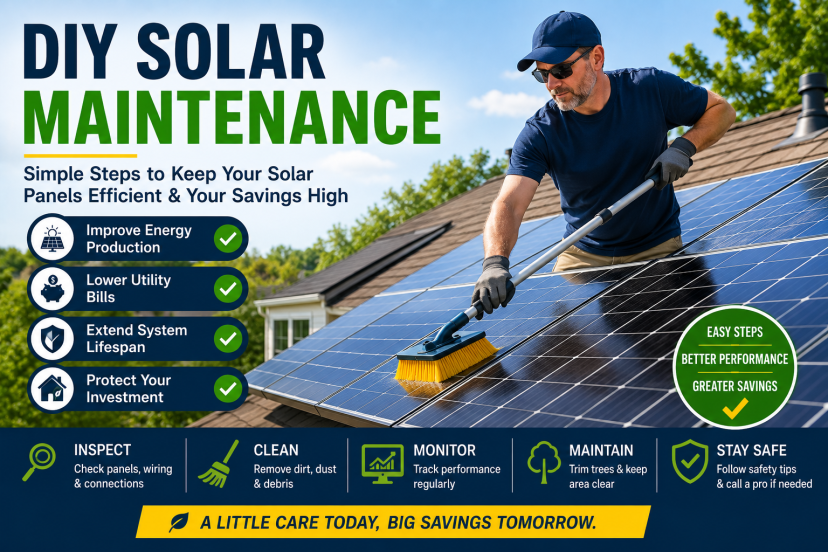
What DIY solar maintenance can keep my system working efficiently? Installing solar panels is one of the smartest investments many U.S. homeowners can make. Once your system is up and running, it quietly generates clean electricity that can lower utility bills, reduce your carbon footprint, and increase your home’s value. But like any major home improvement, solar panels perform best when they receive regular care.
Fortunately, DIY solar maintenance is easier than many people expect. Most systems require very little upkeep, and simple inspections and cleaning can help maintain peak performance for decades. Understanding what you can safely do yourself—and when it’s time to call a professional—can help protect both your roof and your investment.
⭐ Quick Answer: DIY Solar Maintenance
DIY solar maintenance includes safely inspecting your solar panels, removing leaves and debris, cleaning panels when necessary, monitoring system performance, and checking for obvious signs of damage. While homeowners can handle basic maintenance, electrical repairs, roof work, and warranty-related service should always be performed by qualified professionals.
Key Takeaways
Most likely cause: Dust, pollen, leaves, bird droppings, or other debris on the panels can gradually reduce solar energy production.
Usually serious? No. Most solar systems require minimal upkeep, and small performance issues can often be prevented with basic inspections and occasional cleaning.
First thing to check: Review your system’s monitoring app or inverter data for unexpected drops in energy production, then visually inspect the panels from a safe location for dirt, debris, shading, or obvious damage.
Best solution: Follow a simple DIY solar maintenance routine that includes monitoring performance, safely removing accessible debris, and cleaning panels only when necessary. Leave electrical problems, roof work, damaged equipment, and warranty repairs to a qualified solar professional.
☀️ Why DIY Solar Maintenance Matters
Regular DIY solar maintenance helps your system produce as much electricity as possible while extending the life of both your solar equipment and your roof.
Even though modern solar panels have no moving parts, dirt, leaves, pollen, bird droppings, and heavy dust can reduce energy production over time.
Benefits of routine maintenance include:
- Improved energy production
- Lower electricity bills
- Longer equipment lifespan
- Early detection of problems
- Better roof protection
- Fewer expensive repairs
- Greater return on investment
Spending just a few minutes inspecting your system every few months can prevent larger issues later.
🔍 DIY Solar Maintenance Inspection Checklist
Most homeowners can safely perform a visual inspection from the ground.
Look for:
- Cracked panels
- Loose mounting hardware
- Broken glass
- Fallen branches
- Excessive dirt buildup
- Bird nests
- Damaged wiring (only if visible)
- Roof debris
- Shading from growing trees
Also inspect your gutters, as overflowing gutters can allow debris to accumulate around rooftop solar panels.
Avoid climbing onto the roof unless you have proper safety equipment and experience.
🧽 How To Clean Solar Panels Safely
One of the most common parts of DIY solar maintenance is cleaning.
Fortunately, rain naturally removes much of the dust in many climates.
If additional cleaning is needed:
Safe Cleaning Supplies
- Soft sponge
- Microfiber cloth
- Soft-bristle brush
- Garden hose
- Clean water
- Extension cleaning tool (if appropriate)
Avoid Using
- Pressure washers
- Abrasive scrub pads
- Harsh chemicals
- Metal brushes
- Razor blades
Cleaning should ideally be done early in the morning or late in the evening when panels are cool to reduce the risk of thermal stress.
🌿 Remove Debris To Improve Efficiency
Leaves, pine needles, pollen, and branches can reduce airflow and create shaded areas that decrease solar production.
Regularly remove:
- 🍂 Leaves
- 🌲 Pine needles
- 🌳 Small branches
- 🪺 Bird nesting materials
- 🌼 Heavy pollen buildup
If debris is difficult to reach safely, hire a professional rather than risking a fall.

📊 Monitor Solar System Performance
Most modern solar systems include monitoring software that tracks energy production.
Check your monitoring app periodically for:
- Sudden drops in production
- Error notifications
- Inverter alerts
- Reduced daily output
- System disconnect warnings
Small seasonal changes are normal.
Large or unexpected production declines may indicate equipment issues that require professional inspection.
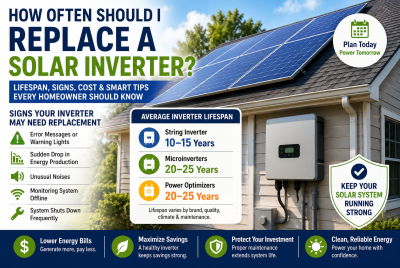
⚡ Inverter Maintenance Tips
The inverter converts the electricity generated by your panels into usable household electricity.
Although homeowners should not open or repair an inverter, you can:
- Check for warning lights
- Listen for unusual noises
- Keep ventilation openings clear
- Remove dust around the unit
- Verify normal operation through the monitoring system
Many residential inverters include warranties ranging from 10 to 25 years.
🏠 Protect Your Roof During DIY Solar Maintenance
Your roof supports your entire solar investment.
Protect it by:
Inspecting Roofing Materials
Look for:
- Missing shingles
- Loose flashing
- Damaged metal panels
- Water stains
- Sagging areas
Keeping Gutters Clean
Overflowing gutters may contribute to water damage near mounting hardware.
Trimming Trees
Tree branches can:
- Scratch panels
- Reduce sunlight
- Drop debris
- Increase storm damage risk
Proper roof maintenance helps maximize solar system lifespan.
💰 DIY Solar Maintenance Costs Vs Professional Service
Routine homeowner maintenance is inexpensive.
| Maintenance Task | Typical DIY Cost | Professional Cost |
|---|---|---|
| Visual Inspection | Free | $100–$300 |
| Panel Cleaning | $10–$40 | $150–$350 |
| Debris Removal | Free | $75–$200 |
| System Monitoring | Free | Included |
| Annual Inspection | N/A | $150–$400 |
Most homeowners spend very little on routine DIY solar maintenance, while scheduling a professional inspection every few years can provide additional peace of mind.
🌞 Solar Warranties And Maintenance
Quality solar systems typically include several warranties.
Product Warranty
Covers manufacturing defects.
Performance Warranty
Guarantees a minimum level of energy production over time.
Workmanship Warranty
Provided by the installer and covers installation quality.
Improper repairs or unauthorized modifications may void portions of your warranty.
Always review warranty documents before attempting repairs beyond basic cleaning and inspections.
💵 Long-Term Savings From Proper Solar Maintenance
Routine DIY solar maintenance helps protect one of your home’s most valuable energy investments.
Long-term benefits include:
- Lower utility bills
- Higher energy production
- Longer panel lifespan
- Better inverter performance
- Reduced repair costs
- Improved roof protection
- Greater home value
If your original installation qualified for the Federal Solar Tax Credit or state energy incentives, maintaining your system properly helps maximize the long-term value of that investment.
⚖️ DIY Maintenance Vs Professional Maintenance
| Task | DIY | Professional |
|---|---|---|
| Visual Inspection | ✅ | ✅ |
| Remove Leaves | ✅ | ✅ |
| Clean Panels | ✅ | ✅ |
| Electrical Repairs | ❌ | ✅ |
| Roof Repairs | ❌ | ✅ |
| Replace Panels | ❌ | ✅ |
| Wiring Inspection | ❌ | ✅ |
| Warranty Repairs | ❌ | ✅ |
Knowing your limits keeps both you and your solar system safe.
🛠️ Seasonal DIY Solar Maintenance Tips
Each season presents different maintenance needs.
Spring
- Remove pollen
- Inspect after winter storms
- Check mounting hardware visually
Summer
- Monitor energy production
- Trim fast-growing trees
- Inspect after severe weather
Fall
- Remove leaves
- Clean gutters
- Prepare for winter
Winter
- Monitor snow accumulation where applicable
- Watch for ice damage
- Inspect after heavy storms
Seasonal attention helps maintain consistent solar performance throughout the year.
👷 When To Call A Professional
Contact a certified solar installer or roofing contractor if:

- Panels are cracked.
- Wiring appears damaged.
- The inverter displays persistent error codes.
- Your roof develops leaks.
- Energy production suddenly drops.
- Mounting hardware becomes loose.
- Your system requires warranty service.
Professional technicians have the equipment and training needed to safely diagnose electrical and roofing issues.
❓ FAQs: DIY Solar Maintenance
1. How often should I perform DIY solar maintenance?
Most homeowners should visually inspect their system every few months and clean panels only when noticeable dirt or debris affects performance.
2. Can I clean solar panels with a pressure washer?
No. High-pressure water can damage panel seals, glass, and mounting components.
3. Is rain enough to clean solar panels?
In many regions, regular rainfall removes much of the dust. However, pollen, bird droppings, and heavy debris may still require occasional cleaning.
4. Does dirty glass reduce solar production?
Yes. Heavy dirt buildup can reduce sunlight reaching the solar cells and lower energy production.
5. Can DIY solar maintenance void my warranty?
Basic cleaning and visual inspections generally do not. Unauthorized repairs or modifications may affect warranty coverage.
6. How long do solar panels last?
Most high-quality panels continue producing electricity for 25 to 30 years or more with proper care.
7. Should I hire a professional for annual inspections?
A professional inspection every few years—or sooner if you notice problems—can help identify issues that aren’t visible during routine homeowner inspections.
🎯 Final Thoughts On DIY Solar Maintenance
Regular DIY solar maintenance is one of the easiest ways to protect your investment and keep your solar roofing system performing efficiently for decades. Simple tasks like inspecting panels, clearing debris, monitoring energy production, and maintaining your roof can improve performance while reducing the likelihood of costly repairs.
By combining routine homeowner care with occasional professional inspections, you’ll maximize energy savings, extend equipment life, and continue enjoying the long-term benefits of clean, renewable energy. If you’re planning a new solar installation or want to ensure your current system is operating at its best, consider requesting an inspection from a certified solar or roofing professional.
Disclaimer: Maintenance recommendations, warranty terms, installation requirements, and energy incentives vary by manufacturer, installer, and location. Always follow your solar equipment manufacturer’s guidelines and consult a licensed solar installer or roofing contractor before performing roof work or electrical repairs.
 Explore more:

- How Often Should I Replace A Solar Inverter?
- What Is The Best Cheap Solar Setup For Small House?
- How Do I Know If My Roof Is Good For Solar?