Solar For Tiny Homes: The Cheapest Way To Start In 2026
☀️ Why Tiny Homeowners Are Turning To Solar Faster Than Ever
Tiny homes were already built around one powerful idea:
Live simpler. Spend less. Depend less on the system.
That is exactly why solar feels like such a natural fit.
In 2026, many tiny homeowners are looking for affordable ways to reduce electric bills, gain energy independence, and avoid expensive utility connections altogether.
But there is a problem.
A lot of people assume tiny-home solar must involve:
- Huge battery banks
- Expensive roof systems
- Full off-grid setups
- Complex electrical work
The reality is usually much simpler.
For many tiny homeowners, the cheapest way to start solar is not building a perfect off-grid system immediately.
It is starting small, learning how much power you truly use, and building gradually over time.
⚡ Quick Answer: What Is The Cheapest Way To Start Solar For Tiny Homes?
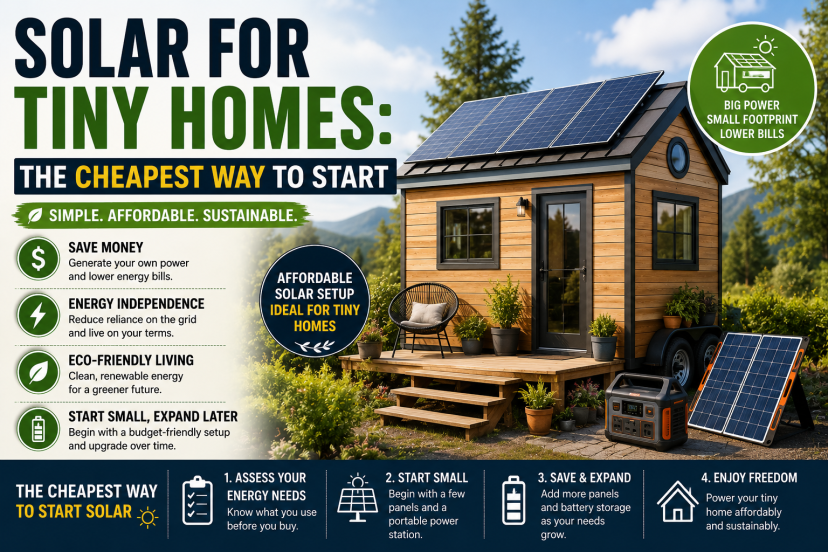
The cheapest way to start solar for tiny homes in 2026 is usually:
- A small starter solar kit
- High-efficiency panels
- Portable power storage
- Energy-efficient appliances
- A simple expandable setup
Many tiny homeowners begin with:
- 1–4 solar panels
- A portable solar generator
- Basic battery storage
- Low daily energy consumption
This approach keeps costs manageable while still covering essential power needs.
For beginners, simplicity often saves more money than trying to build a full off-grid system immediately.
🔍 Why Tiny Home Solar Costs Can Get Expensive Fast
Batteries Are Usually The Biggest Cost
Many people think solar panels are the expensive part.
In reality, batteries often cost more.
Large battery systems designed for full off-grid living can dramatically increase setup costs.
That is why many tiny homeowners begin with:
- Partial solar setups
- Grid-tied support
- Portable battery stations
- Minimal energy usage
Energy Habits Matter More In Tiny Homes
Tiny homes have limited roof space.
That means energy efficiency becomes extremely important.

Running multiple high-power appliances at once can quickly overwhelm a small solar system.
Examples include:
- Electric heaters
- Large air conditioners
- Dryers
- Induction cooktops
- Space heaters
The more energy-efficient the lifestyle, the cheaper the solar setup can be.
Many Beginners Overspend Too Early
One of the biggest mistakes is trying to build a “perfect” system immediately.
Some homeowners buy:
- Too many panels
- Oversized batteries
- Expensive inverters
- Equipment they do not actually need
Starting smaller often makes more financial sense.
🏡 Real-Life Tiny Home Solar Situations
Weekend Tiny Cabin Setup
Some people only use their tiny home occasionally.
In these situations, a simple setup may power:
- Lights
- Phone charging
- Wi-Fi
- Small refrigerator
- Laptop use
A compact starter system may be more than enough.
Full-Time Tiny Home Living
Full-time living requires more careful planning.
But many homeowners still reduce costs by:
- Using propane appliances
- Choosing efficient lighting
- Monitoring daily power use
- Avoiding energy-heavy devices
Off-Grid Tiny Homes
Off-grid living is possible — but it is rarely the cheapest place to start.
Many experienced tiny homeowners recommend learning energy habits first before investing heavily in batteries and backup systems.
Mobile Tiny Homes
Portable solar systems are becoming increasingly popular for:
- RV-style tiny homes
- Trailer-based setups
- Temporary locations
- Flexible travel living
Portable systems allow homeowners to expand gradually over time.
🛠️ Practical Tips For Starting Tiny Home Solar Cheaply
Start With Your Actual Energy Needs
Before buying anything:
- List every appliance
- Estimate daily usage
- Track power consumption
- Identify high-energy devices
Many beginners discover they need far less electricity than expected.
Use Energy-Efficient Appliances
This is one of the fastest ways to reduce solar costs.
Helpful upgrades include:
- LED lights
- Energy-efficient refrigerators
- DC appliances
- Low-power fans
- Smart power management
Reducing energy demand means needing fewer panels and smaller batteries.
Begin With A Portable Solar Generator
Portable solar generators are becoming a popular entry point because they are:
- Easier to install
- Expandable
- Beginner-friendly
- Less intimidating than full systems
For many tiny homeowners, this is the cheapest and simplest way to start.
Add Panels Gradually
Many successful tiny-home solar setups were built over time.
Starting with fewer panels allows homeowners to:
- Learn real-world energy usage
- Avoid overspending
- Upgrade slowly
- Improve efficiency first
Choose High-Efficiency Panels
Tiny homes have limited roof space.
That makes panel efficiency especially important.
Monocrystalline panels are usually preferred because they generate more power in smaller areas.
🚫 Common Tiny Home Solar Mistakes
Trying To Go Fully Off-Grid Immediately
Many beginners underestimate:

- Battery costs
- Winter limitations
- Cloudy weather performance
- Backup power needs
Starting simpler often reduces frustration and financial mistakes.
Buying Cheap Low-Quality Equipment
Cheap components may:
- Fail faster
- Produce less power
- Reduce reliability
- Create safety issues
Quality matters — especially in compact systems.
Ignoring Roof Weight And Space
Tiny homes often have roof limitations.
Heavy systems may affect:
- Structural load
- Mobility
- Roof maintenance
Careful planning is important.
Underestimating Winter Energy Needs
Solar production often drops during winter.
Tiny homeowners may need backup solutions during periods of low sunlight.
Forgetting About Shade
Trees and nearby buildings can dramatically reduce production.
Even small amounts of shade matter on compact systems.
❓ FAQ: Solar For Tiny Homes
How much does a basic tiny home solar setup cost?
Basic starter setups may begin around a few thousand dollars depending on batteries, panels, and energy needs.
Can a tiny home run fully on solar?
Yes, some can run fully on solar.

But full off-grid systems usually require careful energy management and larger battery storage.
What is the cheapest way to start?
Starting with a small portable solar generator and a few panels is often the most affordable approach.
Are batteries required?
Not always.
Some systems remain partially connected to grid power or generators.
How many solar panels does a tiny home need?
Many tiny homes use between 1 and 8 panels, depending on energy usage and efficiency.
What type of solar panel is best for tiny homes?
High-efficiency monocrystalline panels are usually the best choice for limited roof space.
🌱 Final Thoughts On Solar For Tiny Homes
Solar for tiny homes does not need to be complicated or outrageously expensive.
In fact, many homeowners save money by starting smaller and building gradually.
The cheapest path is usually not buying the biggest system possible.
It is:
- Understanding your real energy needs
- Reducing waste first
- Choosing efficient equipment
- Expanding slowly over time
Tiny-home solar works best when simplicity is part of the lifestyle.
For many homeowners, even a modest setup can create meaningful savings, greater flexibility, and a stronger sense of independence in 2026.
Disclaimer: This article is for informational purposes only and should not be considered financial, electrical, or installation advice. Always consult qualified solar and electrical professionals before building or modifying a solar system.
 Explore more:
- Best Solar Roofing Setups For Emergency Backup In 2026
- Small Home Solar Setup
- Can You Install Solar Panels On A Flat Roof?