☀️ How To Avoid Roof Damage When Installing Solar: A Homeowner’s Complete Guide
🏠 Why Roof Damage Is A Top Solar Concern For Homeowners
Solar panels are one of the smartest upgrades a homeowner can make—but many people worry about one thing before going solar: roof damage. Stories of leaks, cracked shingles, or costly repairs after installation make some homeowners hesitate, even though solar technology itself is safe and proven.
The truth is this: solar install roof damage is almost always preventable. Problems happen when panels are installed on aging roofs, mounted incorrectly, or handled by inexperienced installers. When done properly, solar panels can actually protect portions of your roof from weather exposure while lowering energy bills for decades.
This guide explains exactly how to avoid roof damage when installing solar, what mistakes to watch for, and how to protect both your roof and your investment.
🔍 Does Solar Installation Damage Roofs?
When installed correctly, solar panels do not damage roofs.
Solar causes roof damage only when:
-
The roof is already near the end of its lifespan
-
Flashing or mounts are installed incorrectly
-
Penetrations aren’t sealed properly
-
Installers rush or cut corners
-
The roof type isn’t compatible with the mounting system
Understanding these risks upfront is the key to preventing solar install roof damage.
🧱 Start With A Roof Inspection Before Solar Installation
The most important step happens before panels go on the roof.
A professional roof inspection should check:
-
Roof age and remaining lifespan
-
Shingle condition or membrane health
-
Decking integrity
-
Flashing and ventilation
-
Signs of moisture or rot
General rule of thumb:
-
If your roof has less than 10–15 years of life left, replace it before solar
-
Solar panels last 25–30 years, so your roof should last just as long
Installing solar on a failing roof is the #1 cause of solar install roof damage later.
🔩 How Solar Mounting Systems Protect Your Roof
Modern solar mounting systems are designed specifically to prevent leaks and structural damage.
Key protective features:
-
Engineered mounts rated for wind and snow loads
-
Flashed penetrations that channel water away
-
Sealed fasteners designed to outlast the roof
-
Spacing systems that allow water drainage
When properly installed, mounts become more watertight than the original roofing nails.
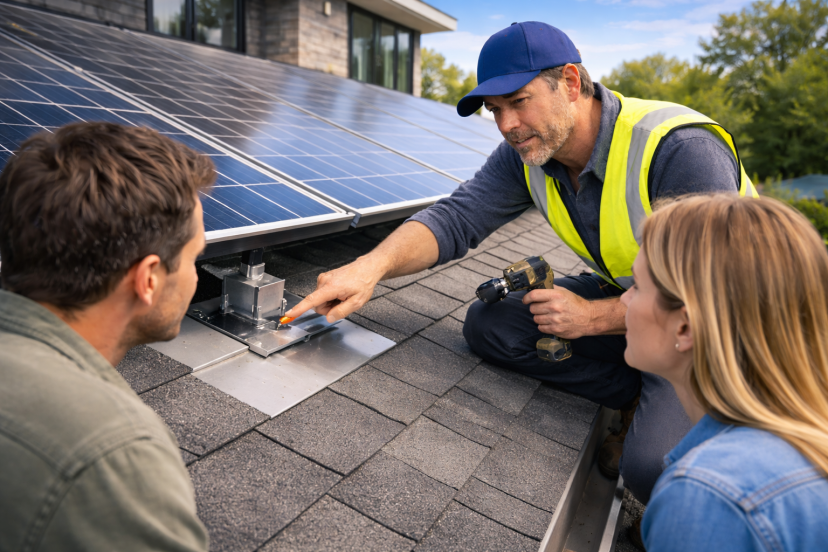
💧 Flashing: The Most Critical Leak-Prevention Component
If there’s one detail that separates quality installs from problem installs, it’s flashing.
Proper flashing prevents:
-
Water intrusion at bolt penetrations
-
Shingle lifting around the mounts
-
Freeze-thaw damage
-
Long-term roof leaks
Best practices:
-
Metal flashing installed under shingles
-
High-grade sealants rated for roofing
-
No exposed fasteners
-
Manufacturer-approved flashing systems
Skipping or cheaping out on flashing is a guaranteed path to solar install roof damage.
🏡 Roof Types And Solar Compatibility
Not all roofs behave the same during solar installation.
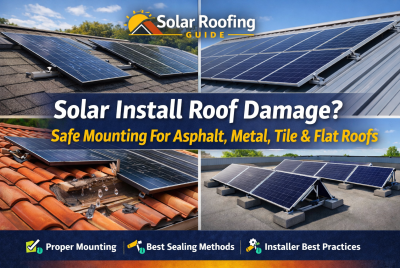
Asphalt shingle roofs
-
Most common in the U.S.
-
Highly compatible with solar
-
Easy to flash and seal
Metal roofs
-
Ideal for solar
-
Often use clamp systems with no penetrations
-
Lowest risk of roof damage
Tile roofs
-
Require specialized mounting
-
Tiles must be removed and replaced correctly
-
Higher labor cost, but safe when done properly
Flat roofs
-
Panels mounted on ballasted or low-penetration systems
-
Excellent option when engineered correctly
Choosing installers experienced with your roof type dramatically reduces risk.
🔋 Why Solar-Ready Roofing Matters
If you’re planning solar in the future, upgrading to a solar-ready roof now can prevent damage later.
Solar-ready roofing advantages:
-
Reinforced decking where needed
-
Optimized flashing placement
-
Improved waterproof underlayment
-
Better load distribution
Solar-ready roofs also help homeowners qualify for incentives like the Federal Solar Tax Credit, which currently allows eligible homeowners to deduct 30% of solar installation costs.
🛠️ Choosing The Right Installer Prevents Roof Damage
The installer—not the solar panels—determines whether roof damage occurs.
Look for installers who:
-
Are licensed and insured
-
Have roofing experience, not just solar
-
Use manufacturer-approved mounting systems
-
Provide workmanship warranties
-
Coordinate with roofing contractors when needed
Installers who understand both roofing and solar dramatically reduce the risk of solar install roof damage.
💰 Cost Of Fixing Roof Damage Vs Doing It Right
Preventing damage is far cheaper than repairing it later.
Typical costs:
-
Proper flashing and mounting: included in professional install
-
Minor leak repair: $500–$1,500
-
Panel removal and roof repair: $2,000–$6,000
-
Roof replacement after solar: $8,000–$20,000+
Doing it right the first time protects both your roof and your return on investment.
🏠 Energy Efficiency And Roof Protection Benefits Of Solar
When installed correctly, solar panels can actually reduce roof wear.
Solar panels help by:
-
Shielding roof areas from UV exposure
-
Reducing temperature swings
-
Protecting shingles from hail and debris
-
Improving attic temperature stability
Homes using energy-efficient roofing and solar systems aligned with Energy Star standards often see lower cooling costs and longer roof life.
🔍 How To Spot Potential Roof Damage After Solar Installation
Even with great installers, homeowners should know what to watch for.
Warning signs to monitor:
-
Water stains on ceilings or walls
-
Dripping during heavy rain
-
Lifted shingles near mounts
-
Cracked or displaced tiles
-
Unusual attic moisture
Annual inspections help catch issues early—before they become expensive.
🔧 Maintenance Tips To Prevent Solar Install Roof Damage
Solar systems require very little maintenance, but your roof still matters.
Smart maintenance steps:
-
Annual roof and solar inspection
-
Clear debris around mounts
-
Check flashing after major storms
-
Avoid walking on panels or mounts
-
Use licensed professionals for repairs
Preventive maintenance protects warranties and roof integrity.
👷 When To Call A Professional Immediately
Some signs shouldn’t wait.
Call a professional if:
-
You notice leaks after installation
-
Panels shift or appear loose
-
Roofing material cracks near mounts
-
Your roof is over 15–20 years old
-
You plan to add more panels
Early intervention prevents serious structural damage.
❓ FAQs: Solar Install Roof Damage
1. Do solar panels cause roof leaks?
Not when installed properly with correct flashing and sealing.
2. Can solar panels void my roof warranty?
Some warranties require approved installation methods—always check first.
3. Is it safe to install solar on an older roof?
Only if the roof has enough remaining lifespan.
4. Are metal roofs safer for solar?
Yes. Metal roofs often allow no-penetration clamp systems.
5. Can solar panels be removed for roof repairs?
Yes, but removal and reinstallation can be costly.
6. Should I replace my roof before solar?
If the roof has less than 10–15 years left, replacement is recommended.
7. Who is responsible if roof damage occurs?
Responsibility depends on contracts, warranties, and installer workmanship.
✅ Conclusion: Solar Doesn’t Damage Roofs—Poor Planning Does
Solar panels don’t damage roofs. Bad installations do. By inspecting your roof first, choosing experienced installers, using proper flashing, and planning for the long term, you can enjoy clean energy without worrying about solar install roof damage.
If you’re considering solar, start with a roof evaluation and work with professionals who understand both roofing and solar. Done right, solar protects your home, lowers energy bills, and adds value for decades.
⚠️ Disclaimer
Roof conditions, installation methods, costs, and incentives vary by location and home design. Always consult licensed roofing and solar professionals before installing solar panels.
 Explore more:
- How Often Should You Clean Your Roof?
- Roof Coating Systems: Do They Really Extend Roof Life?
- Roof Ventilation Explained: Why It Matters For Your Home