Solar Panel Roof Mounting: Best Options By Roof Type For Safe, Efficient Installations
🏠 Choosing The Right Solar Panel Roof Mounting Matters
If you’re a U.S. homeowner looking to cut energy bills, boost home value, and protect your roof, going solar is one of the smartest moves you can make. But here’s what many people don’t realize: Your solar success depends heavily on your solar panel roof mounting system.
The wrong mounting choice can lead to:
-
Roof leaks
-
Reduced energy output
-
Warranty problems
-
Costly repairs later
The right mounting system, however, protects your roof, maximizes sunlight exposure, and ensures your system lasts 25+ years.
This guide breaks down:
-
Best solar panel roof mounting options by roof type
-
Racking systems, clamps, and rails explained
-
Roof compatibility and safety tips
-
Costs, incentives, and long-term savings
Whether you have shingles, metal, tile, or a flat roof, you’ll find the best solution below.
☀️ What Is Solar Panel Roof Mounting?
Solar panel roof mounting refers to the hardware used to attach solar panels securely to your roof while protecting its structure and waterproofing.
It includes:
-
Racking systems
-
Rails and rail-less setups
-
Clamps and brackets
-
Flashing and seals
A proper system must:
-
Hold panels against wind and snow
-
Allow airflow for cooling
-
Prevent roof damage or leaks
-
Match roof compatibility
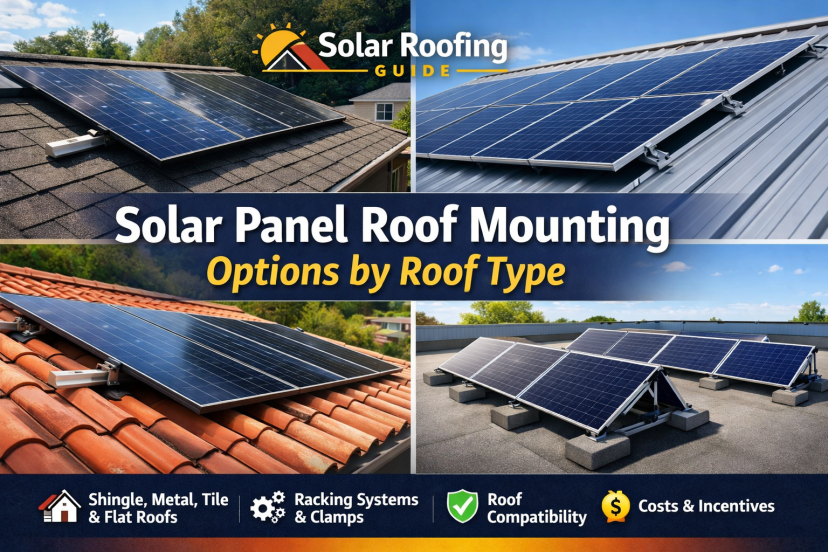
🏠 Solar Panel Roof Mounting Options By Roof Type
Every roof requires a different mounting approach.
☀️ Asphalt Shingle Roof Mounting
Asphalt shingles are the most common U.S. roof type and the easiest for solar panel roof mounting.
Best Mounting Systems
-
Rail-based racking systems
-
Aluminum rails with flashing
-
L-foot brackets
-
Mid and end clamps
How It Works
-
Mounts attach to the roof rafters
-
Flashing seals around bolts
-
Rails run horizontally
-
Panels clamp onto rails
Pros
-
Most affordable option
-
Widely compatible with racking systems
-
Easy to repair or modify
Cons
-
Penetrations required
-
Needs high-quality flashing
Typical Cost
-
$2.50–$3.50 per watt installed
🏠 Metal Roof Solar Panel Roof Mounting
Metal roofs are excellent for solar.
Standing Seam Metal Roof
No drilling needed.
Best Mounting Systems
-
Clamp-based systems
-
Rail-less or rail-based options
-
Seam clamps
How It Works
-
Clamps grip metal seams
-
No roof penetration
-
Panels attach via rails or direct clamps
Pros
-
No drilling = no leaks
-
Fast installation
-
Long roof lifespan
Cons
-
Slightly higher material cost
Typical Cost
-
$2.75–$3.75 per watt
🧱 Tile Roof Solar Panel Roof Mounting
Tile roofs need extra care.
Best Mounting Systems
-
Tile replacement mounts
-
Standoff mounts with flashing
-
Rail-based racking systems
How It Works
-
Tiles are removed at mounting points
-
Mounts attach to rafters
-
Waterproof flashing installed
-
Tiles replaced or cut
Pros
-
Strong and secure
-
Works with curved or flat tile
Cons
-
Higher labor cost
-
Tiles can crack during installation
Typical Cost
-
$3.50–$4.50 per watt
🏢 Flat Roof Solar Panel Roof Mounting
Flat roofs use tilt systems instead of drilling.
Best Mounting Systems
-
Ballasted racking systems
-
Tilt frames
-
Non-penetrating mounts
How It Works
-
Panels sit on weighted frames
-
No roof drilling
-
Tilt optimized for sun angle
Pros
-
No roof penetration
-
Easy maintenance
-
Adjustable tilt
Cons
-
Heavyweight load
-
Needs a structural check
Typical Cost
-
$3.00–$4.00 per watt
🔧 Racking Systems, Rails, And Clamps Explained
Your solar panel roof mounting setup depends on three key parts.
🔩 Racking Systems
Racking systems are the backbone of your solar setup.
Types include:
-
Rail-based systems
-
Rail-less systems
-
Ballasted systems
Functions:
-
Hold panels securely
-
Space panels for airflow
-
Adjust tilt and orientation
📏 Rails
Rails run horizontally or vertically across your roof.
Benefits:
-
Flexible panel placement
-
Strong wind resistance
-
Easy future expansion
Drawback:
-
More hardware = higher cost
🔗 Clamps
Clamps secure panels to rails or seams.
Types include:
-
Mid clamps
-
End clamps
-
Seam clamps
They:
-
Hold panels tight
-
Allow easy removal
-
Prevent movement
🧩 Roof Compatibility Checklist
Before choosing solar panel roof mounting, check:
-
Roof age (under 10 years is best)
-
Roof material compatibility
-
Roof slope and orientation
-
Structural strength
-
Local wind and snow loads
Roofs That May Need Repair First
-
Curling or cracked shingles
-
Leaking areas
-
Soft decking
-
Sagging rafters
Fixing your roof before solar saves thousands later.
💰 Costs And Incentives For Solar Panel Roof Mounting
Mounting hardware is usually included in solar pricing, but roof type affects total cost.
Average U.S. Costs
-
Asphalt: $2.50–$3.50 per watt
-
Metal: $2.75–$3.75 per watt
-
Tile: $3.50–$4.50 per watt
-
Flat: $3.00–$4.00 per watt
Federal Solar Tax Credit
-
30% off total system cost through 2032
-
Includes panels, inverters, and mounting
State And Utility Rebates
-
California, New York, Texas, Florida, and Arizona offer programs
-
Some utilities offer cash incentives
-
Net metering saves monthly
🔋 Energy Output And Mounting Angle
Your solar panel roof mounting system affects performance.
Ideal Tilt
-
Equal to your latitude (30–40° for most U.S. states)
Best Direction
-
South-facing roofs perform best
-
East and west still work well
Good Mounting Design Provides
-
Proper airflow cooling
-
Optimal sun exposure
-
Minimal shading
🛠 Installation Tips For Long-Term Success
-
Choose corrosion-resistant hardware
-
Use certified racking systems
-
Install flashing correctly
-
Match mounts to the roof material
-
Allow space for roof drainage
-
Check wind and snow ratings
Good mounting protects both your roof and your solar investment.
💵 Long-Term Savings From Proper Solar Panel Roof Mounting
A well-installed system delivers:
-
25–30 years of energy production
-
Lower maintenance costs
-
Better warranty protection
-
Higher resale value
Typical U.S. homeowner saves:
-
$20,000–$40,000 over 25 years
-
More in high-electricity states
🧑🔧 When To Call A Professional
Contact a certified solar or roofing installer if:
-
Your roof is older than 10–12 years
-
You have tile, slate, or flat roofing
-
You see leaks or damage
-
Your roof has complex angles
-
You live in high wind or snow zones
Professionals ensure code compliance, safety, and warranty protection.
❓ FAQs About Solar Panel Roof Mounting
1. What is the best solar panel roof mounting for shingles?
Rail-based racking systems with flashing are the most common and affordable.
2. Can solar panels damage my roof?
Not when installed properly. Quality mounts and flashing prevent leaks.
3. Do solar mounts void my roof warranty?
Some roofing warranties require certified installers — always check first.
4. Is drilling always required?
No. Metal standing-seam and flat-roof ballasted systems often require no drilling.
5. How long do mounting systems last?
Most last 25–30 years, matching panel lifespan.
6. Can I move panels if I replace my roof later?
Yes, but removal and reinstallation costs extra.
7. Does mounting affect energy production?
Yes. Angle, direction, and airflow all impact output.
✅ Conclusion: Choose The Right Solar Panel Roof Mounting
Solar is one of the best investments for your home — but only if your solar panel roof mounting system is right for your roof.
The best setup:
-
Matches your roof type
-
Uses high-quality racking systems
-
Protects against leaks
-
Maximizes sun exposure
-
Qualifies for tax credits
Your next step:
-
Check your roof condition
-
Compare mounting options
-
Request quotes from certified installers
-
Ask about warranties and incentives
Going solar starts at the roof — make sure yours is ready.
⚠️ Disclaimer
Pricing, incentives, and availability vary by location and roof type. Always consult a licensed solar or roofing professional before installation.
 Explore more:
- How To Tell If Your Roof Needs Replacement
- Contractors Roof Solar: Best Contractors For Roof
- Solar Install Roof Damage: Safe Solar Panel Mounting Options