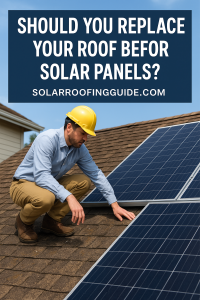
Should You Replace Your Roof Before Solar Panels? Here’s What Homeowners Need to Know
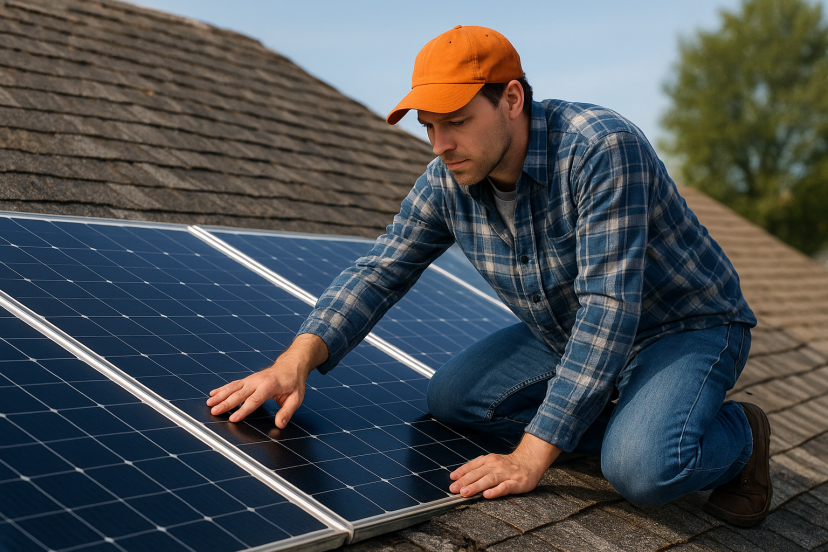
🏠 The Crucial Connection Between Roof Health and Solar Panels
Installing solar panels is one of the best investments for your home — lowering your energy bills, boosting property value, and reducing your carbon footprint. But there’s one major question many U.S. homeowners face before making the leap:
Should you replace your roof before solar?
The short answer: If your roof is nearing the end of its lifespan, yes.
Your solar system will likely last 25 to 30 years, and replacing your roof first can help you avoid the costly and inconvenient process of removing and reinstalling panels later. Think of it as building a solid foundation for your solar future.
🔍 Assessing Your Roof’s Age and Condition Before Solar Installation
Before you install panels, it’s essential to evaluate your roof’s age, material, and overall condition. These factors determine whether a replacement makes sense.
🧱 Roof Lifespan by Material
| Roofing Material | Average Lifespan | Solar Compatibility | Replacement Needed Before Solar? |
|---|---|---|---|
| Asphalt Shingles | 20–25 years | Excellent | Often recommended if 15+ years old |
| Metal Roofing | 40–70 years | Ideal | Usually not needed |
| Clay or Concrete Tile | 50+ years | Excellent | Typically not needed |
| Wood Shingles | 20–30 years | Moderate | Sometimes recommended |
| Flat Roof (Membrane) | 20–25 years | Good | Replace if 15+ years old |
If your roof is older than 15 years or shows signs of damage (like curling shingles or leaks), a roof replacement before solar is usually the smart choice.
⚠️ Signs Your Roof Needs Replacement Before Solar Panels
Before installation, check for these old roof issues that could complicate your solar project:
🚨 Warning Signs:
-
Leaks or water stains inside your attic or ceiling
-
Missing, cracked, or curling shingles
-
Sagging rooflines or soft spots underfoot
-
Granule loss (bald patches on asphalt shingles)
-
High energy bills caused by poor insulation
-
Roof is over 15–20 years old with visible wear
A roof that’s already failing won’t support solar mounts properly, and hidden moisture damage could shorten your solar system’s lifespan. Replacing your roof beforehand eliminates these risks and ensures your panels are installed on a secure, long-lasting structure.
💰 Cost Efficiency: Replace Roof Before Solar vs. After Installation
Many homeowners worry about the extra cost of a roof replacement before going solar. But doing it in the right order can actually save you thousands long term.
💵 Cost Comparison
| Option | Short-Term Cost | Long-Term Cost | Pros | Cons |
|---|---|---|---|---|
| Replace Roof Before Solar | $8,000–$15,000 (roof) + solar system | One-time cost, long-term savings | Avoids reinstallation costs | Higher upfront expense |
| Replace Roof After Solar | $0 now | $2,000–$5,000 for panel removal + $10,000+ new roof | Lower upfront cost | Double labor, potential damage |
Key takeaway: If your roof is old or damaged, replacing it before solar saves you $2,000–$5,000 later and ensures your warranty coverage remains valid.
🔋 Roof Replacement and Solar: Timing Is Everything
The best time to consider a roof replacement is right before your solar installation. This ensures both systems work together seamlessly — structurally and aesthetically.
🏗️ Ideal Project Sequence:
-
Roof Inspection: A licensed roofing contractor checks for damage and provides lifespan estimates.
-
Replacement (if needed): Roofers install new materials, flashing, and underlayment.
-
Solar Design & Installation: The solar team mounts panels using fresh, stable surfaces for maximum durability.
This combined approach often qualifies for bundle discounts — many U.S. roofing companies now partner with solar installers to offer joint project pricing.
🌞 Why Roof Replacement Before Solar Makes Financial Sense
💰 1. Maximize Your Return on Investment (ROI)
Solar panels last 25+ years. Installing them on a new roof ensures you get full use of your solar system’s lifespan without interruptions or extra labor costs later.
🧾 2. Federal Solar Tax Credit (ITC) Advantage
Good news: In some cases, roof work directly related to solar installation may qualify for the 30% Federal Solar Investment Tax Credit — especially if your roof upgrade improves solar performance (e.g., structural reinforcement or reflective shingles).
👉 Always confirm eligibility with your tax advisor or installer.
🏡 3. Boost Your Home’s Value
A new roof + solar system can increase resale value by $15,000–$25,000, according to Zillow. Homebuyers love homes that come with fresh roofing and low energy bills.
🌤️ 4. Long-Term Peace of Mind
Replacing your roof before solar installation ensures:
-
No leaks under solar mounts
-
Full roofing and solar warranties intact
-
Seamless waterproofing integration
-
Decades of energy efficiency and protection
🧠 Roofing Material and Solar Compatibility
Not all roofs are created equal. Understanding how different roofing materials interact with solar mounting systems helps you make the most durable, efficient choice.
🪨 Best Roof Types for Solar:
-
Metal Roofing: Highly durable, reflective, and easy to attach solar racks.
-
Asphalt Shingles: Most common and cost-effective; compatible with nearly all solar hardware.
-
Tile Roofing: Excellent longevity; requires specialized brackets but looks great with solar.
-
Flat Roofs: Need tilted racking systems for sun exposure, but work well for commercial or modern homes.
If your current roof material isn’t ideal, replacing it before going solar gives you a chance to choose a solar-friendly surface that maximizes efficiency.
🧾 Can Roofing Costs Be Rolled Into Solar Financing?
Yes — and this is where many U.S. homeowners find surprising savings.
Solar lenders and installers often allow you to bundle roof replacement costs into your solar loan or financing package. This helps you avoid two separate financing processes and benefit from one low monthly payment.
Financing Benefits Include:
-
30% federal tax credit on eligible portions
-
Fixed low-interest rates
-
Increased home equity value
-
One combined project warranty
💡 Real-Life Example: The Smart Homeowner Move
Imagine this scenario:
A homeowner in Phoenix, Arizona, has a 17-year-old asphalt roof and wants to go solar. Instead of installing panels right away, they invest $10,000 in a roof replacement before adding a $20,000 solar system.
Because the new roof is solar-optimized, they qualify for:
-
30% Federal ITC on eligible costs
-
Energy Star cool roofing rebate
-
Lower installation labor since both jobs were bundled
In just five years, their system pays for itself through energy savings — all without future roof repair headaches.
⚙️ Technical Tips for Roof Replacement Before Solar
If you decide to replace your roof first, keep these expert recommendations in mind:
🔨 Installation Tips:
-
Choose roofing materials that last as long or longer than your solar system.
-
Request solar-ready flashing around vents and chimneys.
-
Ask your roofer to mark rafter locations for easier solar mounting.
-
Verify the weight load capacity to ensure the roof can handle solar panels.
-
Coordinate between roofing and solar installers for unified warranties.
Pro Tip: Always work with licensed and insured contractors who are certified in both roofing and solar installation.
🧱 Roofing Lifespan and Solar Panel Durability: The Perfect Match
Solar panels are designed to last 25–30 years, while top-quality roofing materials (metal, tile) can last 40–70 years. Aligning these lifespans ensures long-term synergy and cost efficiency.
If you install solar panels on an older roof, you’ll likely need to remove and reinstall them halfway through their lifespan — an unnecessary expense easily avoided with a new roof today.
🧰 When to Call a Professional
Call a certified solar or roofing contractor if:
-
Your roof shows visible wear or leaks.
-
Your roof is more than 15 years old.
-
You plan to install solar in the next 12–24 months.
-
You’re unsure about load-bearing or warranty coverage.
Certified professionals can perform roof inspections, solar load analysis, and detailed cost breakdowns to determine whether replacement makes financial sense.
❓ FAQs: Should You Replace Your Roof Before Solar Panels?
1. How old should my roof be before I replace it for solar?
If your roof is over 15 years old, replacement is recommended before installing solar panels to avoid premature wear or removal costs.
2. Can I install solar panels on an old roof?
You can, but it’s risky. If the roof needs repairs later, you’ll have to remove the panels, which can add $2,000–$5,000 in labor costs.
3. Can I include roof replacement in my solar financing?
Yes. Many lenders allow you to roll both into a single loan — often still qualifying for tax credits on eligible portions.
4. How do I know if my roof is strong enough for solar?
A professional roof inspection can confirm load capacity and structural integrity before installation.
5. What’s the best roofing material for solar panels?
Metal and asphalt shingle roofs are the most compatible and cost-effective for solar installations.
6. Does replacing the roof help solar performance?
Yes. New roofs provide smoother mounting surfaces and better waterproofing, improving efficiency and system longevity.
7. Can a new roof lower my energy bills even without solar?
Absolutely. New, insulated roofing materials reduce heat transfer, lowering cooling costs by up to 20% in warm U.S. states.
🌎 Conclusion: Build a Strong Foundation for Long-Term Solar Success
Replacing your roof before installing solar isn’t just about safety — it’s a strategic investment. A solid, solar-ready roof maximizes efficiency, extends your system’s life, and eliminates future reinstallation costs.
Whether you’re dealing with old roof issues or planning ahead for cost efficiency, pairing a new roof with solar gives you decades of reliable protection and clean energy savings.
✅ Next Step: Contact a licensed solar installer or roofing contractor in your area for a professional inspection and estimate. You may even qualify for combined roof + solar financing and 30% federal tax incentives.
⚠️ Disclaimer
Roofing costs, incentives, and solar eligibility vary by state and installation type. Always consult a licensed roofing and solar professional for accurate assessments and current rebate information.
 Explore more:
- Roof Slope Considerations for Solar Installation
- Roof Ventilation Tips with Solar Panels
- Best Roofing Materials for Hot Climates