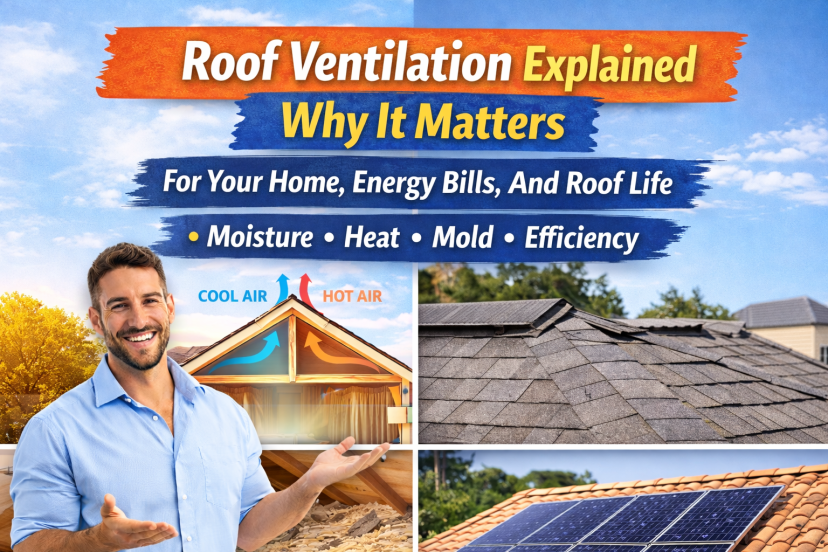
Roof Ventilation Explained: Why It Matters For Your Home, Energy Bills, And Roof Life
🏠 Why Roof Ventilation Is One Of The Most Overlooked Home Upgrades
If your home feels hotter than it should, your energy bills keep climbing, or your roof seems to age faster than expected, the problem may not be your shingles—it’s likely your roof ventilation.
For many U.S. homeowners, roof ventilation is out of sight and out of mind. Yet it plays a major role in controlling heat, managing moisture, preventing mold, protecting roofing materials, and improving energy efficiency—especially if you plan to go solar.
In this guide, we’ll clearly explain how roof ventilation, attic ventilation, ridge vents, and proper roof airflow work together to protect your home and lower long-term costs.
☀️ What Is Roof Ventilation And How Does It Work?
Roof ventilation is a system that allows fresh air to enter your attic while hot, moist air escapes. This constant air movement regulates temperature and humidity levels year-round.
✅ Basic Roof Ventilation Principle
-
Cool air enters through intake vents (usually at eaves or soffits)
-
Warm, moist air rises and exits through exhaust vents near the roof peak
-
Continuous airflow prevents heat and moisture buildup
Without balanced airflow, your attic can trap heat and humidity—damaging your roof and increasing cooling costs.
🏠 Why Roof Ventilation Matters For U.S. Homes
Across the U.S., climate extremes make proper roof ventilation essential.
☀️ Summer Heat Control
-
Reduces attic temperatures by up to 30–40°F
-
Lowers strain on air conditioning systems
-
Improves indoor comfort
❄️ Winter Moisture Protection
-
Prevents condensation buildup
-
Reduces mold and mildew risk
-
Helps avoid ice dams in colder regions
Good attic ventilation protects your home in every season.
🔋 Roof Ventilation And Energy Efficiency
One of the biggest benefits of proper roof ventilation is lower energy consumption.
💰 Energy Savings Benefits
-
Reduced cooling costs (up to 15–20%)
-
Less heat radiating into living spaces
-
Improved HVAC efficiency
For solar homeowners, better roof airflow also helps panels operate more efficiently by reducing excess heat buildup.
🏠 Attic Ventilation Explained: Intake Vs Exhaust
Effective attic ventilation depends on balance.
✅ Intake Vents
-
Located at soffits or roof edges
-
Pull in cooler outside air
✅ Exhaust Vents
-
Installed near the roof peak
-
Release hot, moist air
A balanced intake-to-exhaust ratio is critical. Too much of one without the other reduces airflow efficiency.
☀️ Common Roof Ventilation Types Explained
Understanding vent options helps homeowners choose the best setup.
⭐ Ridge Vents
Ridge vents run along the roof peak and provide continuous exhaust ventilation.
Benefits:
-
Even airflow across the attic
-
Discreet appearance
-
Excellent for most roof designs
⭐ Box Vents
-
Individual vents are installed near the roof peak
-
Cost-effective but less uniform airflow
🏠 Gable Vents
-
Mounted on attic walls
-
Useful in combination systems
⭐ Powered Attic Fans
-
Use electricity or solar power
-
Can improve airflow, but must be properly sized
Among these, ridge vents paired with soffit vents are often the most effective solution.
🌧️ Moisture, Mold, And Roof Ventilation
Moisture is one of the biggest threats to roofing systems.
⚠️ Problems Caused By Poor Roof Airflow
-
Mold and mildew growth
-
Wood rot in rafters and decking
-
Insulation damage
-
Reduced indoor air quality
Proper roof ventilation removes moisture before it can cause structural damage or health issues.
🏠 Roof Ventilation And Roof Lifespan
Heat and moisture significantly shorten roof life.
✅ How Ventilation Protects Roofing Materials
-
Prevents shingles from overheating and cracking
-
Reduces premature aging of the underlayment
-
Maintains manufacturer warranty conditions
Many roofing warranties require adequate roof ventilation to remain valid.
🔋 Roof Ventilation And Solar Panel Compatibility
If you’re considering solar panels, ventilation matters even more.
☀️ Benefits For Solar Homes
-
Reduces attic heat that can affect panel efficiency
-
Prevents trapped heat beneath panels
-
Supports longer roof and solar lifespan
A well-ventilated roof is a stronger foundation for long-term solar ROI.
💰 Cost Of Roof Ventilation Systems
💵 Typical Cost Ranges (U.S.)
| Vent Type | Average Cost |
|---|---|
| Ridge vents | $300–$1,500 |
| Soffit vents | $200–$1,000 |
| Box vents | $150–$500 |
| Powered fans | $300–$1,200 |
While costs vary, roof ventilation is one of the most cost-effective upgrades homeowners can make.
🛠️ Installation Tips For Proper Roof Ventilation
✅ Best Practices
-
Match intake and exhaust airflow
-
Avoid mixing incompatible vent types
-
Ensure insulation does not block vents
-
Follow local building codes
Proper design matters more than adding more vents.
🔋 Incentives And Energy Programs
While ventilation alone doesn’t qualify for the Federal Solar Tax Credit, it supports:
-
Energy Star-rated roofing systems
-
Improved HVAC efficiency
-
Better performance for solar installations
Some states and utilities offer rebates for energy-efficiency improvements that include ventilation upgrades.
👷 When To Call A Professional
Contact a licensed roofing or solar professional if:
-
Your attic feels extremely hot year-round
-
You see signs of mold or moisture
-
Energy bills are unusually high
-
You’re planning solar panel installation
-
Your roof warranty is at risk
A professional can assess airflow balance and recommend the right solution.
❓ FAQs: Roof Ventilation Explained
1. Why is roof ventilation important?
Roof ventilation controls heat and moisture, protecting your roof and reducing energy costs.
2. What happens if roof ventilation is poor?
Poor ventilation can cause mold, higher energy bills, and premature roof failure.
3. Are ridge vents better than box vents?
Ridge vents provide more consistent airflow across the attic.
4. Does roof ventilation help in winter?
Yes. It prevents moisture buildup and ice dams.
5. Can roof ventilation lower AC costs?
Yes. Proper attic ventilation can reduce cooling costs by up to 20%.
6. Do solar panels affect roof airflow?
They can if ventilation is poor, making proper airflow even more important.
7. How do I know if my attic is well ventilated?
A professional inspection is the most reliable way to assess airflow balance.
🌟 Conclusion: Roof Ventilation Is A Smart, High-ROI Upgrade
Roof ventilation isn’t just a technical detail—it’s a key factor in protecting your home, improving comfort, and saving money. By managing heat, moisture, and airflow, proper ventilation extends roof life, lowers energy bills, and supports solar performance.
🏠 Next step: Schedule a professional roof or attic evaluation to ensure your ventilation system is working efficiently—especially before installing solar panels or replacing your roof.
⚠️ Disclaimer
Costs, performance, and incentives vary by location and home design. Always consult a licensed roofing or solar professional before making ventilation or roofing upgrades.
 Explore more:
- Do Solar Panels Increase Home Value?
- Roof Coating Systems: Do They Really Extend Roof Life?
- Signs Of Hidden Roof Damage Most Homeowners Miss