Installing Solar Panels on Metal Roofs: Pros & Cons for Homeowners
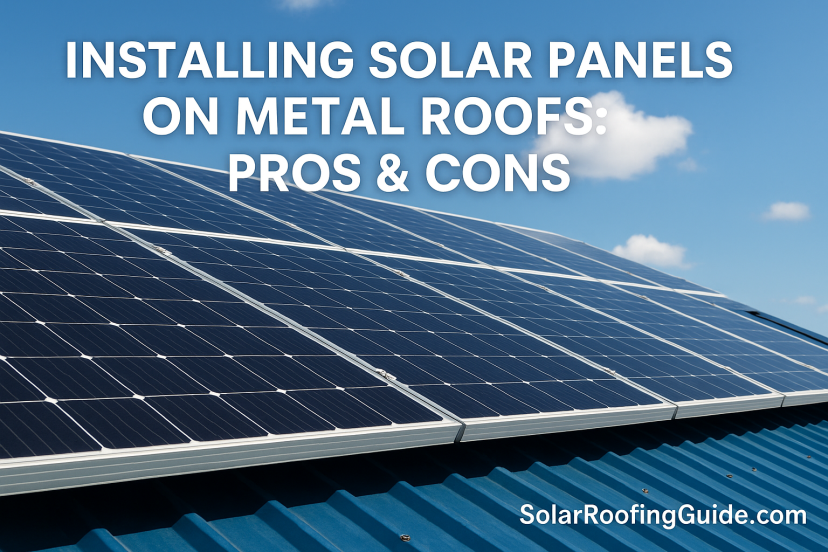
🏠 Are Metal Roofs Good for Solar Panels? The Fastest-Growing Combo in the U.S.
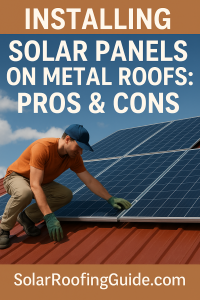
Metal roofing is one of the fastest-growing roofing materials in the U.S., especially across states like Texas, Florida, Arizona, Colorado, and the Midwest. With lifespans of 40–70 years, durability against storms, and high energy efficiency, metal roofs are already a smart home investment.
But here’s the exciting part:
Metal roofs are one of the BEST roofing types for solar panel installation.
In fact, standing seam metal roofs are considered the #1 most solar-friendly roofing material due to fast installation, no roof penetrations, and exceptional longevity.
Still, metal roofs come with unique considerations — and understanding the full list of solar panels metal roof pros cons helps homeowners make the right choice.
This guide breaks down everything you need to know about pairing solar with metal roofing, including cost, installation tips, mounting systems, and long-term performance.
☀️ Pros of Installing Solar Panels on a Metal Roof
✅ 1. Metal Roofs Last 40–70 Years — Perfect Match for Solar Panels
Solar panels last 25–30 years.
Metal roofs last 2–3× longer, making them the ideal structural foundation.
This prevents a common and costly issue:
Replacing a roof AFTER installing solar requires removing & reinstalling panels — costing $2,000–$5,000+.
Metal roofs directly eliminate that risk.
✅ 2. Standing Seam Metal Roofs Require Zero Holes in the Roof
One of the strongest advantages is the standing seam design.
Installers can attach solar racks using:
-
standing seam clamps
-
S-5 clamps (industry standard)
-
rail-based or rail-less systems
These mount directly to the metal seams — no drilling, no penetrations, no leaks.
This gives:
-
cleaner aesthetic
-
faster installation
-
stronger wind ratings
-
preserved manufacturer warranty
This is a major benefit over asphalt, tile, wood shake, or flat roofs.
✅ 3. Metal Roofs Reduce Heat — Boosting Solar Panel Efficiency
Metal roofs often use reflective coatings or “cool roof” technology.
That means:
-
cooler attics
-
less heat absorption
-
higher solar performance
Solar panels lose efficiency as temperatures rise, so a cooler roof improves output.
✅ 4. Handles Heavy Snow, Winds, and Hail Better Than Standard Roofs
If you live in:
-
Colorado
-
Montana
-
Minnesota
-
Wyoming
-
Northern Utah
-
Upstate New York
…metal roofs are unmatched in performance.
Metal roofing materials are:
-
fire-resistant
-
hail-resistant (Class 4 rating)
-
superior under high winds (140–180 mph)
-
ideal for heavy snow loads
This protects both the roof and the solar system during severe weather.
✅ 5. Low Maintenance for Decades
Metal roofs require minimal upkeep:
-
no shingle curling
-
no cracking
-
no mold
-
high corrosion resistance
Solar installations on metal roofs maintain long-term structural integrity with little maintenance.
✅ 6. Best Roof Type for Snow Slide-Off
Panels warm slightly in the sun and help snow slide off a metal roof faster than asphalt.
Result:
-
reduced winter loading
-
fewer snow-related production dips
-
longer roof lifespan
✅ 7. Increased Home Value & Better Resale Potential
Metal roofing + solar boosts home value significantly, especially in:
-
Texas
-
Florida
-
Colorado
-
California
Buyers love:
-
low energy bills
-
a 50-year roof
-
renewable energy system
This combo ranks as one of the highest-ROI home upgrades according to modern real estate studies.
❌ Cons of Installing Solar Panels on a Metal Roof
⚠️ 1. Upfront Cost Is Higher Than Asphalt
Metal roofing costs:
-
$10–$17 per sq. ft. installed
-
Asphalt shingles: $3–$6 per sq. ft.
But the LONG lifespan offsets that difference — especially when going solar.
⚠️ 2. Corrugated Metal Requires More Roof Penetrations
Standing seam = no penetrations.
Corrugated metal = more penetrations.
Corrugated panels need specialized brackets, like:
-
S-5! CorruBracket
-
EcoFasten corrugated mounts
These are still safe, but require:
-
proper sealing
-
EPDM gaskets
-
stainless fasteners
Poor installation can lead to leaks — so certified installers are a must.
⚠️ 3. Some Metal Roof Types Need Extra Planning
Metal tile or stone-coated metal shingles may need:
-
custom flashing
-
specialized mounting hardware
-
manufacturer-approved installation steps
This slightly increases labor cost.
⚠️ 4. Potential Glare Issues (Rare but Possible)
Highly reflective metal roofs can cause solar glare onto:
-
neighboring homes
-
streets
-
upper windows
A matte coating or darker color solves this easily.
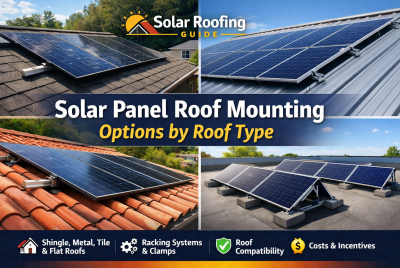
🔧 Mounting Systems for Solar Panels on Metal Roofs (Technical Overview)
Solar panels use different mounting systems depending on the metal roof type.
🏗️ Standing Seam Metal Roof (BEST OPTION)
Mounting Type: Clamp-based
Hardware Examples:
-
S-5!® Clamp
-
SnapNrack®
-
IronRidge®
Benefits:
-
No drilling
-
Fastest installation
-
Strongest wind resistance
-
No roof penetrations
-
Preserves warranty
🪛 Corrugated Metal Roof
Mounting Type: Penetration-based mounts
Hardware Examples:
-
CorruBracket
-
GreenFasten™
-
L-Foot mounts
Needs:
-
Premium sealant
-
Gasketed fasteners
-
Proper flashing
🧱 Metal Tile / Stone-Coated Metal
Mounting Type: Specialty brackets + flashing
Installer skill: Higher than asphalt roofs
Cost: Slightly higher labor costs
⛅ Horizontal Rib Metal Roofs
Also compatible but require:
-
rib-specific clamps
-
rail-based racking
Not as seamless as standing seam, but still highly solar-friendly.
💰 Cost Comparison: Solar on Metal Roof vs Asphalt Roof
🔋 Average Costs
| Roofing Type | Solar Mounting Cost | Notes |
|---|---|---|
| Standing Seam Metal Roof | ⭐ Lowest mounting cost | No drilling, fast install |
| Corrugated Metal Roof | Moderate | More hardware required |
| Metal Tile Roof | Higher | Specialized brackets |
| Asphalt Shingles | Moderate | Standard installation |
Estimated Total Costs (Roof + Solar)
Metal Roof + Solar
-
Metal roof: $18,000–$45,000
-
Solar system: $15,000–$25,000
-
Total: $33,000–$70,000
Asphalt Roof + Solar
-
Asphalt roof: $6,000–$14,000
-
Solar system: $15,000–$25,000
-
Total: $21,000–$39,000
However:
Metal roofing lasts 40–70 years — asphalt lasts 20–25.
Over a lifetime, metal is cheaper and more solar-efficient.
🧰 Installation Tips for Solar Panels on Metal Roofs
Here are key considerations for a perfect install:
☑️ 1. Use manufacturer-approved clamps
Avoid generic hardware.
S-5! is industry-standard for metal roofing.
☑️ 2. Never drill into standing seams
This eliminates the biggest advantage of metal roofing.
☑️ 3. Check roof thickness (gauge)
Thicker metal → better structural support.
☑️ 4. Use stainless steel fasteners
Avoid corrosion in humid or coastal climates.
☑️ 5. Protect against galvanic corrosion
Use compatible metal hardware.
☑️ 6. Confirm wind uplift ratings
Metal roofs perform best in hurricane zones.
☑️ 7. Ensure rail alignment for snow load
Panels must handle sliding snow safely.
🏡 Long-Term Savings & Energy Efficiency
🔋 Solar + Metal Roof Combo Benefits:
-
Highest ROI roofing material
-
Maximum solar lifespan
-
Best performance in hot climates
-
Best performance in snowy climates
-
Reduced maintenance
-
Strongest protection against leaks
Metal roofing’s reflective properties also reduce HVAC costs by up to 20% in hot states.
💵 Incentives for Metal Roof + Solar Panels
U.S. homeowners may qualify for:
Federal Incentives:
-
30% Federal Solar Tax Credit (ITC)
-
Battery tax credit (30%)
State Incentives:
-
California’s Net Billing 3.0
-
New York NYSERDA rebates
-
Colorado & Texas utility rebates
-
Arizona solar property-tax exemption
Roofing Incentives:
-
Some metal roofs qualify for Energy Star cool roof incentives.
🔨 When to Call a Professional Solar Installer
Contact a certified installer if:
-
Your metal roof is over 20 years old
-
You’re unsure what mounting system you need
-
You have stone-coated or corrugated metal
-
Your roof has multiple pitches or penetrations
-
You live in a high-wind or heavy-snow region
A professional offers:
-
roof load analysis
-
wind uplift evaluation
-
racking recommendations
-
full cost estimate
❓ FAQs About Solar Panels Metal Roof Pros and Cons
1. Are metal roofs good for solar panels?
Yes — standing seam metal roofs are the best roofing type for solar installations.
2. Do installers need to drill holes into a metal roof?
Standing seam roofs require no drilling. Corrugated roofs do require penetrations.
3. What is the best mounting system for metal roofs?
Clamp systems like S-5! offer the strongest, leak-free installation.
4. Is solar cheaper on metal or asphalt?
Solar installation is slightly cheaper on metal (standing seam) because no drilling is needed.
5. Do solar panels damage metal roofs?
No, metal roofs handle mounting better than any other roofing type.
6. How long does a metal roof last with solar?
40–70 years — the longest lifespan of any solar-compatible roofing material.
7. Does a metal roof increase solar output?
Indirectly yes — reflective metal roofs keep roof temperatures lower, improving panel efficiency.
🌞 Final Thoughts: Is a Metal Roof the Best Surface for Solar?
If you’re evaluating solar panels, metal roof pros and cons, here’s the clear bottom line:
⭐ Metal Roof + Solar =
-
best durability
-
best long-term savings
-
fastest installation (standing seam)
-
highest wind resistance
-
minimal maintenance
-
longest roofing lifespan
-
superior overall value
Whether you’re building a new home or upgrading an existing roof, pairing solar with metal roofing is one of the smartest, most future-proof decisions a homeowner can make.
⚠️ Disclaimer
Solar and roofing costs vary by location, roof complexity, labor rates, and utility policies. Always consult a licensed roofing or solar professional for accurate pricing and incentive eligibility.
 Explore more:
- How Much Does A New Roof Cost In The U.S.?
- Asphalt Shingles vs Metal Roofing: Which Is Better For Your Home?
- How Old Can a Roof Be for Solar?