How Much Weight Do Solar Panels Add To A Roof? A Complete Structural Safety Guide For Homeowners
Worried About Roof Weight? Here’s What You Need To Know
If you’re thinking about going solar, you’re probably asking:
How much weight do solar panels add to a roof—and will my home handle it safely?
It’s a smart question.
Many U.S. homeowners want to cut energy bills and go solar, but they worry about roof stress, structural damage, or costly repairs.
The good news?
Most modern homes are already strong enough to support solar panels—with no structural upgrades needed.
In this guide, you’ll learn exactly how much weight solar panels add, how roof load limits work, and how to make sure your home is safe before installation.
🏠 How Much Weight Do Solar Panels Add To A Roof? (Quick Answer)
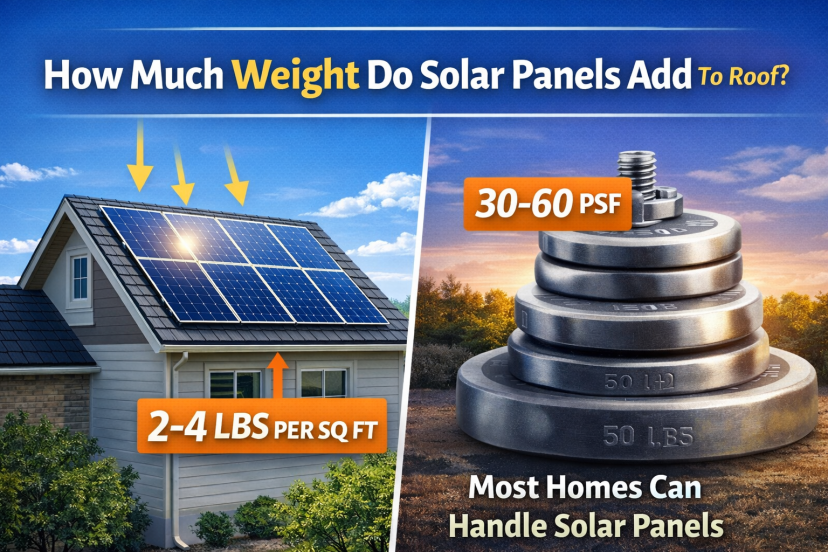
Solar panels typically add about 2 to 4 pounds per square foot (PSF) to your roof.

That includes:
- Solar panels
- Mounting hardware
- Racking systems
For comparison:
- A standard asphalt shingle roof weighs 2.5–4 PSF
- Snow loads in many U.S. regions can exceed 20–30 PSF
🎯 Bottom line: Solar panels add relatively little weight compared to what your roof is already designed to handle
🔋 Understanding Solar Panel Roof Load
To fully answer how much weight do solar panels add to a roof, you need to understand solar panel roof load.
📊 Typical Solar System Weight Breakdown
- Panels: 2.0–2.5 PSF
- Racking system: 0.5–1.0 PSF
- Total system load: 2–4 PSF
🏗️ What Does This Mean?
This load is:
- Evenly distributed across your roof
- Considered a static load (not moving)
- Accounted for during structural assessment
This is why most roofs can safely handle solar installation.
⚖️ Roof Weight Limits In U.S. Homes
Every roof is built to support specific loads.
🏠 Standard Roof Load Capacity
In the U.S., residential roofs are typically designed for:
- Dead load (permanent weight): 10–20 PSF
- Live load (temporary weight like snow): 20–40 PSF
Combined capacity often exceeds 30–60 PSF
🔎 Where Solar Fits In
Since solar adds only 2–4 PSF, it’s a small fraction of your roof’s total capacity.
That’s why the answer to how much weight do solar panels add to a roof is reassuring for most homeowners.
☀️ Structural Load Solar: Why It’s Still Important
Even though solar is lightweight, a structural load solar analysis is still essential.
🧠 Why Installers Check Structural Load
Certified installers evaluate:
- Roof age and condition
- Rafter spacing and size
- Roof pitch and materials
- Local building codes
This ensures your system is safe, compliant, and long-lasting.
🏠 Roof Type And Weight Compatibility
Not all roofs behave the same under load.
✅ Asphalt Shingle Roofs
- Most common in the U.S.
- Typically handles solar easily
- Ideal for standard installations
🧱 Tile Roofs (Clay Or Concrete)
- Heavier than shingles
- May require special mounting
- Still compatible with solar
🏗️ Metal Roofs
- Lightweight and durable
- Often the best option for solar
- Easy installation with clamps
🪵 Flat Roofs
- Use ballasted or tilted systems
- Load distribution is carefully engineered
📊 Solar Weight Vs Other Roof Loads
Here’s how solar compares to other common roof loads:
| Load Type | Weight (PSF) |
|---|---|
| Solar panels | 2–4 PSF |
| Asphalt shingles | 2.5–4 PSF |
| Snow load (moderate areas) | 20–30 PSF |
| Heavy snow regions | 40+ PSF |
| HVAC units | 5–10+ PSF (localized) |
Solar is one of the lightest additions you can put on your roof.
💰 Does Solar Weight Affect Costs?
In most cases, no—but there are exceptions.
💵 When Costs Stay Low
- The roof is structurally sound
- No reinforcement needed
- Standard installation
⚠️ When Costs May Increase
- Older roof (20+ years)
- Structural damage or sagging
- Weak framing or undersized rafters
👉 Reinforcement costs can range from $1,000 to $5,000+, depending on the issue.
🔧 Installation Tips To Minimize Roof Stress
✅ Best Practices
- Use certified installers
- Distribute panels evenly
- Avoid overloading one roof section
- Choose lightweight mounting systems
🛠️ Advanced Options
- Microinverters reduce system complexity
- Rail-less systems reduce weight
- Strategic panel layout improves load balance
🔋 Long-Term Impact On Your Roof
Many homeowners worry about long-term stress.
🏠 Does Solar Damage Your Roof?
No—if installed correctly.
In fact:
- Solar panels can protect roofing materials from UV exposure
- They may extend the roof lifespan in some cases
⏳ Lifespan Alignment
- Solar panels: 25–30 years
- The roof should ideally have at least 10–15 years left
👉 If your roof is older, consider replacing it before installing solar.
🏡 Solar Incentives And Financial Benefits
Even with structural concerns, solar remains one of the best investments.
💵 Federal Solar Tax Credit (ITC)
- Covers 30% of the installation cost
- Applies to residential systems
🏠 Additional U.S. Incentives
- State rebates
- Net metering programs
- Property tax exemptions in some states
👉 These incentives often outweigh any minor structural upgrade costs.
🔍 Signs Your Roof May Need Evaluation
Before installing solar, watch for:
- Sagging roof lines
- Water damage or rot
- Cracked rafters or decking
- Roof older than 20–25 years
These don’t mean you can’t go solar—but you may need upgrades first.
🛠️ When To Call A Professional
Contact a licensed solar installer or structural engineer if:

- You’re unsure how much weight your roof can handle
- Your home is older or custom-built
- You plan a large solar system
- You see signs of structural wear
A professional will perform a structural load solar analysis to confirm safety.
❓ FAQs About How Much Weight Solar Panels Add To A Roof
1. How much weight do solar panels add to a roof per square foot?
Solar panels typically add 2–4 pounds per square foot, including mounting equipment.
2. Can my roof collapse from solar panels?
No. Modern roofs are designed to handle much heavier loads like snow, making solar panels safe in most cases.
3. Do solar panels require roof reinforcement?
Usually not. Reinforcement is only needed if the roof is old or structurally weak.
4. How do installers check roof strength?
They inspect rafters, spacing, and materials, and may use engineering calculations to verify load capacity.
5. Are solar panels heavier than shingles?
No. Solar panels weigh about the same or slightly less than asphalt shingles.
6. What is the maximum roof weight limit?
Most residential roofs are designed for a 30–60 PSF total load, far above the solar system weight.
7. Does adding solar affect home insurance?
Typically, no, but you should notify your insurer to ensure proper coverage.
📌 Conclusion: Solar Panels Are Safe For Most Roofs
So, how much weight do solar panels add to a roof?
Just 2–4 pounds per square foot—a small load compared to what your roof already handles.

For most U.S. homeowners:
- No structural upgrades are needed
- Solar is safe and reliable
- The financial benefits far outweigh the risks
🚀 Next Step
If you’re considering solar:
- Get a professional roof inspection
- Request a solar quote
- Compare production and savings estimates
A simple evaluation can confirm your roof is ready—and help you start saving on energy for decades.
⚠️ Disclaimer
Solar system weight, roof capacity, costs, and incentives vary by location and home structure. Always consult a licensed solar installer or structural engineer for accurate assessments tailored to your property.
 Explore more:
- Best Solar Roofing Setups For Emergency Backup In 2026
- Solar For Tiny Homes
- South-Facing vs West-Facing Roofs For Solar Power