Best Roof Types for High-Efficiency Solar: How to Maximize Power, Savings, and Performance
🏠 Choosing the Right Roof Can Make or Break Your Solar Savings
If you’re planning to go solar, your roof isn’t just a mounting surface — it’s the foundation of your entire energy system. The wrong roof type can limit power output, raise installation costs, and slow your return on investment. The right roof type can dramatically boost performance through proper sunlight optimization and ideal panel placement.
That’s why understanding roof types solar efficiency is so critical for U.S. homeowners. Whether you own a flat roof, a metal roof, or a shingle roof, your roof design directly impacts:
-
Total energy production
-
System lifespan
-
Installation cost
-
Long-term maintenance
-
Resale value
-
Federal and state incentives
In this guide, you’ll learn:
-
Which roof types are best for solar efficiency
-
How roof shape and materials affect sunlight capture
-
Cost breakdowns by roof type
-
Installation tips that protect your roof
-
How to maximize long-term solar savings
Let’s break it all down step by step.
☀️ What Does “Roof Types Solar Efficiency” Really Mean?
Solar efficiency isn’t just about how good your panels are — it’s about how well your roof design allows those panels to perform.
High roof types solar efficiency depends on:
-
Roof angle (slope)
-
Roof orientation (north, south, east, west)
-
Shading levels
-
Roof material
-
Ventilation and heat buildup
-
Panel mounting flexibility
A highly efficient roof allows your panels to:
-
Capture more sunlight
-
Operate at cooler temperatures
-
Maintain stable output year-round
-
last longer with fewer repairs
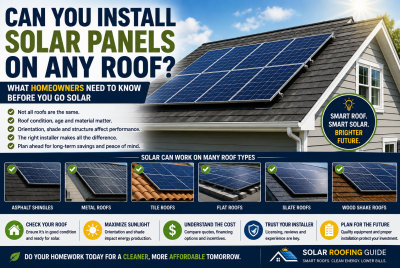
🧱 Overview of the Most Common Solar Roof Types
Before comparing performance, here are the most popular U.S. roof types used for solar:

-
Shingle roof (asphalt shingles)
-
Metal roof (standing seam & corrugated)
-
Flat roof (commercial and modern homes)
-
Tile roof (clay and concrete)
-
Slate roof
Now, let’s evaluate how each one performs for high-efficiency solar.
🔋 Best Roof Types for High-Efficiency Solar (Ranked)
✅ 1. Metal Roof – The Highest Solar Efficiency Performer
A metal roof is widely considered the best roof type for solar efficiency.
☀️ Why metal roofs are ideal for sunlight optimization:
-
Standing seam roofs allow clamp-on mounting (no drilling)
-
Panels sit higher above the roof, improving airflow
-
Lower heat buildup improves panel efficiency
-
Excellent south-facing alignment potential
🔋 Energy performance benefits:
-
Higher output per panel
-
Cooler operating temperatures
-
Minimal shading interference
💰 Cost impact:
-
Metal roof install: $10–$17 per sq ft
-
Solar installation cost: often lower labor cost due to clamp mounts
✅ Metal roof solar advantages:
-
Longer roof lifespan (40–70 years)
-
Zero roof penetrations (standing seam)
-
Lower leak risk
-
Better panel cooling
-
Higher long-term efficiency
This is the top-tier choice for homeowners who want maximum performance and minimal maintenance.
✅ 2. Shingle Roof – The Most Common and Budget-Friendly Option
A shingle roof is the most popular roof in the U.S. and supports excellent solar efficiency when installed properly.
☀️ Sunlight optimization on shingle roofs:
-
Works best with south- and southwest-facing slopes
-
Adjustable rack systems optimize tilt angle
-
Easy to reposition panels as needed
🔋 Efficiency performance:
-
Strong energy production
-
Slightly warmer roof surface than metal
-
Performance remains highly competitive
💰 Cost impact:
-
Shingle roof replacement: $4–$7 per sq ft
-
Solar installation: standard national pricing
✅ Shingle roof advantages:
-
Lowest upfront roofing cost
-
Wide installer availability
-
Easy repairs and replacements
-
Strong resale compatibility
This is the best balance of cost and efficiency for most U.S. homeowners.
✅ 3. Flat Roof – Maximum Sunlight Control with Adjustable Angle
A flat roof is common in commercial buildings and modern-style homes. It allows exceptional control over sunlight optimization.
☀️ How flat roofs boost efficiency:
-
Panels are mounted on adjustable tilt racks
-
Perfect alignment for seasonal sun movement
-
No slope limitations
-
Excellent airflow beneath panels
🔋 Energy performance:
-
Extremely high output when properly tilted
-
Highly efficient in southern states
-
Great for battery-ready systems
💰 Cost impact:
-
Ballast mounting systems cost more
-
Structural evaluation may be needed
✅ Flat roof solar advantages:
-
Total control of panel angle
-
Easy future system expansion
-
Minimal roof penetrations
-
Ideal for large solar arrays
Flat roofs deliver outstanding efficiency when properly engineered.
⚠️ 4. Tile Roof – Good Efficiency With Higher Installation Complexity
Tile roofs perform well for solar but increase both labor cost and installation complexity.
☀️ Sunlight optimization:
-
Good heat reflection
-
Strong UV resistance
-
Airflow can be restricted under tiles
🔋 Efficiency performance:
-
Solid output
-
Moderate heat retention vs metal
-
Requires specialized racking systems
💰 Cost impact:
-
Tile roof solar labor: high
-
Broken tile replacement risk
✅ Tile roof solar advantages:
-
Very long roof life
-
Excellent curb appeal
-
Strong solar compatibility with the right installer
Tile is efficient but more expensive to install and maintain.
⚠️ 5. Slate Roof – Low Practical Solar Efficiency
Slate roofs can support solar, but are usually not recommended for most homeowners.

❌ Slate roof issues:
-
Extremely fragile
-
Very high labor cost
-
limited certified installers
-
Panel repositioning is difficult
✅ Slate roof advantage:
-
Very long roof lifespan
Slate is technically compatible but often not financially efficient.
📊 Roof Types Solar Efficiency Comparison Table
| Roof type | Solar efficiency | Installation cost | Maintenance | Best for |
|---|---|---|---|---|
| Metal roof | 최고 | Medium–high | Very low | Maximum performance |
| Shingle roof | High | Low | Low | Most homeowners |
| Flat roof | Very high | Medium–high | Low | Modern homes & commercial |
| Tile roof | Medium–high | High | Medium | High-end homes |
| Slate roof | Low practical value | Very high | High | Specialty projects |
🧠 How Roof Design Impacts Sunlight Optimization
Even with excellent panels, roof design can limit output if not optimized.
Key sunlight optimization factors:
-
South-facing exposure
-
Minimal tree shading
-
Roof slope between 20°–40°
-
Unobstructed ridgelines
-
Proper vent placement
A small change in tilt can create 10%–25% output differences over the year.
🔧 Installation Tips for High-Efficiency Solar by Roof Type
✅ Metal roof installation tips
-
Use standing seam clamp mounts
-
Avoid drilling whenever possible
-
Ensure thermal expansion allowance
🧩 Shingle roof installation tips
-
Install flashing at every penetration
-
Confirm rafter mapping
-
Replace weak shingles before mounting
✅ Flat roof installation tips
-
Use non-penetrating ballast systems
-
Engineer wind uplift protection
-
Allow for seasonal tilt adjustment
🧩 Tile roof installation tips
-
Use tile-replacement hooks
-
Replace broken tiles immediately
-
Avoid walking directly on tiles
💰 Cost Differences Based on Roof Type
Your roof choice affects both up-front costs and long-term savings.
Average U.S. solar-ready roofing costs:
-
Shingle roof: $6,000–$14,000
-
Metal roof: $18,000–$40,000
-
Flat roof upgrades: $10,000–$25,000
-
Tile roof: $20,000–$45,000
Solar installation cost impact:
-
Metal roofs often reduce solar labor
-
Flat roofs increase racking cost
-
Tile roofs increase both labor and repair risk
🔋 Long-Term Energy Savings by Roof Type
Roof types with better cooling and airflow improve panel efficiency.
| Roof type | Annual efficiency boost | Long-term savings impact |
|---|---|---|
| Metal roof | +5% to +10% | Higher lifetime production |
| Shingle roof | Baseline | Strong savings |
| Flat roof | +10% with optimal tilt | Excellent for battery systems |
| Tile roof | Slightly reduced | Medium savings |
🏡 Roof Compatibility With Federal & State Incentives
Your roof type does NOT limit your eligibility for solar incentives.
☀️ Federal Solar Tax Credit
-
30% tax credit through 2032
-
applies to:
-
Solar panels
-
Inverters
-
Mounting systems
-
Batteries
-
💰 State-level incentives vary
Strong solar incentive states include:
-
California
-
Texas
-
Florida
-
New Jersey
-
New York
-
Massachusetts
-
Colorado
-
Arizona
Some states also offer:
-
Performance-based incentives
-
Net metering credits
🛡️ Roof Protection & Maintenance With High-Efficiency Solar
Solar panels actually extend the lifespan of many roof types.
✅ How solar protects your roof:
-
Blocks UV radiation
-
Reduces temperature swings
-
Shields from hail and rain
-
Limits storm debris exposure
🧼 Maintenance tips:
-
Clean panels 1–2 times per year
-
Inspect flashing annually
-
Remove leaf buildup
-
Check attic ventilation
Metal and shingle roofs benefit the most from added solar protection.
🔍 How to Choose the Best Roof Type for Your Home
Ask yourself:
-
Is your budget focused on the lowest upfront cost?
-
Do you want maximum performance regardless of price?
-
Are HOA restrictions an issue?
-
Do you plan to add battery storage later?
Smart selection guide:
-
Budget-focused → shingle roof
-
Performance-focused → metal roof
-
Modern homes → flat roof
-
Luxury properties → tile roof
🔨 When to Call a Professional Installer
You should contact a certified solar and roofing professional if:
-
Your roof is older than 12–15 years
-
You are unsure which roof type you have
-
Shading may reduce sunlight optimization
-
You want accurate incentive estimates
-
Your home uses non-standard materials
Professionals will evaluate:
-
Roof pitch and angle
-
Rafter spacing
-
Electrical panel load
-
Wind and snow load requirements
-
Local permit rules
❓ FAQs – Roof Types & Solar Efficiency
1. Which roof type is most efficient for solar?
Metal roofs deliver the highest long-term solar efficiency.
2. Is a shingle roof good for solar efficiency?
Yes, it provides excellent performance at the lowest total cost.
3. Can a flat roof support high-efficiency solar?
Absolutely, especially with adjustable tilt racks.
4. Do tile roofs reduce solar output?
Slightly, due to heat retention and complex airflow.
5. Does roof color affect solar efficiency?
Yes, lighter roof colors reduce heat buildup and improve output.

6. Can I change my roof type before installing solar?
Yes, many homeowners upgrade to solar-ready metal or shingles first.
7. Does roof type affect the 30% federal tax credit?
No, the incentive applies regardless of roof material.
🌞 Final Verdict: Best Roof Types for High-Efficiency Solar
Your roof choice directly shapes your solar success. For most U.S. homeowners:
✅ Best overall performance: metal roof
✅ Best budget solution: shingle roof
✅ Best for system control: flat roof
✅ Best for luxury homes: tile roof
When optimized correctly, the right roof type can:
-
Increase output by 10%–25%
-
Reduce system strain
-
Lower maintenance costs
-
Extend both the roof and solar lifespan
⚠️ Disclaimer
Solar output, roofing costs, tax incentives, and installation requirements vary by location, utility provider, roof condition, and structural design. Always consult a licensed solar installer and roofing contractor before making final decisions.
 Explore more:
- Solar Roof Rebates USA
- Residential Roofing Services: What Homeowners Need To Know
- Roofing Warranties Explained: What’s Actually Covered